
The Core Issue: What is the Honda Collision Mitigation Braking System (CMBS) Error?
Honda’s Collision Mitigation Braking System (CMBS) is a primary component of the comprehensive Honda Sensing safety suite.
It is designed to act as a secondary set of eyes, utilizing high-precision radar sensors mounted in the front grille and wide-angle cameras positioned behind the windshield.
These components work in tandem to monitor the distance and closing speed between your vehicle and obstacles ahead, such as other cars, pedestrians, or stationary objects.
The system is intended to provide visual and audible warnings when it detects a potential collision, eventually applying the brakes automatically if the driver fails to respond.
However, a dangerous defect known as “phantom braking” has emerged as a significant hazard.
This occurs when the vehicle’s software incorrectly interprets non-threatening environmental factors—such as shadows cast by overpasses, metal road signs, or even pavement markings—as immediate collision threats.
When this happens, the vehicle abruptly slams on the brakes while traveling at highway speeds on clear roads.
The danger this poses to drivers on busy US interstates is immense.
Because the braking event is unprovoked and sudden, it places drivers at immediate risk of high-speed rear-end collisions from traffic behind them.
The unpredictability of this system failure turns a modern safety feature into a profound liability.
The 2026 Legal Landscape: Class Action Verdict vs. Ongoing Investigations
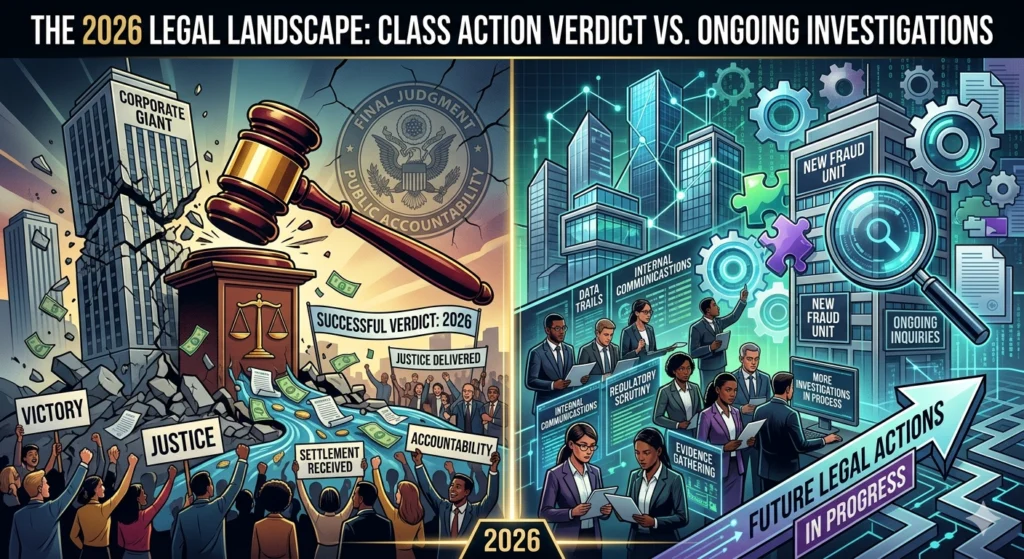
The Cadena v. Honda Jury Verdict (April 2026)
In April 2026, the long-running consolidated class action lawsuit, Cadena v. American Honda Motor Co., reached a conclusion in federal court.
This eight-year legal battle focused on older model CR-V and Accord vehicles and their alleged braking defects.
The jury returned a verdict in favor of Honda.
The court largely agreed with the manufacturer’s defense, noting that the system’s limitations were clearly outlined in owner manuals.
The jury concluded that these documented operational limitations did not constitute a legally actionable defect.
Active NHTSA Engineering Analysis on Honda Phantom Braking
It is vital to understand that this verdict does not resolve the issue for newer Honda owners.
The National Highway Traffic Safety Administration (NHTSA) remains actively engaged in an Engineering Analysis regarding unintended automatic emergency braking.
This investigation is far from closed.
To date, the NHTSA database includes over 1,200 consumer complaints, nearly 50 reported crashes, and nearly 100 injuries linked to these systems across various Honda models.
This regulatory scrutiny continues to encompass recent model years, ensuring that the safety concerns surrounding CMBS remain a priority for federal oversight regardless of the recent class action outcome.
Is the 11th Gen Honda Civic (2022-2026) Included in the Lawsuits?
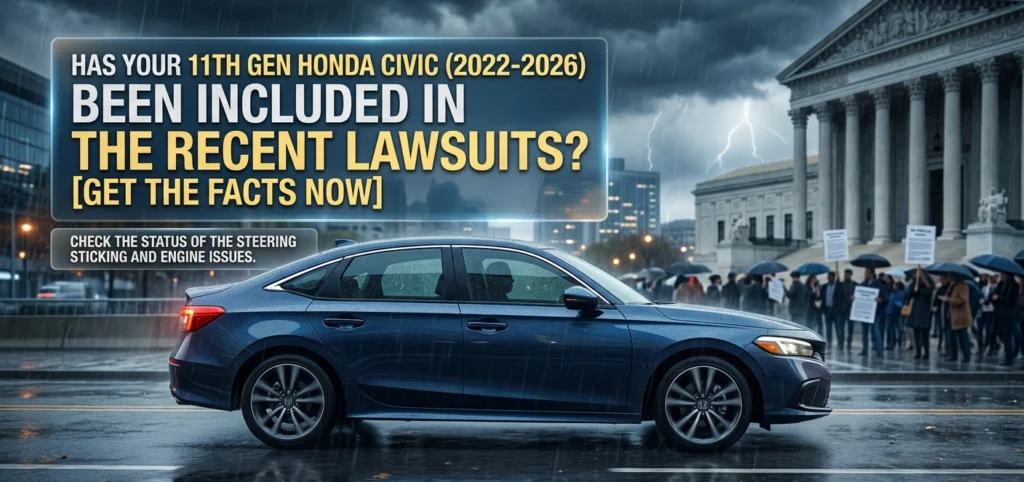
The 11th generation Honda Civic, covering the 2022 through 2026 model years, remains a focus for automotive consumer rights advocates.
This includes the Sport, Touring, and the newer Hybrid configurations.
As of April 2026, firms such as Lemberg Law are still actively logging complaints from owners of these newer vehicles.
These reports describe the exact same unprovoked braking patterns experienced by owners of older models.
While the Cadena verdict may have impacted older vehicles, it does not prevent 11th Gen owners from pursuing relief.
If your vehicle suffers from these issues, you are not legally bound by the outcome of a class action that primarily targeted earlier vehicles.
What to Do If Your Civic Suffers from Phantom Braking (Dealer Log & Lemon Law)
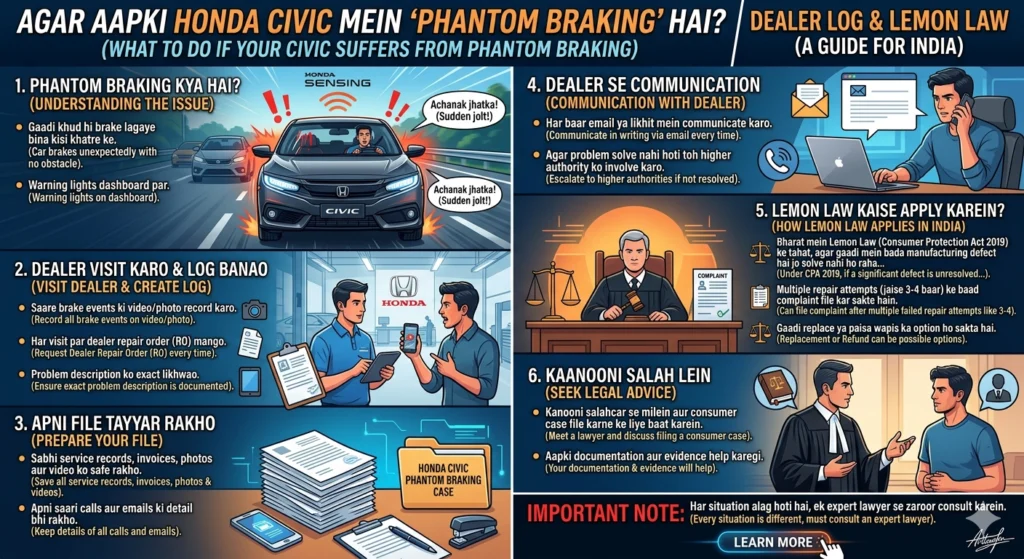
If your dealership dismisses your concerns by claiming “no error codes were found,” you must shift your strategy to building a formal evidence file.
Dealers often require documented proof to authorize deep-level diagnostic work or repairs.
Your Step-by-Step Action Plan
- Document Every Incident: Create a log detailing the exact date, time, vehicle speed, and weather/lighting conditions during every phantom braking event.
- Request Written Invoices: Never leave the dealership without a written repair invoice for every visit, even if they claim they found “no issue.”
- Insist on Documentation: Ensure the service advisor explicitly writes down your report of “unintended automatic emergency braking” on every repair order.
- Establish a Paper Trail: Multiple failed repair attempts for the same safety-critical defect are the bedrock of a successful Lemon Law claim.
Individual state Lemon Laws are designed to protect you when a manufacturer cannot fix a substantial safety defect.
These laws operate independently of any class action.
If your vehicle meets your state’s specific criteria for “reasonable repair attempts,” you may be entitled to a full vehicle buyback or a substantial cash settlement.
Consult with a consumer protection attorney in your state to evaluate the viability of an individual claim based on your specific repair history.