
Introduction
You are driving down the highway in your Honda Civic. Suddenly, a low humming sound fills the cabin.
It sounds just like a small airplane engine. You turn up the radio to drown it out, but the noise refuses to go away.
You might wonder if your tires are simply wearing out. That persistent humming noise is rarely just tire roar.
It is usually a direct warning sign of a failing wheel bearing. Ignoring this mechanical issue puts your safety at serious risk.
Catching the problem early saves you hundreds of dollars in repair bills. It also prevents a dangerous wheel lockup or separation while driving at high speeds.
What Causes Honda Civic Wheel Bearing Failure?
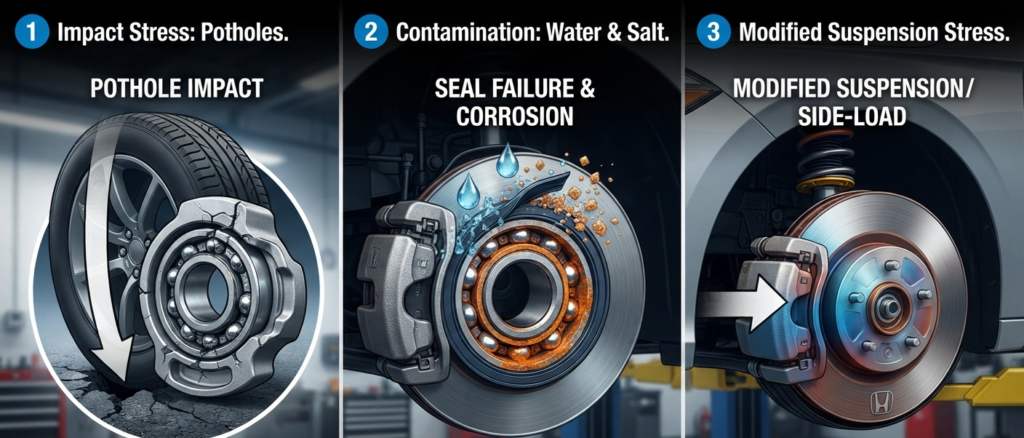
Wheel bearings carry the massive weight of your vehicle while allowing the wheels to spin freely. They endure constant friction and heavy loads every single day.
Potholes and rough road surfaces put severe impact stress on these precision parts. Hitting a deep pothole damages the microscopic steel balls and raceways inside the bearing assembly.
Modified suspension setups add even more stress. Lowered springs and aftermarket coilovers change the factory suspension geometry and increase side load forces.
Water, dirt, and winter road salt can also slip past worn rubber seals. Once moisture breaches the seal, it washes away the specialized grease and causes rapid rust formation.
Top Symptoms of a Bad Honda Civic Wheel Bearing
The Highway Hum and Growl
A failing bearing always announces itself through a distinct acoustic signature. The sound usually starts as a faint hum around 35 miles per hour.
As you accelerate to highway speeds, the noise grows progressively louder. It turns into a deep, aggressive growl that rises and falls directly with your vehicle speed, not your engine RPM.
The Cornering Test
Weight transfers dynamically from one side of the car to the other during turns. This weight shift helps you isolate which side has failed.
If you make a sharp right turn and the humming noise suddenly intensifies, your left wheel bearing is damaged. Turning left loads up the right side of the vehicle and makes a bad right bearing roar loudly.
Steering Wheel Vibration
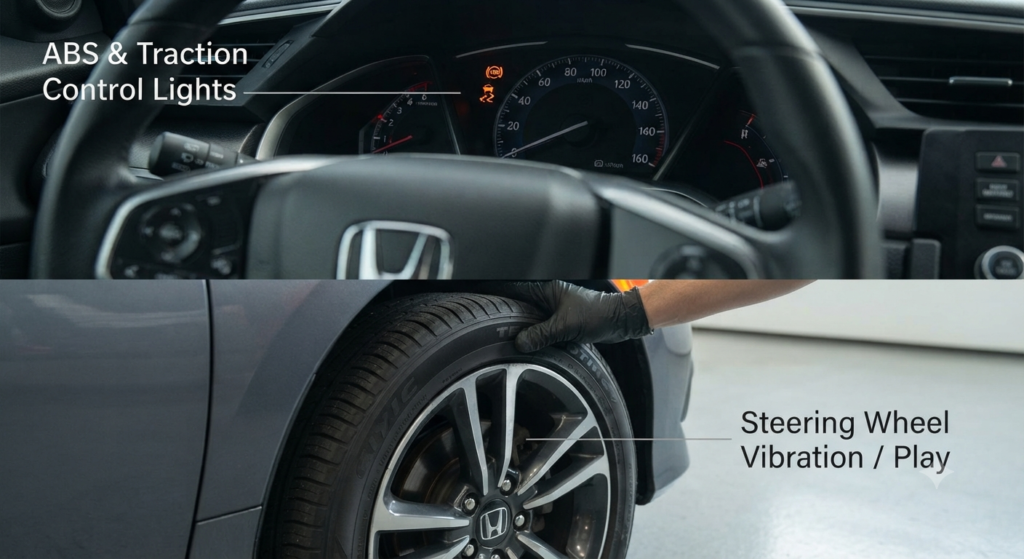
A worn bearing develops microscopic play within its steel housing. This tiny mechanical movement travels directly down through the steering knuckle.
You might feel a mild, constant vibration in the steering wheel at cruising speeds. Your steering may also feel slightly loose or vague when changing lanes.
ABS and Traction Control Dashboard Lights
Modern Honda Civics feature a magnetic encoder ring built straight into the wheel bearing seal. The wheel speed sensor reads this magnetic ring to control your anti-lock braking system.
When the bearing wears out completely, the magnetic ring breaks down. This sudden failure triggers unexpected ABS and traction control warning lights on your dashboard.
How to Confirm a Bad Wheel Bearing at Home
The Jack and Shake Test
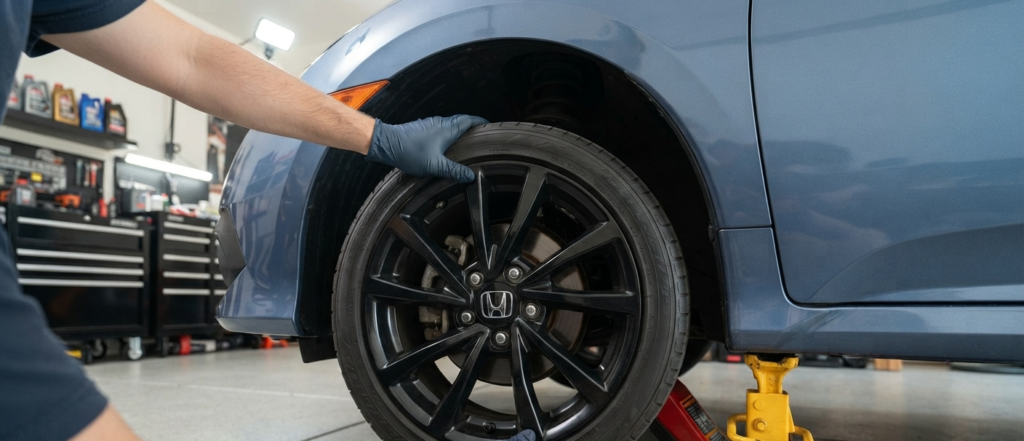
Park your Civic on a completely flat surface and loosen the lug nuts. Lift the front or rear of the car securely using a hydraulic floor jack.
Always support the vehicle with heavy-duty jack stands before crawling underneath. Grab the tire firmly at the twelve o’clock and six o’clock positions.
Rock the wheel back and forth with force. If you feel any loose play or knocking movement, your wheel bearing assembly is worn out.
The Spin Test
Keep the tire elevated safely off the ground. Spin the wheel manually as fast as you can with your hands.
Listen closely near the brake caliper and knuckle area. A healthy bearing spins in total silence.
A bad bearing produces a rough, gritty grinding noise. You may even feel physical vibrations transmitting through your fingertips.
Wheel Bearing vs. Bad Tires vs. CV Axle Noise
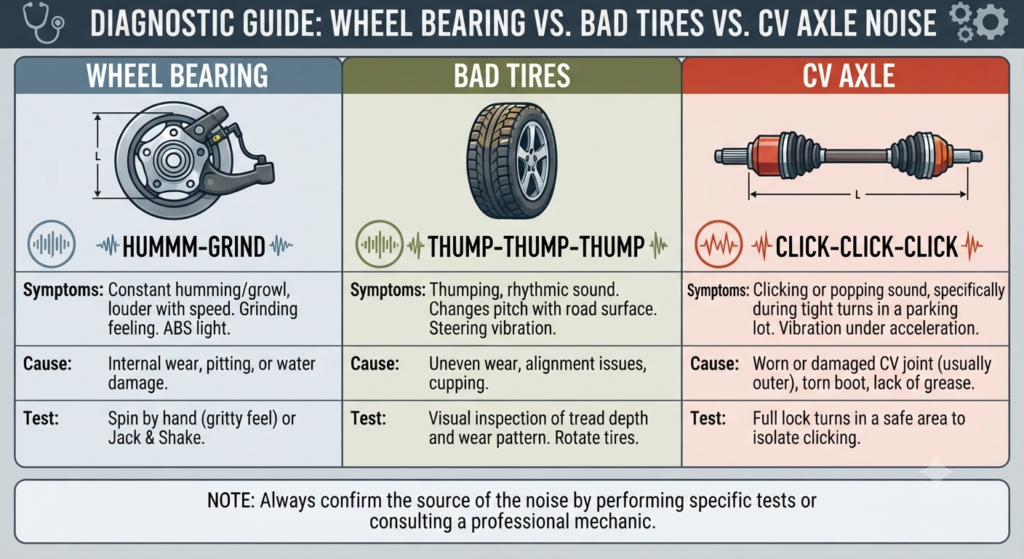
Drivers frequently mistake cupped tire tread for a failing wheel bearing. Cupped tires produce a rhythmic thumping sound that changes tone based on the road surface texture.
Spinning your tires by hand exposes tire noise differences instantly. Tires never grind or roar like a damaged steel bearing race.
Constant velocity axle problems sound completely different from wheel bearings. A bad CV axle generates a sharp clicking or popping sound only when you make tight turns in a parking lot.
Wheel bearings make a continuous humming sound that grows louder at high speeds while driving in a straight line.
Replacement Guide: OEM vs. Aftermarket Parts
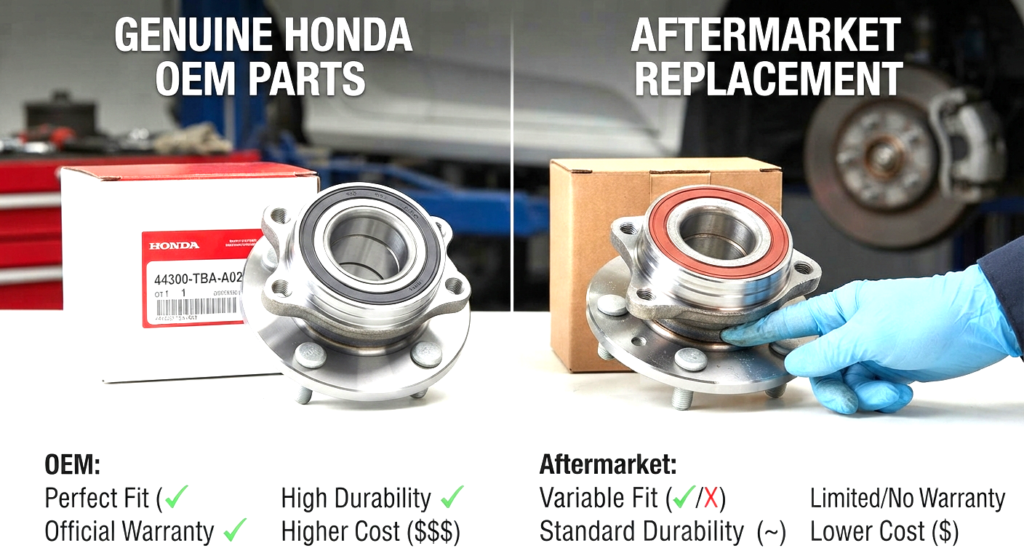
Choosing the correct replacement part ensures long-term durability and safety. Cheap budget aftermarket wheel hubs often feature low-quality rubber seals.
These inferior parts fail quickly when exposed to rain, mud, and winter road salt. Purchasing reputable OEM or high-end aftermarket brands ensures your steering stays stable for years.
Professional repair shops generally charge between 350 and 600 dollars per side for a complete hub replacement. DIY owners can save significantly on labor costs by using the right tools, including a heavy-duty breaker bar and a calibrated torque wrench.
Conclusion
A noisy wheel bearing is a mechanical warning sign you should never ignore. The persistent humming sound means a vital safety part is wearing down.
Check your vehicle symptoms early to protect your suspension and steering components. Addressing the issue right away ensures your daily commute remains safe, quiet, and reliable.