
Buying a sports car is one of the most exciting milestones in a driver’s life. You get the thrill of high speeds, sharp styling, and total freedom on the open road.
However, many new owners experience a rude awakening when the first insurance bill arrives. A sleek car that looks like a casual weekend cruiser on the outside can carry a massive, unexpected price tag for coverage.
Unlike the Department of Motor Vehicles (DMV), US insurance companies do not use a simple, straightforward rulebook to define a sports car. Instead, they rely on a complex, data-driven risk matrix.
Understanding how national carriers categorize these performance vehicles can save you from a costly financial surprise before you sign on the dotted line.
How US Insurance Companies Define a Sports Car

There is no official “sports car” designation printed on your state DMV registration card. Insurance companies make their own classification choices based purely on statistical risk.
When underwriters look at a vehicle, they inspect specific physical traits:
- Seating Configuration:
Vehicles with two doors and two front bucket seats instantly trigger a sports car profile in pricing algorithms. - The 2+2 Layout:
Coupes featuring a tiny, almost unusable back seat often get lumped into the sports car category because their design focuses on speed rather than family practicality. - Body Styles:
Soft tops, hardtop convertibles, and roadsters face strict scrutiny. Underwriters assume these designs offer less structural protection during a severe rollover.
The Technical Specs That Trigger Higher Rates

Physical appearance is only half the battle. Insurance underwriters also dive deep into the mechanical specs of every single model.
Engine size and cylinder counts play a massive role. A V6 or V8 engine immediately signals high-speed potential and aggressive driving habits to an insurer.
Forced induction systems like turbochargers and superchargers also raise red flags. These performance add-ons let smaller engines deliver massive, sudden bursts of acceleration.
Insurers closely track power-to-weight ratios, too. A lightweight car packed with high horsepower reaches dangerous speeds much faster than a heavy family sedan, which increases the statistical likelihood of severe accidents.
The Gray Area: When Ordinary Cars Are Classified as Sports Cars

Many buyers assume that if a car has four doors and a normal trunk, it qualifies as a standard commuter sedan. Insurance companies often disagree.
Automakers frequently release high-performance trims of everyday commuter cars. A sporty hatchback or a standard sedan equipped with a factory performance package carries the hidden mechanical DNA of a sports car.
Rating algorithms don’t just look at the marketing name; they check the exact factory trim level down to the last digit using the Vehicle Identification Number (VIN). You can’t hide high-performance capabilities behind a mild-mannered body style or a subtle paint job.
Why Insurance Companies View Sports Cars as High Risk
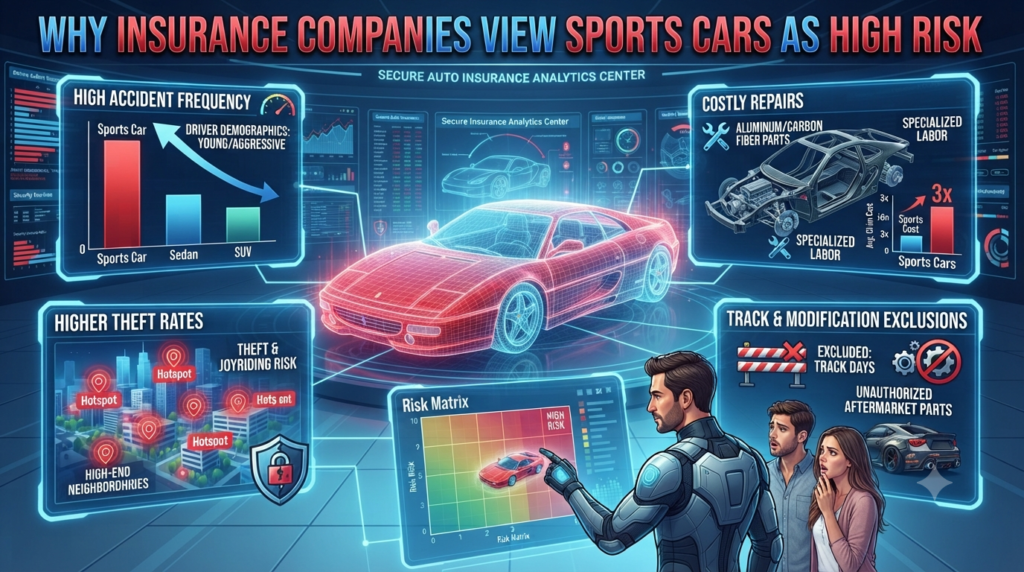
Auto insurers don’t charge higher rates out of malice. Their pricing models rely strictly on historical claims data and math.
- Higher Repair Costs:
Sports cars feature lightweight aluminum frames, specialized carbon fiber body panels, and high-performance brakes that require expert labor and expensive OEM parts. - Theft Rates:
Sleek, high-profile sports cars face a much higher risk of theft, joyriding, and parking lot vandalism compared to standard commuter crossovers. - Driver Demographics:
Statistics show that high-performance vehicles attract younger or more aggressive drivers, leading to a much higher frequency of high-speed accidents.
The Aftermarket Modification Trap

Many owners love customizing their vehicles to boost performance and looks. However, installing aftermarket parts can completely change your insurance situation overnight.
Adding custom body kits, performance exhausts, or engine tuning chips alters the vehicle’s risk profile. Standard auto insurance policies are specifically built to cover factory-stock vehicles.
If your modified sports car is damaged in a collision, a standard policy will only pay to replace factory-standard parts. You will be stuck paying out-of-pocket for any custom upgrades unless you buy specialized endorsements. Always declare your modifications to your provider.
Track Days and Racing Exclusions

Owning a sports car often tempts drivers to test its limits on a closed-circuit racetrack. But keep in mind: standard auto insurance policies feature strict, unyielding exclusions for competitive driving.
If you take your car to a local track day or a timed racing event, your personal auto insurance will not cover any physical damage. Drivers participating in High-Performance Driver Education (HPDE) events need specialized, short-term track day insurance to stay protected.
Understanding Driver History and Insurance Scoring

Your personal driving record plays a massive role in how carriers price sports car coverage. Before issuing a policy, insurers check your motor vehicle report.
Even minor speeding tickets or past fender-benders can cause your sports car quote to skyrocket. Because insurers already view high-performance cars as a liability, they have zero tolerance for a shaky driving history. Maintaining a clean record for three to five years helps offset this baseline risk.
How to Lower Your Sports Car Insurance Premiums

Owning a high-performance vehicle doesn’t mean you have to go broke paying for coverage. You can keep your costs manageable with a few smart strategies:
- Shop Around:
Look into specialty insurance carriers that cater specifically to enthusiast vehicles. They often offer much better rates than standard national insurers. - Adjust Deductibles:
Raising your collision and comprehensive deductibles lowers your monthly premium, as long as you keep cash saved for emergencies. - Take Defensive Driving Courses:
Enrolling in advanced driving classes or opting for telematics tracking devices proves your responsible driving habits to the insurer.
Conclusion
Classifying a sports car for insurance purposes isn’t just about a fancy vehicle badge it’s about horsepower, structural design, and underwriting risk.
Always run a complete VIN check and secure verified insurance quotes before finalizing your next car purchase. By balancing your passion for performance with smart financial prep, you can enjoy the open road without any unexpected insurance stress.