
Picture this: you are heading to work on a crisp morning, everything is smooth, and suddenly boom the check engine light pops on. You plug in your OBD2 scanner, and it spits out a confusing error code about your oxygen sensor.
If you drive a Honda Civic, you are definitely not alone. O2 sensor issues are super common, and they can mess with everything from your daily fuel economy to how your engine performs. Ignoring a failing sensor might not seem like a big deal at first, but it can easily ruin your catalytic converter and stick you with a massive repair bill down the road.
Let’s break down the exact symptoms, error codes, and steps you need to handle this like a pro.
What Does a Honda Civic Oxygen Sensor Actually Do?
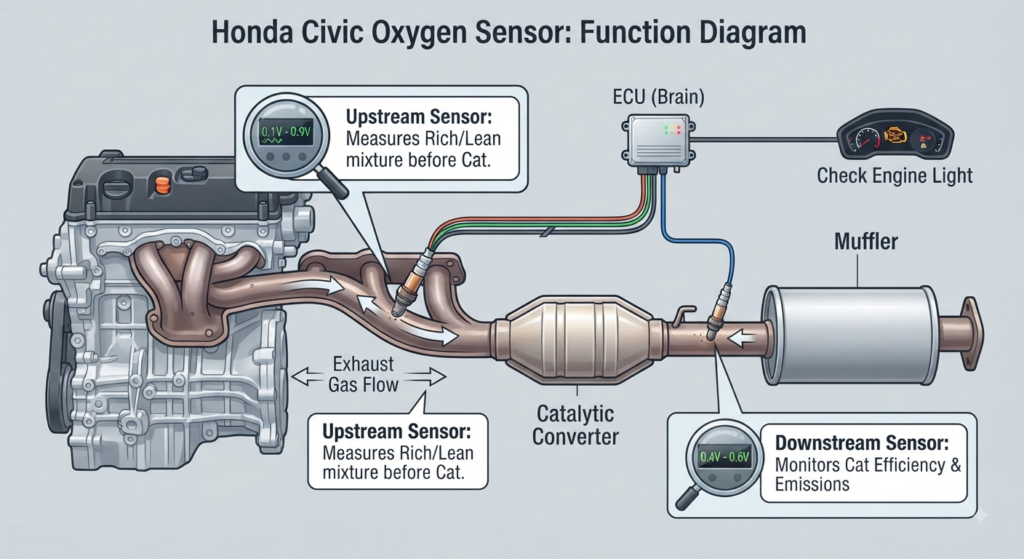
Your Civic relies on a very precise balance of air and fuel to run efficiently. Oxygen sensors are placed directly inside the exhaust system to measure unburnt oxygen, sending real-time voltage signals straight to your engine control unit (ECU).
Most Civics feature two main sensors:
- Upstream Sensor: Located right before the catalytic converter on the exhaust manifold or downpipe. It keeps an eye on the air-fuel mixture entering the engine and adjusts fuel delivery on the fly.
- Downstream Sensor: Located after the catalytic converter. This one measures how well the cat is doing its job of cleaning up harmful emissions before they hit the tailpipe.
Top 6 Symptoms of a Bad Honda Civic Oxygen Sensor
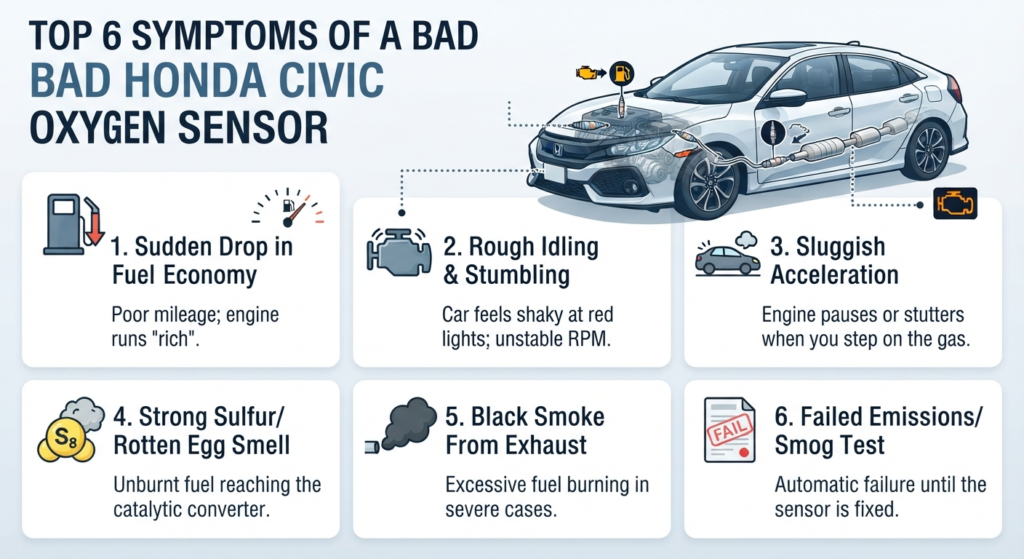
When an oxygen sensor goes bad, your car’s computer loses its ability to regulate fuel properly. Here are the major warning signs to watch out for:
1. Sudden Drop in Fuel Economy
Notice yourself pulling into the gas station way more often? A failing sensor feeds bad data to the computer, often forcing the engine to run “rich” and burn way more gas than it actually needs.
2. Rough Idling and Engine Stumbling
Does your Civic feel shaky or unstable when you come to a red light? If the air-fuel balance is totally off, your engine will struggle to stay smooth, causing RPM dips and a bumpy idle.
3. Sluggish Acceleration and Hesitation
When you step on the gas, does the car pause or stutter before finally moving? Because the sensor data is either delayed or totally dead, the engine struggles to find the right power balance.
4. Strong Sulfur or Rotten Egg Smell
An overly rich fuel mixture floods the exhaust system with unburnt gas. This creates a distinct sulfur smell trailing behind your car, meaning raw fuel is reaching your catalytic converter.
5. Black Smoke From the Exhaust
In severe cases, unburnt fuel pours out through the exhaust system. You might notice dark smoke puffing out when you start your car or punch the gas on the highway.
6. Failed Emissions / Smog Test
If your check engine light is glowing because of an O2 sensor, your car will automatically fail state emissions tests until the problem is fixed.
Common Check Engine Codes Related to Civic O2 Sensors
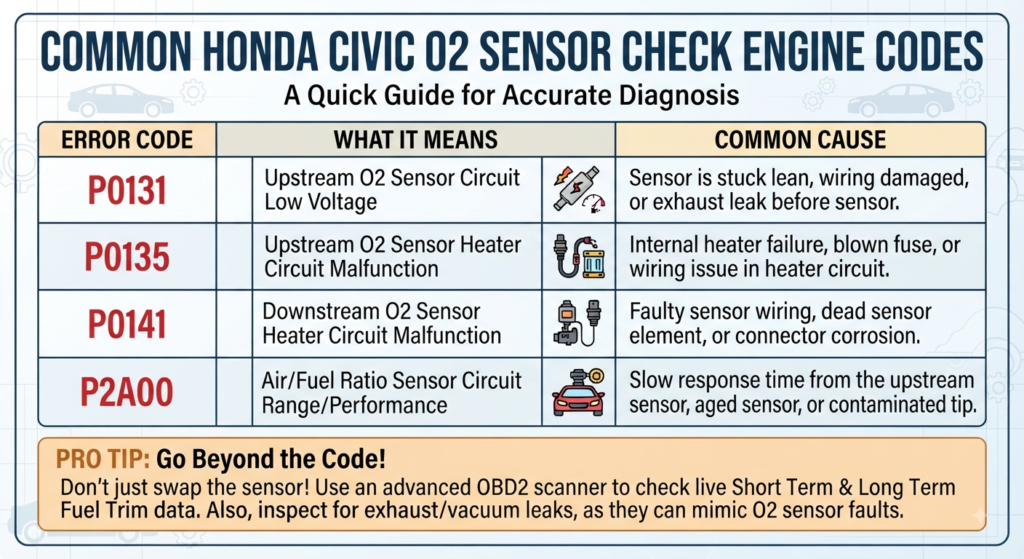
Your OBD2 scanner will usually point you right to the culprit. Here are the most frequent codes you will see on a Honda Civic:
| Error Code | What It Means | Common Cause |
| P0131 | Upstream O2 Sensor Circuit Low Voltage | Sensor is stuck lean or wiring is damaged. |
| P0135 | Upstream O2 Sensor Heater Circuit Malfunction | Internal heater failure or a blown fuse. |
| P0141 | Downstream O2 Sensor Heater Circuit Malfunction | Faulty sensor wiring or a dead sensor element. |
| P2A00 | Air/Fuel Ratio Sensor Circuit Range Performance | Slow response time from the upstream sensor. |
Pro Tip: Advanced Diagnosis Using Live OBD2 Data
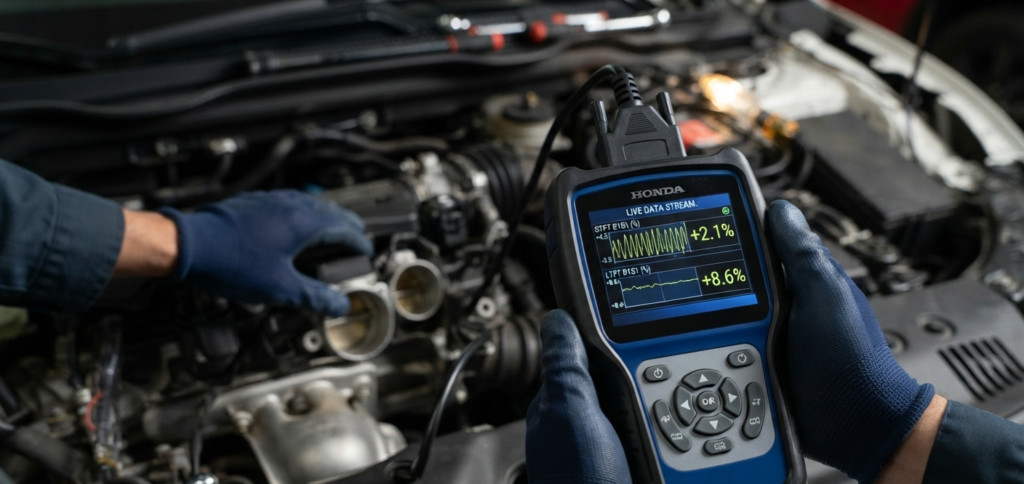
Don’t just buy a new sensor based purely on the code. Take a minute to plug in an advanced OBD2 scanner and check your live data values first.
Take a look at your Short Term Fuel Trim and Long Term Fuel Trim numbers. If those numbers are swinging wildly to their maximum positive or negative limits, your sensor is almost certainly dead.
Also, always check for vacuum or exhaust leaks before spending money on parts. A cracked exhaust manifold near your upstream sensor can trick the computer into throwing an O2 code, even when the sensor itself is completely fine.
Step-by-Step DIY Replacement Guide
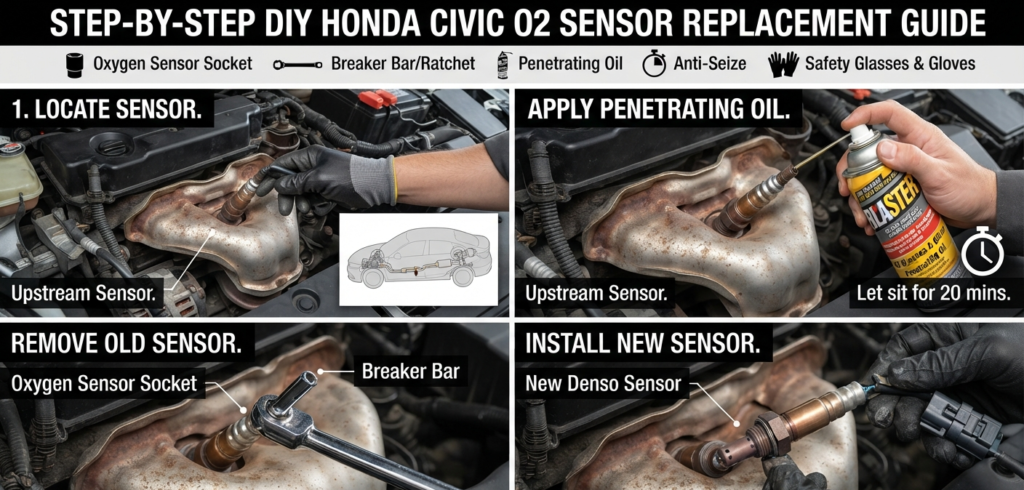
Swapping out a Honda Civic oxygen sensor is a very manageable DIY project if you have the right patience and tools.
Tools You Will Need:
- Oxygen sensor socket (the one with a slot for the wires)
- Breaker bar or standard ratchet
- Penetrating oil (like PB Blaster)
- Anti-seize lubricant
- Safety glasses and heavy-duty work gloves
Replacement Steps:
- Locate the Sensor:
Find your faulty upstream or downstream sensor along the exhaust pipe. - Apply Penetrating Oil:
If the sensor is rusted tight, spray the threads with penetrating oil and let it sit for about 20 minutes to break the rust. - Disconnect the Wiring:
Carefully unclip the electrical wiring harness connector without snapping the plastic tabs. - Remove the Old Sensor:
Slide your oxygen sensor socket over the part and use your breaker bar to loosen it counter clockwise. - Prepare the New Sensor:
Put a tiny dab of anti-seize compound on the threads of the new sensor. Be super careful not to get any grease on the sensor tip! - Install the New Sensor:
Thread the new sensor in by hand first to avoid cross-threading, then snug it down securely with your socket. - Reconnect and Clear Codes:
Plug the wiring harness back in, fire up your car, and use your OBD2 scanner to clear out the check engine light.
A Crucial Warning: Why Brand Matters for Hondas
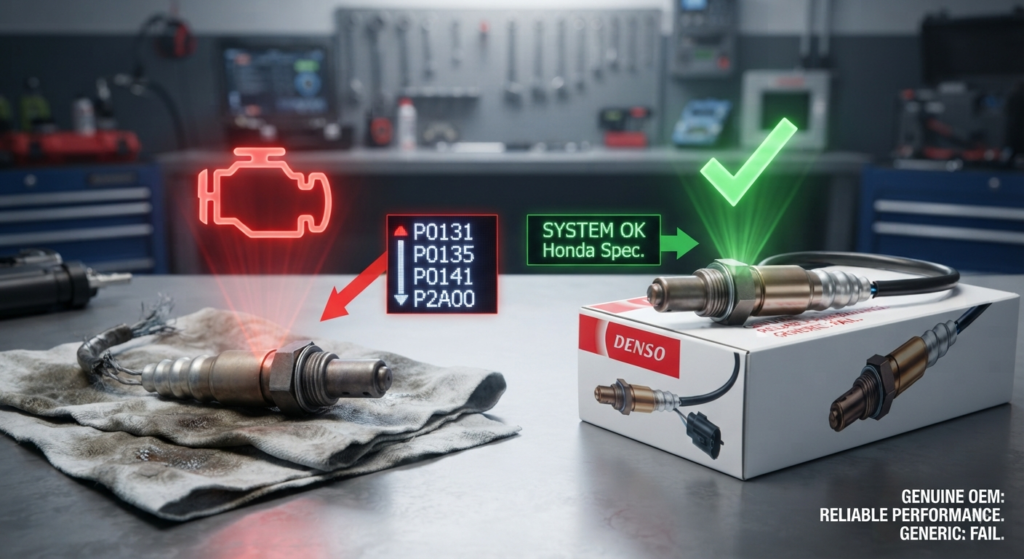
Honda Civics are notoriously picky about electronics. A lot of owners try to save a quick buck by buying cheap, unbranded universal oxygen sensors online.
Spoiler alert: These budget sensors almost always trigger a persistent check engine light within a few weeks. Always stick to trusted OEM suppliers like Denso or NTK to ensure long-term reliability and proper engine performance.
How to Prevent Future Sensor Failures
Taking good care of your Civic engine goes a long way in keeping your sensors healthy. Use good-quality fuel to prevent carbon build up on the sensor tips. Fix engine misfires immediately unburnt oil or coolant from a failing head gasket will ruin a brand-new oxygen sensor instantly. Routine tune-ups keep your engine running clean and drastically extend the lifespan of your entire exhaust system.