
The Honda Civic is practically a rite of passage in the driving world. Mention a Civic to almost any daily commuter, and they’ll likely lean in and tell you a story about a family member who drove one past the 200,000-mile mark without missing a beat.
Hitting that kind of legendary milestone doesn’t happen by accident. Sure, modern engineering makes cars tougher than ever, but neglect will eventually catch up to even the most bulletproof machine on the market.
Knowing how to spot early distress signals, mastering smart maintenance routines, and figuring out when to fix versus replace parts will keep your trusted commuter cruising smoothly for years to come.
The Real Lifespan Expectancy of a Honda Civic Engine
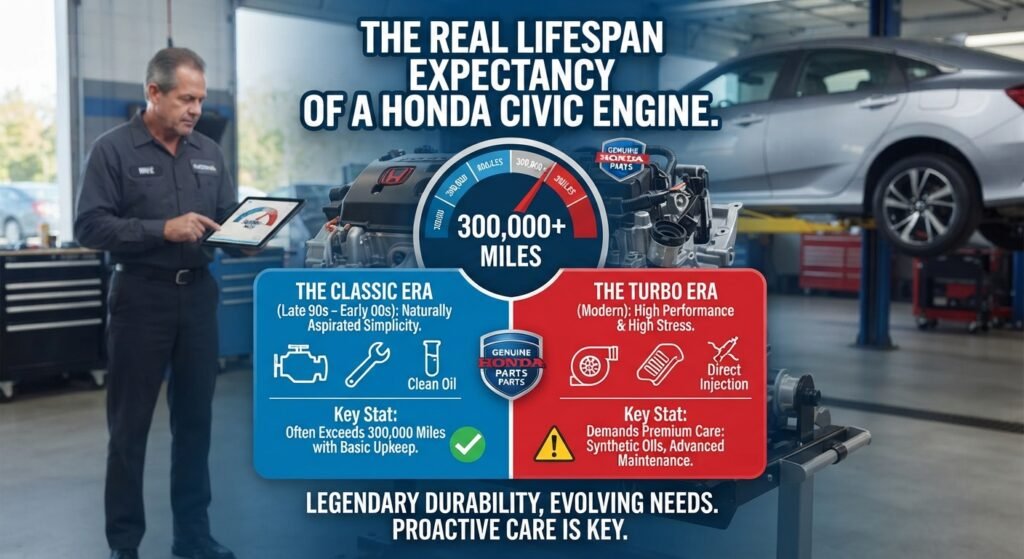
Older Civics from the late ’90s and early 2000s came with naturally aspirated engines that felt virtually indestructible. Those classic blocks frequently sailed past 300,000 miles with basic oil changes and standard upkeep.
Modern Civics, however, are a different breed. Powered by high-tech powerplants like the 1.5-liter turbocharged engine and direct injection fuel systems, they deliver incredible fuel economy and snappy acceleration. But there’s a catch: they operate under much higher internal pressures and thermal stress.
Pushing a modern Civic into high-mileage territory means changing your habits. You simply can’t rely on extended factory oil intervals if you want your engine to outlast its warranty and stay healthy down the road.
Early Warning Signs Your Honda Civic Engine is Struggling

Catching mechanical trouble early can save you thousands of dollars in surprise repair bills. Your car is constantly talking to you through sounds, smells, and subtle shifts in how it drives.
The Cold Start Rattle
Pay close attention to the first ten seconds after firing up your car on a chilly morning. If you hear a brief metallic rattle from under the hood, it’s often a sign of a worn variable valve timing actuator. Ignoring this sound can lead to a stretched timing chain and expensive valve damage down the line.
Subtle Exhaust Smoke Variations
Make a habit of checking your rearview mirror during hard acceleration. A quick puff of blue smoke usually means oil is slipping past worn piston rings or valve stem seals. On the flip side, sweet-smelling white smoke points to coolant leaking into the combustion chamber—a classic warning sign of head gasket fatigue.
Idling Fluctuations and RPM Dips
Does your RPM needle bounce up and down while you’re sitting at a red light? If so, your engine is struggling to regulate air or fuel delivery. This usually traces back to carbon buildup on direct injection intake valves or a dirty throttle body choking off airflow.
Unexplained Fluid Loss
Pop the hood once a month and take a good look around the valve cover gasket and timing chain cover. Catching minor oil seepage early prevents it from turning into a heavy leak that could spell disaster on the highway.
High Mileage Care Blueprint for Honda Civics
Protecting a high-mileage engine requires stepping up your maintenance game. Small tweaks to your service schedule pay massive dividends over time.
Advanced Lubrication Management
Factory oil change intervals are usually tested under ideal lab conditions. Once your Civic passes the 100,000-mile mark, cut those intervals down to every 5,000 miles using high-quality full synthetic oil. This is especially crucial for turbocharged models to prevent oil coking inside delicate turbo bearings.
Cooling System Defense
Aluminum engine blocks absolutely despise overheating. Swap out your radiator hoses, thermostat housing, and coolant every 60,000 miles. A sudden coolant leak can quickly warp your cylinder heads or blow a head gasket, so proactive defense is key.
Fuel System and Direct Injection Health
Direct injection sprays fuel straight into the combustion chamber, completely bypassing the intake valves. Because fuel doesn’t wash over them anymore, these valves are prone to heavy carbon crusting. Scheduling professional intake valve cleanings every 30,000 miles keeps your engine breathing easy.
Drive Belt and Pulley Inspection
Rubber serpentine belts dry out and crack under continuous engine heat. Take a quick look at your accessory drive belt and automatic tensioner pulley during every oil change to avoid getting stranded with a dead alternator or power steering failure.
Transmission Preservation: CVT vs. Traditional Automatic
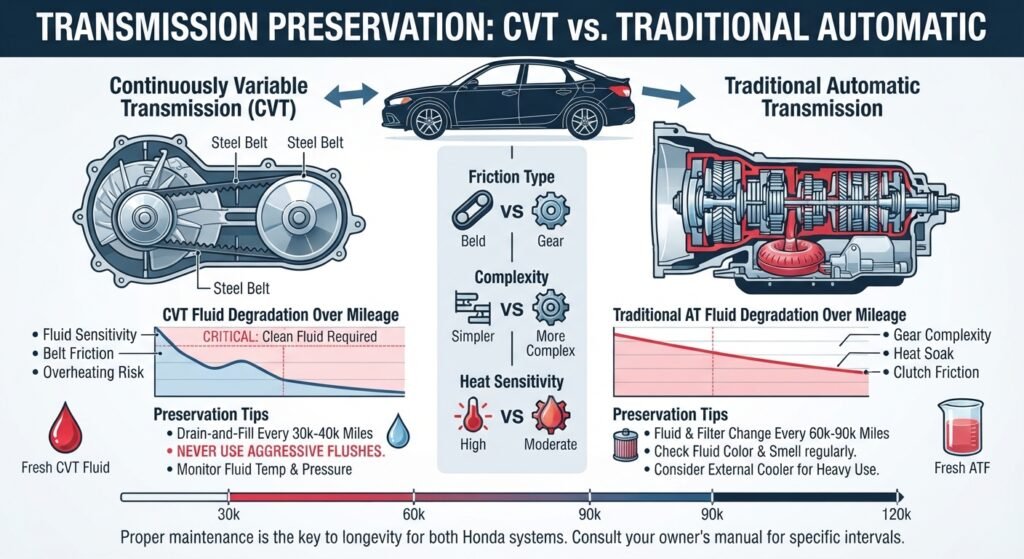
An engine is only as good as the transmission attached to it. Modern Civics rely heavily on Continuously Variable Transmissions (CVTs) or traditional automatics depending on the year.
CVTs work under intense friction and need pristine fluid to survive. Never fall for the marketing myth of “lifetime transmission fluid.”
Do a drain-and-fill service on your CVT every 30,000 to 40,000 miles, and steer clear of aggressive mechanical flushes that can dislodge debris and ruin delicate valve bodies. If your Civic has a manual gearbox, swap the gear oil every 60,000 miles to keep shifts crisp and protect the synchros.
Driving Habits That Maximize Engine Life
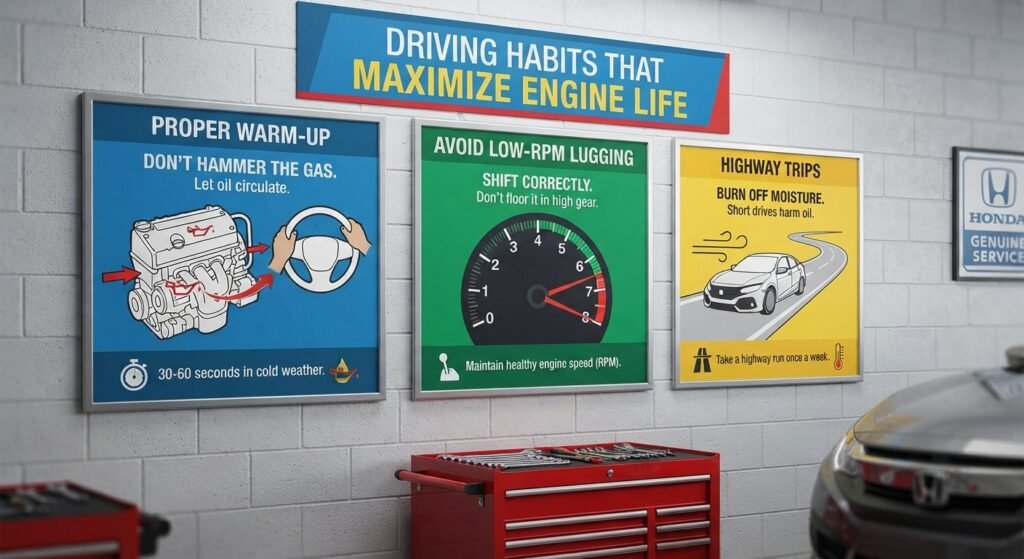
Mechanical maintenance is only half the battle. How you drive your Civic every day plays a massive role in its lifespan:
- Warm Up Properly:
Avoid hammering the gas pedal right after starting your car on freezing mornings. Give the oil pump a minute or two to circulate warm fluid through the turbo and valvetrain. - Avoid Low-RPM Lugging:
If you drive a manual or turbo Civic, don’t floor the throttle while cruising at very low RPMs in a high gear. It puts brutal stress on your connecting rods and bearings. - Take Highway Trips:
Short city drives prevent engines from reaching proper operating temperatures, causing moisture to build up in the oil. Take your Civic out on an open highway run once a week to let everything burn off cleanly.
The High Mileage Financial Crossroads: Repair or Retire?
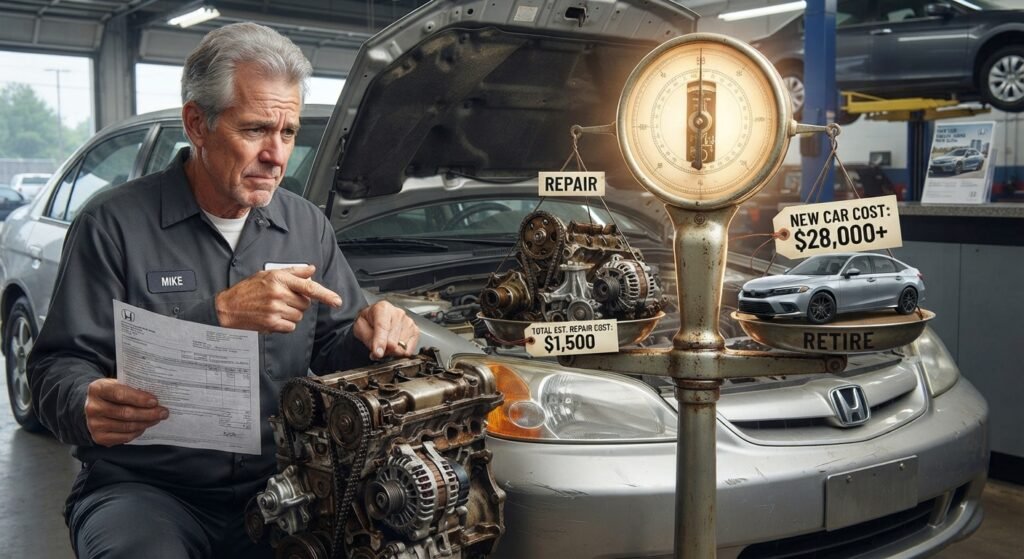
Crossing high milestones eventually brings you to a tough financial crossroads: do you pay for a pricey repair, or is it time to let the car go?
Before you panic and take on a hefty new car payment, take a step back. A $1,500 repair on a solid, well-maintained engine block is almost always cheaper than twelve months of brand-new car financing, higher insurance rates, and extra registration fees.
Investing in suspension parts, alternators, and cooling components keeps your true cost of ownership remarkably low. With a little proactive care, your reliable commuter can easily become a lifelong companion on the open road.
Would you like me to generate a meta description, title tags, or image prompts for this article?