
Introduction
A Honda Civic electric parking brake problem can turn a routine errand into an unexpected headache.
One moment the brake engages and releases like normal. The next, a warning light appears on the dash and the switch stops responding.
This issue is more common than most Civic owners realize, especially on models built after Honda replaced the traditional lever with an electronic switch.
The electric parking brake, often shortened to EPB, relies on a small motor, a control module, and several sensors instead of a simple mechanical cable.
That added complexity brings real convenience, but it also introduces new failure points that a cable-operated brake never had.
A stuck caliper, a dead switch, or a software glitch can all trigger the same frustrating symptom: a brake that will not release or will not hold.
The good news is that most EPB issues on the Civic are fixable without a trip to the dealership.
This guide walks through why the problem happens, how to recognize it early, and the exact steps to resolve it safely at home or in your driveway.
Whether your Civic is stuck with the parking brake engaged or the dash light simply will not turn off, the following sections will help you diagnose the real cause.
Common Symptoms of a Honda Civic Electric Parking Brake Problem
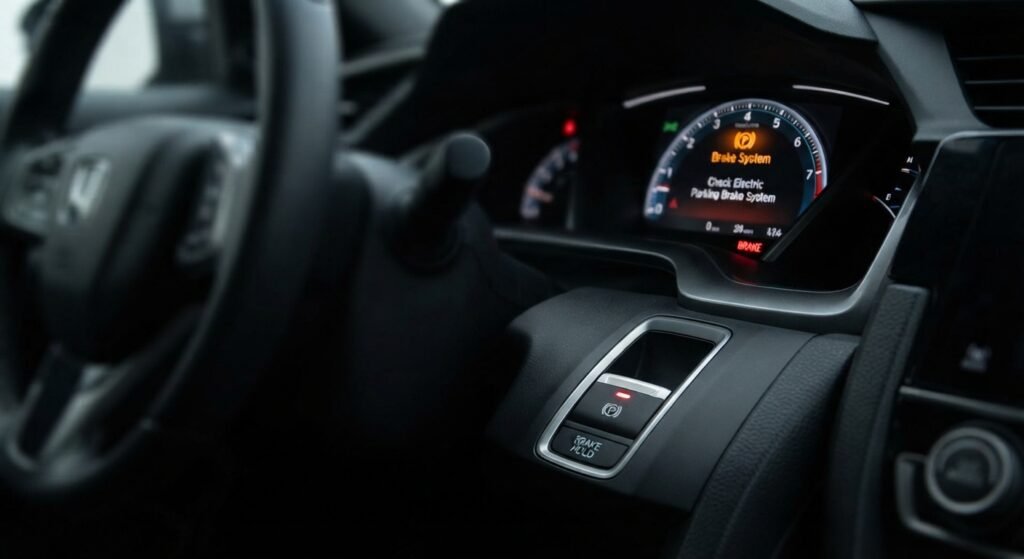
Recognizing the early warning signs saves time and prevents a minor glitch from becoming a bigger repair.
Below are the symptoms Civic owners report most often when the EPB system starts to fail.
Parking Brake Warning Light Stays On
The most obvious sign is a red or amber brake symbol that remains lit after the engine starts.
Sometimes the light flashes instead of staying solid, which usually points to a communication fault between the EPB module and the rest of the car.
Brake Will Not Release
Pressing the release switch does nothing, and the rear wheels stay locked even after starting the car.
This is the most disruptive symptom because it can leave the vehicle undrivable until it is resolved.
Brake Will Not Engage
Pulling the switch to set the parking brake produces no clicking sound, no motor noise, and no resistance at the rear wheels.
This often points to a fuse issue or a worn switch rather than a mechanical failure at the caliper.
Grinding or Clicking Noises from the Rear
A faint grinding or repeated clicking near the rear wheels usually means the actuator motor is trying to move but cannot complete its cycle.
This can happen when brake pad debris or corrosion blocks the caliper piston.
Dashboard Alerts and Chimes
Many Civic trims pair the EPB warning with an audible chime or a secondary message in the driver information display.
These alerts are the car’s way of flagging a fault code even before the brake becomes fully unusable.
Delayed Response When Braking or Releasing
Some drivers notice a lag of a second or two between pressing the switch and feeling the brake respond.
A delay like this is often an early symptom that appears before a full failure sets in.
Brake Pedal Feels Different
Because the EPB shares hydraulic components with the main braking system on some Civic models, a failing actuator can occasionally affect pedal feel.
If the pedal feels spongy alongside any of the symptoms above, treat the issue as a priority rather than a minor annoyance.
What Causes Electric Parking Brake Problems in the Honda Civic
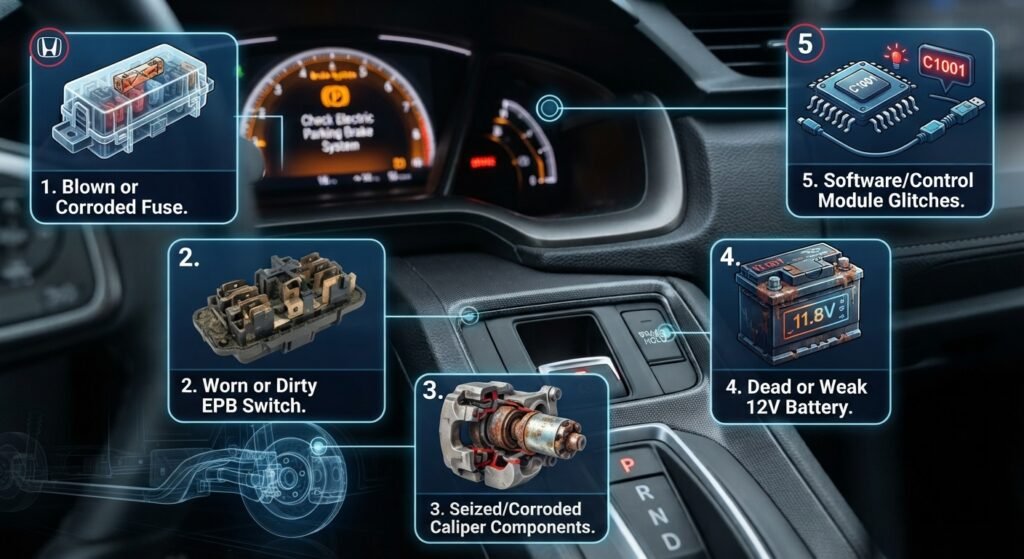
EPB failures usually trace back to one of five root causes.
Understanding which one applies to your Civic makes the repair process much faster.
1. A Blown or Corroded Fuse
The EPB motor and control module draw power through a dedicated fuse in the underhood or interior fuse box.
A blown fuse cuts power instantly, so the brake will neither release nor engage, and the dash light usually comes on right away.
Corrosion inside the fuse box can create the same effect even when the fuse itself looks fine.
2. A Worn or Dirty EPB Switch
The small toggle switch on the center console sees constant use and collects dust, moisture, and grime over time.
Once enough debris builds up under the switch contacts, the signal to the control module becomes unreliable or stops altogether.
3. Seized or Corroded Caliper Components
Rear calipers on EPB-equipped Civics contain a small motor that threads the piston in and out.
Road salt, moisture, and age can cause the piston or the actuator spindle to seize, which stalls the motor mid-cycle.
4. A Dead or Weak 12-Volt Battery
The EPB module needs stable voltage to complete its release and engagement cycles.
A weak battery or a bad ground connection can cause the system to fault out and lock down as a safety precaution.
5. Software or Control Module Glitches
Like any computer-controlled system, the EPB module can occasionally freeze or misread a sensor signal.
This is more common after a battery disconnect, a jump start, or an incomplete software update.
Step-by-Step Fixes for a Honda Civic Electric Parking Brake
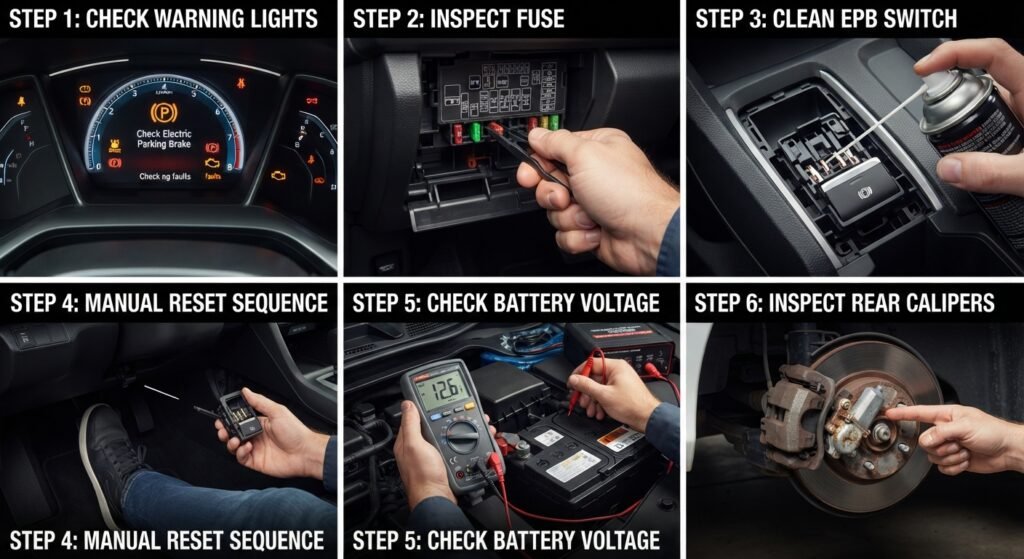
Work through these steps in order. Most Civic owners resolve the issue within the first three steps.
Step 1: Check the Dashboard for Additional Warning Lights
Before touching any components, note every warning light on the cluster, not just the brake symbol.
A low battery light or an ABS light alongside the EPB warning points you straight to the electrical system rather than the caliper.
Step 2: Inspect and Replace the Fuse
- Locate the fuse box diagram in your owner’s manual or on the inside of the fuse box cover.
- Find the fuse labeled for the parking brake or EPB system.
- Pull the fuse and check the thin metal strip inside for a visible break.
- Replace it with a new fuse of the identical amperage rating.
- Turn the ignition on and test the switch before starting the engine.
If the brake responds normally after this step, the problem is solved.
Step 3: Clean the EPB Switch
- Turn off the ignition and remove the switch panel from the center console using a trim tool.
- Disconnect the electrical connector on the back of the switch.
- Spray a small amount of electrical contact cleaner into the switch housing.
- Move the toggle back and forth several times to work the cleaner into the contacts.
- Let it dry for a few minutes, then reconnect and reinstall the switch.
This single step resolves a large share of intermittent EPB complaints.
Step 4: Perform a Manual Reset Sequence
Honda builds a simple reset procedure into most Civic models with EPB.
- Turn the ignition to the on position without starting the engine.
- Press and hold the brake pedal firmly.
- Press and hold the EPB switch in the release direction for about ten seconds.
- Release both the pedal and the switch at the same time.
- Start the engine and test the parking brake through a full engage and release cycle.
This reset clears minor faults in the control module without needing a scan tool.
Step 5: Check the Battery and Charging System
Test the battery voltage with a multimeter, both with the engine off and running.
A reading below 12.4 volts at rest often means the battery is too weak to run the EPB system reliably.
Charge or replace the battery, then repeat the reset sequence from Step 4.
Step 6: Inspect the Rear Calipers
If the switch, fuse, and battery all check out, the actuator motor inside the caliper may be seized.
Listen closely at each rear wheel while a second person operates the switch.
A motor that hums but does not move the piston usually needs caliper replacement rather than a repair.
This section covers one of the most expensive mistakes a DIY mechanic can make on an EPB-equipped Civic.
Why Maintenance Mode Matters
Replacing rear brake pads on a Civic with EPB requires retracting the caliper piston with the motor still connected.
If the piston is pushed back without first putting the system into maintenance mode, the actuator motor can be damaged instantly.
A damaged actuator often means replacing the entire caliper, which turns a simple pad swap into a much larger repair bill.
How to Enter Maintenance Mode
Most Civic models use a version of this sequence, though exact steps vary slightly by model year.
- Turn the ignition on without starting the engine.
- Press and hold the brake pedal.
- Press and hold the EPB switch until the dash confirms maintenance mode, often shown as a flashing brake icon.
- Confirm the mode is active before removing any caliper hardware.
Always confirm the exact sequence for your specific model year in the factory service manual before starting.
Exiting Maintenance Mode Safely
Once new pads are installed, the system must be taken out of maintenance mode before the car is driven.
Skipping this step can leave the parking brake unresponsive or cause the motor to recalibrate incorrectly.
When to Seek Professional Repair
Some EPB problems go beyond what a fuse swap or switch cleaning can fix.
Knowing when to hand the job to a professional protects both your safety and your wallet.
Reading OBD2 Diagnostic Codes
A code reader that supports body or chassis systems, not just the engine, can pull EPB-specific fault codes.
Codes in the C1 or B1 range typically point to the parking brake module, while U-series codes point to a communication problem between modules.
A generic engine-only scanner will often miss these codes entirely, which is why many owners believe the car has no stored faults.
Signs You Need a Shop Visit
- The reset sequence fails to clear the warning light after multiple attempts.
- The actuator motor makes noise but never completes its cycle.
- Fault codes point to the control module itself rather than a switch or sensor.
- The brake engages or releases unevenly between the left and right rear wheels.
A qualified technician can bench test the actuator and module to confirm whether replacement is truly necessary.
Frequently Asked Questions
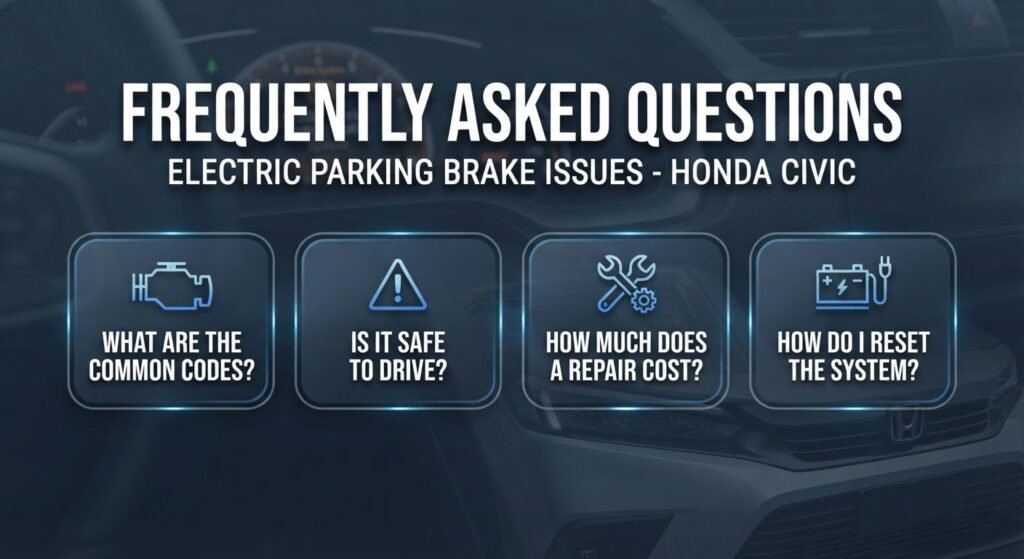
Can I drive with the electric parking brake light on?
Driving short distances is usually safe if the light is simply an alert rather than a stuck brake.
However, you should diagnose the cause quickly, since a stuck caliper can wear down a brake pad in a matter of miles.
How much does it cost to fix a Honda Civic EPB problem?
A fuse or switch repair typically costs very little if done at home.
A full caliper replacement at a shop can run several hundred dollars per side, depending on labor rates in your area.
Can I release the parking brake manually in an emergency?
Yes. Most Civic models include a manual release cable or bolt near the rear caliper, described in the owner’s manual.
This is meant for emergencies only and should not replace a proper repair.
Does disconnecting the battery reset the EPB system?
Disconnecting the battery can sometimes clear a minor glitch, but it also risks leaving the caliper piston in an unknown position.
The manual reset sequence described earlier is a safer first option.
Is the electric parking brake covered under warranty?
Many EPB components are covered under Honda’s standard new vehicle warranty if the Civic is still within its coverage period.
Check your specific warranty documents or contact a Honda dealer to confirm coverage for your model year.