
The Honda Civic Type R FL5 is an absolute powerhouse of front-wheel-drive engineering. It dominates twisty mountain passes, carves through corners with razor-sharp precision, and lays down blistering lap times straight out of the box.
However, taking this high-performance machine onto a closed racing circuit exposes it to extreme thermal loads. Drivers quickly realize that factory components face intense stress under heavy track conditions. If you want to push your limits on track day, consumable parts vanish fast and understanding brake pad wear is essential to keeping your car safe, fast, and reliable.
Why the FL5 Civic Type R Eats Brake Pads on Track
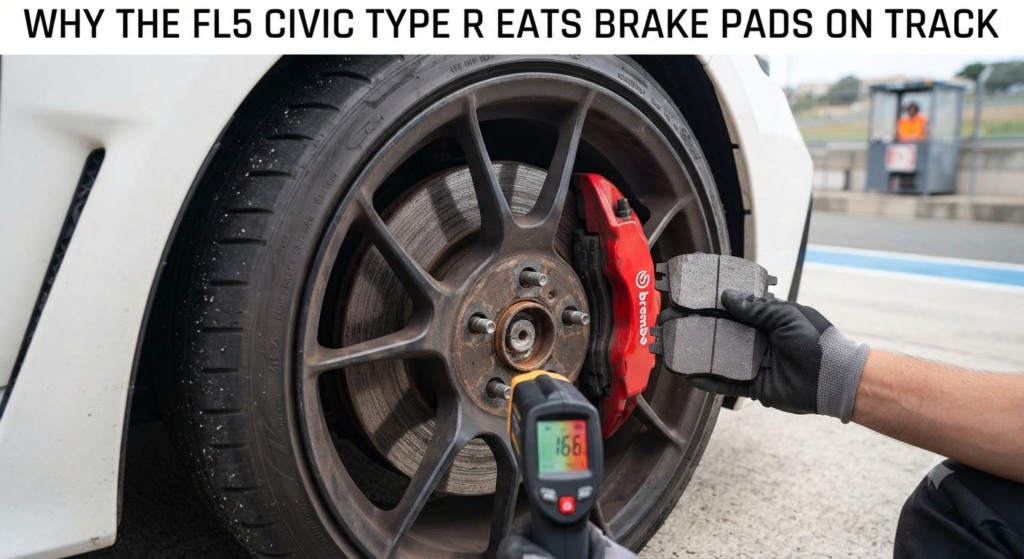
1. The Stock Limitation
The factory Brembo braking system is incredible for spirited street driving and aggressive canyon runs. Honda designed the stock pads to bite hard from a cold start while keeping dust and noise low for everyday use.
Unfortunately, those street-oriented friction materials are simply not built for continuous, high-speed deceleration. When you hammer the brakes from 130 mph down to 40 mph lap after lap, temperatures skyrocket in seconds. The factory compound breaks down rapidly, causing accelerated wear, uneven thickness, and dangerous brake fade when you need stopping power the most.
2. Heat Management Issues
Track driving converts massive amounts of kinetic energy into extreme thermal energy. As your brake rotors glow a dull orange in the twilight, that intense heat transfers directly into the brake pads and caliper pistons.
When stock street pads exceed their maximum operating temperature, they begin to glaze over. Glazed pads lose their initial bite, forcing you to mash the pedal harder just to achieve the same deceleration. This vicious cycle generates even more surface heat, eventually leading to severe pad taper or crumbling friction material right down to the metal backing plates.
3. Torque Vectoring Impact
The FL5 features advanced electronic safety systems and brake-based agility aids. During hard cornering, the car uses subtle rear braking inputs to help rotate the chassis through tight apexes. While this makes the car handle like a dream, it means your rear brakes work overtime. You will likely find your rear pads wearing down much faster than expected compared to older-generation front-wheel-drive performance platforms.
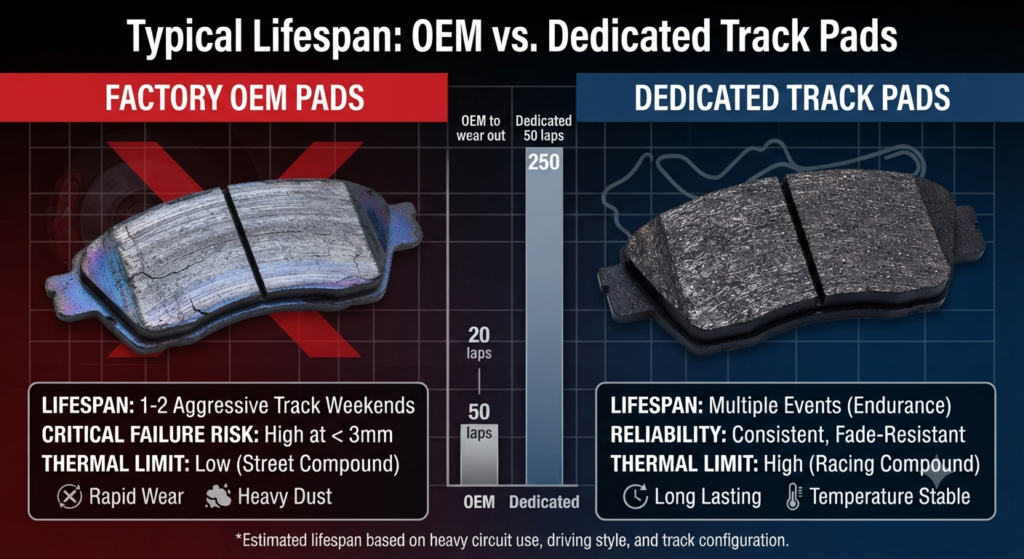
Typical Lifespan: OEM vs. Dedicated Track Pads
The OEM Reality Check
If you run factory brake pads during a high-speed track day at a heavy circuit, expect them to vanish astonishingly fast. Many drivers report burning through a brand-new set of OEM front pads in just one or two aggressive weekend events.
Continuing to run worn factory pads on track is dangerous. Once the friction material drops below 3 millimeters, the structural integrity weakens, and the risk of cracking or complete material separation multiplies exponentially.
Aftermarket Endurance
Switching to dedicated semi-metallic or carbon-metallic track pads changes the game entirely. These specialized compounds thrive under extreme heat and heavy pedal pressure.
While they might squeal loudly and throw dark dust on your drive to work, they maintain a firm, reliable pedal feel lap after lap. A good set of endurance track pads easily survives multiple heavy track weekends, saving you both time and money.
The Cost Factor
Investing in proper track pads upfront protects your expensive factory rotors from destructive metal-on-metal contact. Replacing ruined, scored brake rotors costs significantly more than buying a quality set of dedicated track pads before your event. Think of high-temperature brake pads as cheap, highly effective insurance for your entire braking system.
Top Brake Pad Upgrades for FL5 Track Enthusiasts
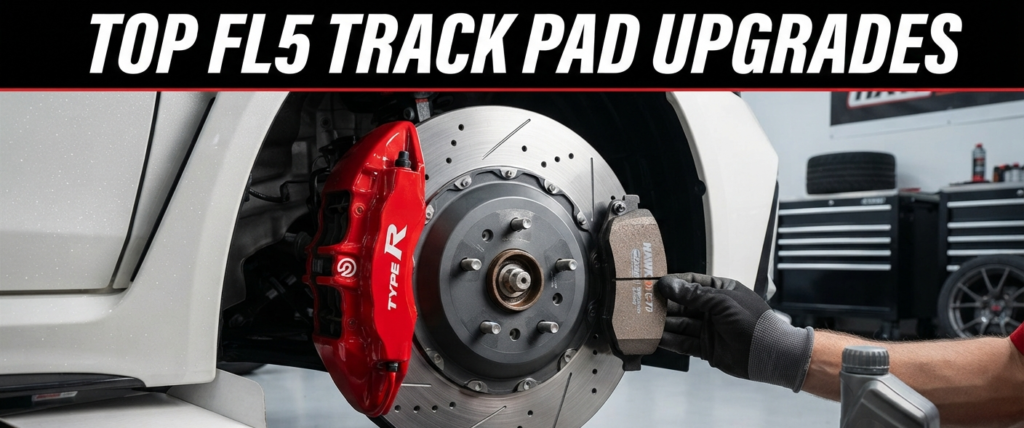
- Front Axle Champions:
Look to proven aftermarket options from brands like Hawk, Paragon, and Endless. Compounds like the Hawk DTC series or equivalent endurance track pads provide massive initial bite and consistent release characteristics, giving you the confidence to brake later and harder into every corner. - Rear Axle Balance:
Never upgrade your front brakes without addressing the rear. Upgrading only the front pads shifts the brake bias too far forward, causing unstable rear-end be havior under heavy trail braking. Always match your front track pads with a compatible rear compound from the same manufacturer to maintain neutral chassis balance. - Fluid Pairing:
Even the best brake pads are useless if your brake fluid boils. Factory fluid absorbs moisture over time and has a relatively low boiling point, leading to a mushy pedal mid-corner. Always flush your system with a high-temperature racing fluid like Castrol SRF or Motul RBF700 before hitting the track.
Step-by-Step Guide to Managing and Changing FL5 Track Pads
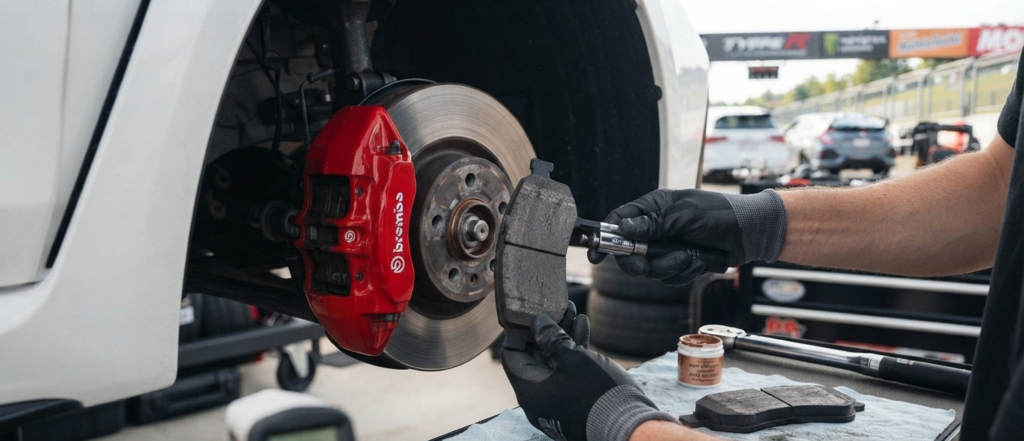
- The Service Mode Requirement:
The rear brake calipers feature an integrated electronic parking brake motor. Trying to compress the rear pistons manually without disengaging this system will destroy the internal mechanisms. You must use an OBD2 scan tool or enter the dashboard service mode to retract the electronic parking brake completely before starting your pad swap. - Quick Swap Advantage:
The front Brembo calipers are a mechanic’s dream. They feature a simple pin and spring retainer design that requires zero complex bolt removal. You can swap your front track pads trackside in less than twenty minutes using basic hand tools. Many enthusiasts drive to the track on comfortable street pads, swap to track pads in the paddock, and reverse the process before driving home. - Bedding-In Procedure:
Once your new track pads are installed, you must bed them in properly. Find a safe stretch of road or track and perform a series of moderate slowdowns from 60 mph down to 20 mph. Do not come to a complete stop while the brakes are glowing hot. This process transfers an even layer of pad material onto the rotor face, preventing vibrations and maximizing stopping power.
Expert Tips to Maximize Pad Life and Prevent Failure
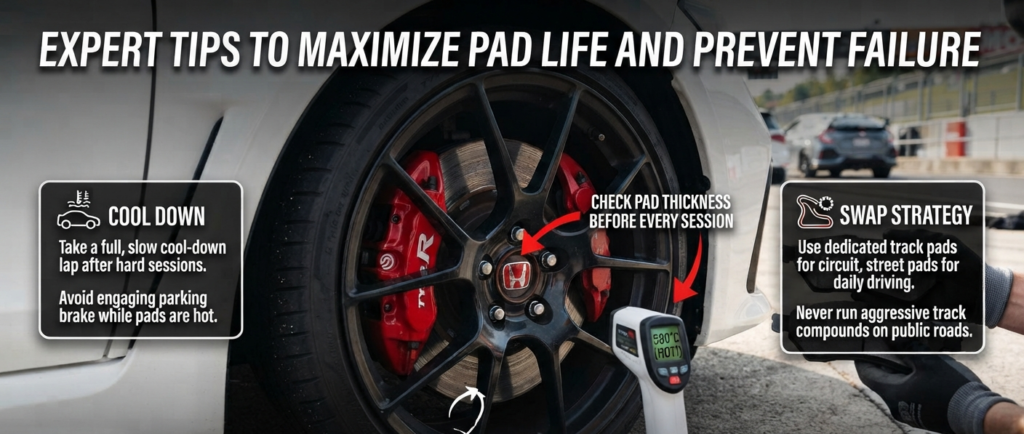
- Cool Down Laps:
Never drive straight off the racing circuit and pull into your parking spot immediately after a hot session. Parking with hot pads clamped tightly against hot rotors can cause pad imprints and warp your expensive rotors. Always take a slow, unbraked cool-down lap to let airflow drop system temperatures naturally. - Dedicated Street vs. Track Swaps:
Do not daily drive aggressive track compounds on public roads. True track pads need heat to work properly; when cold, they offer poor bite and produce obnoxious amounts of noise and dust. Keep a separate set of street pads for daily commuting to preserve your track pads for the circuit.