
Introduction
Finding the right family sedan can feel like a heavy task. You want a car that balances comfort, reliability, and modern style, and two popular choices often catch the attention of daily commuters: the Honda Civic LX and the Honda Civic Sport.
Many buyers get stuck trying to figure out if the higher price tag of the Sport is truly worth it. This comprehensive differences sheet cuts through the marketing talk to give you a clear breakdown of specs, pricing, and features to make your choice simple.
At a Glance: Honda Civic LX vs. Sport
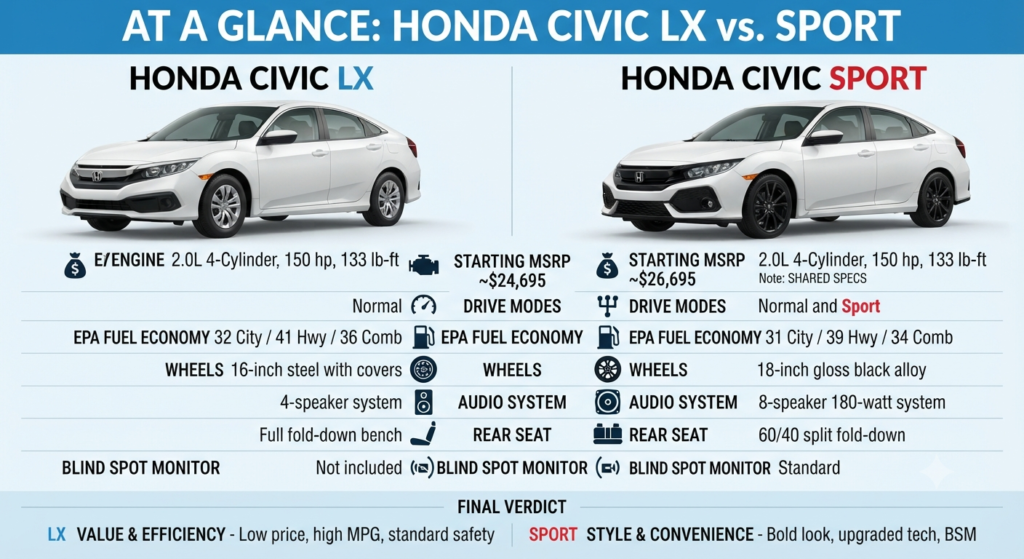
| Feature | Honda Civic LX | Honda Civic Sport |
| Starting MSRP | ~$24,695 | ~$26,695 |
| Engine | 2.0L 4-Cylinder | 2.0L 4-Cylinder |
| Horsepower | 150 hp | 150 hp |
| Torque | 133 lb-ft | 133 lb-ft |
| Transmission | CVT | CVT with Paddle Shifters |
| Drive Modes | Normal | Normal and Sport |
| EPA Fuel Economy | 32 City / 41 Hwy / 36 Comb | 31 City / 39 Hwy / 34 Comb |
| Wheels | 16-inch steel with covers | 18-inch gloss black alloy |
| Audio System | 4-speaker system | 8-speaker 180-watt system |
| Rear Seat | Full fold-down bench | 60/40 split fold-down |
| Blind Spot Monitor | Not included | Standard |
Pricing and Financial Breakdown
Base MSRP Comparison
The base price sets the foundation for your car-buying journey. The Civic LX starts at roughly $24,695, while stepping up to the Civic Sport brings the price to about $26,695. This creates a clear $2,000 gap before taxes and dealer fees.
Auto Loan and Monthly Payments
Spreading this amount over a standard auto loan adds a very small amount to your monthly payment. Still, you should calculate your budget carefully before making a final dealership visit.
Long-Term Maintenance Costs
You also need to think about long-term maintenance costs. The Sport model comes with larger 18-inch low-profile tires. Replacing these tires will cost more money down the road compared to the smaller 16-inch tires on the LX.
Performance, Engine, and Fuel Economy
Engine Specifications
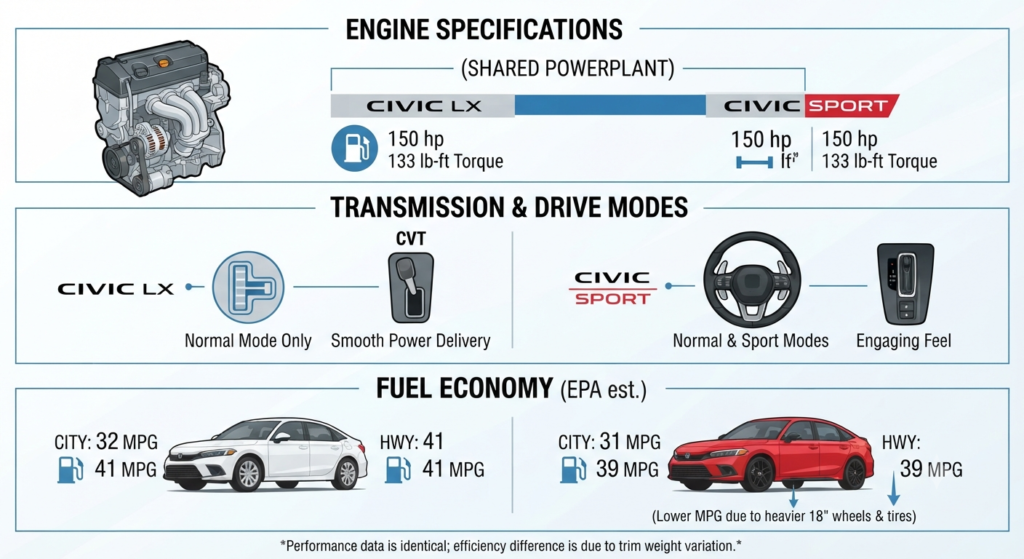
Under the hood, both cars share the exact same mechanical setup. They both use a 2.0-liter 4-cylinder engine that pushes out 150 horsepower and 133 lb-ft of torque. Neither car is built for street racing, but both offer smooth power delivery for city driving and highway cruising.
Transmission and Drive Modes
The Sport trim adds a dedicated Sport mode and steering wheel-mounted paddle shifters. These let you simulate gear changes for a slightly more engaging feel on twisty roads.
EPA Fuel Economy Ratings
Fuel economy numbers favor the base model by a narrow margin:
- Civic LX: Estimated 32 mpg city / 41 mpg highway.
- Civic Sport: Drops slightly to 31 mpg city / 39 mpg highway.
This small drop happens because the Sport model carries heavier wheels and wider tires.
Exterior Styling and Wheel Options
- Civic LX Exterior Style: The LX keeps things traditional with 16-inch steel wheels and full plastic covers. It looks clean and simple, but it lacks visual presence on the highway.
- Civic Sport Exterior Upgrades: The Sport trim transforms the stance of the car in a big way. It features aggressive 18-inch gloss black alloy wheels, dark exterior accents, and a chrome exhaust finisher. Drivers who want a bold and sporty look on the road will instantly prefer the styling of the Sport trim.
Interior, Comfort, and Technology Upgrades
- Cabin Features on the LX Trim:
The LX comes with a basic 4-speaker audio system and a 7-inch touchscreen. It handles basic phone calls and radio streaming just fine for daily errands. - Upgraded Tech on the Sport Trim:
The Sport upgrades your entertainment with an 8-speaker 180-watt audio system. It also adds smart entry with walk-away auto-lock, remote engine start, and a leather-wrapped steering wheel. - Cargo Versatility Differences:
The LX features a solid fold-down rear bench seat, whereas the Sport gives you a 60/40 split folding rear seatback, making it easier to load long gear while keeping one side free for a passenger.
Safety and Driver Assist Technology
Standard Honda Sensing Suite
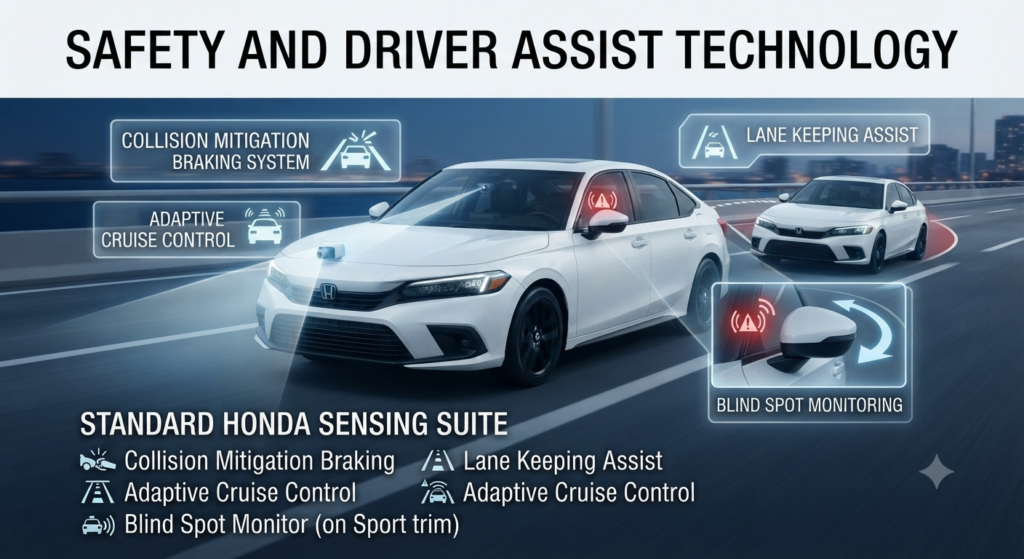
Safety is a top priority for every modern vehicle buyer. You will be glad to know that both trims come standard with the complete Honda Sensing suite, which includes collision mitigation braking, lane keeping assist, and adaptive cruise control.
Blind Spot Monitoring Availability
However, the Sport adds one major feature that the LX leaves out entirely: the Blind Spot Information system with a rear cross-traffic monitor. Many drivers consider blind spot monitoring a deal breaker in heavy traffic. If you want this safety tech built right in, you are pushed toward the Sport trim.
Community Real Talk: What Owners Wish They Knew
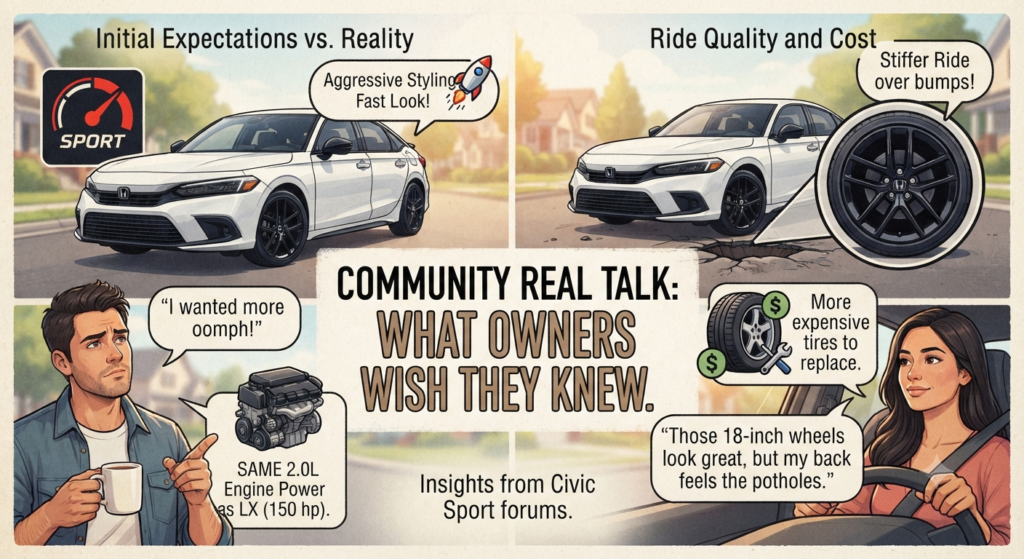
- Power Expectations vs. Reality: Real-world owners on automotive forums often share honest feedback. A common complaint is that the Sport trim looks fast and aggressive, but uses the exact same engine power as the base model. Some buyers feel let down by this mismatch.
- Ride Quality on Rough Roads: Another frequent discussion involves ride quality on rough roads. The larger 18-inch wheels on the Sport mean less rubber cushion between your car and the street, resulting in a stiffer ride over potholes compared to the softer setup on the LX.
- The Price Tag Debate: Budget buyers often debate whether blind spot monitoring is worth the extra $2,000, and many wish Honda offered it as an optional add-on for the base model.
Final Verdict: Which Trim Should You Buy?
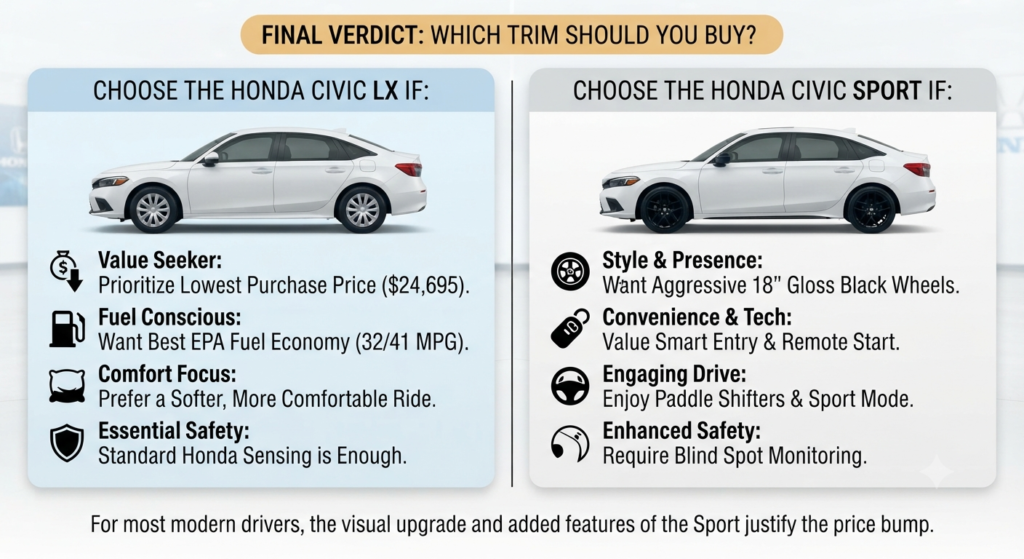
Choose the Honda Civic LX if:
- You want to keep your purchase price as low as possible.
- You want great fuel economy, standard safety features, and a comfortable ride without any costly extras.
Choose the Honda Civic Sport if:
- You care about bold exterior styling, larger alloy wheels, and a leather-wrapped steering wheel.
- You value convenience and crucial safety tech like blind spot monitoring and an upgraded audio system.
- The visual upgrade and added convenience features easily justify the price bump for most modern drivers.