
Introduction: The Shift Toward Efficient Performance
The automotive market in the United States is shifting fast. Drivers want cars that save money at the gas pump. At the same time, nobody wants a vehicle that feels boring to drive on their daily commute.
Enter the Honda Civic Hybrid. This car bridges the gap perfectly, delivering high fuel economy alongside the engaging driving dynamics that enthusiasts appreciate.
However, official sticker prices only tell part of the story. Hidden fees and dealership practices can completely change the math. In this article, we break down the exact pricing, hidden fees, real-world savings, and honest owner feedback to help you buy smart.
Official US Pricing Breakdown by Trim Level
Keeping the US Lineup Simple
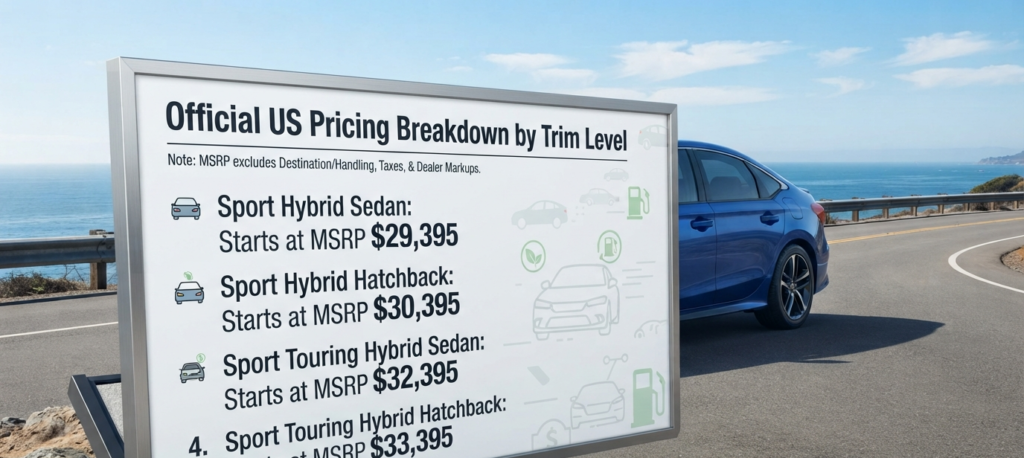
Honda keeps the choices straightforward for American buyers. You can choose between two main hybrid trims, with both options available in sedan and hatchback body styles:
- The Sport Hybrid: The entry-level model providing most of the technology and comfort features average daily drivers need.
- The Sport Touring Hybrid: The top-tier model adding premium leather seats, a larger infotainment screen, and a high-end audio system.
Current Official MSRP Pricing
- Sport Hybrid Sedan: Starts at an MSRP of $29,395.
- Sport Hybrid Hatchback: Starts at an MSRP of $30,395.
- Sport Touring Hybrid Sedan: Starts at an MSRP of $32,395.
- Sport Touring Hybrid Hatchback: Starts at an MSRP of $33,395.
Note: These numbers reflect the base Manufacturer Suggested Retail Price. Paying the exact sticker price, however, is rarely how modern car buying works in the real world.
Hidden Costs Beyond the Sticker Price
The Shock of the Dealership Lot
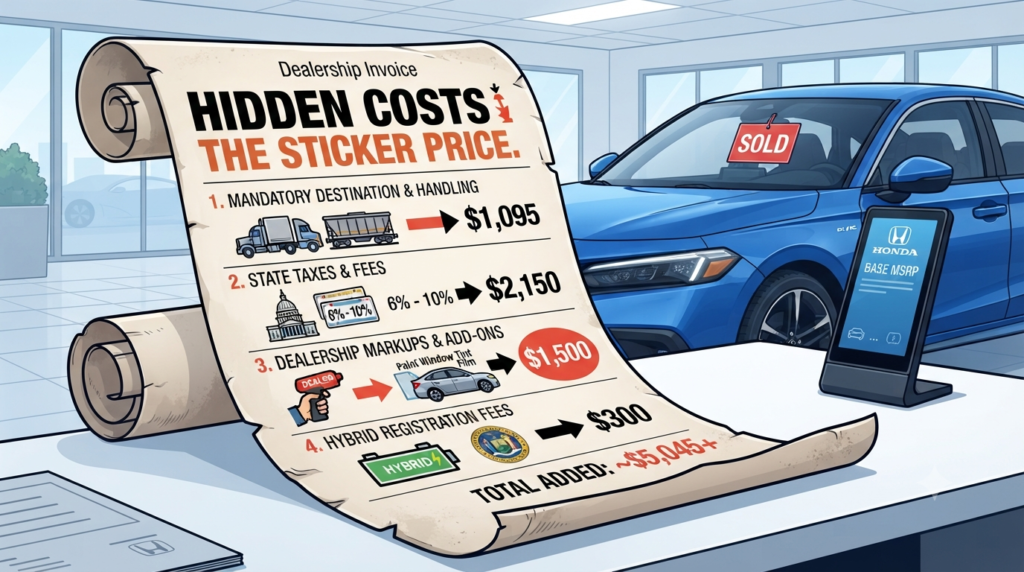
Walking onto a local dealership lot with only the MSRP in mind can lead to surprises. Several additional costs affect your total out-the-door price:
- Mandatory Destination and Handling Fees: Every new Honda comes with a mandatory freight charge. This destination and handling fee is usually around $1,095, applying no matter which US state you purchase the vehicle in.
- State Taxes and Local Registration Fees: State and local taxes add another layer to the math. Depending on your location, sales tax adds anywhere from zero to over 10 percent. Some states also charge extra hybrid registration fees.
- Dealing With Dealership Markups: High demand for fuel-efficient hybrids creates pricing pressure. Some local dealers add market adjustments or mandatory add-ons like window tint and paint protection packages.
Pro Tip: Always ask for a complete out-the-door price quote in writing. Walking away from a dealer padding the bill with unnecessary extras is your best negotiating power.
Civic Hybrid vs. Main Competitors
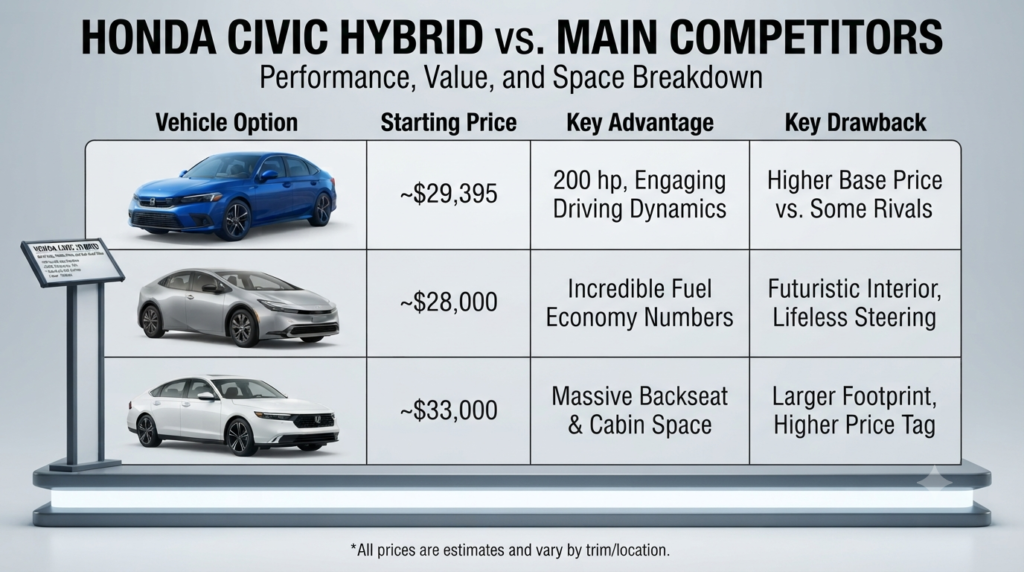
Shoppers looking at the Honda Civic Hybrid often compare it against other popular options to clarify its true market value:
| Vehicle Option | Starting Price | Key Advantage | Key Drawback |
| Honda Civic Hybrid | ~$29,395 | 200 hp, engaging driving dynamics | Higher base price than some rivals |
| Toyota Prius | ~$28,000 | Incredible fuel economy numbers | Futuristic interior, lifeless steering |
| Honda Accord Hybrid | ~$33,000 | Massive backseat and cabin space | Larger footprint, higher price tag |
While the Prius is slightly cheaper, the Civic Hybrid fights back with a natural driving feel. It produces 200 horsepower and 232 pound-feet of torque, turning routine highway merging into genuine fun. If you don’t need the massive backseat space of the Accord, the Civic hits the sweet spot.
Real-World Ownership Costs and Savings
Investing in Long-Term Fuel Savings
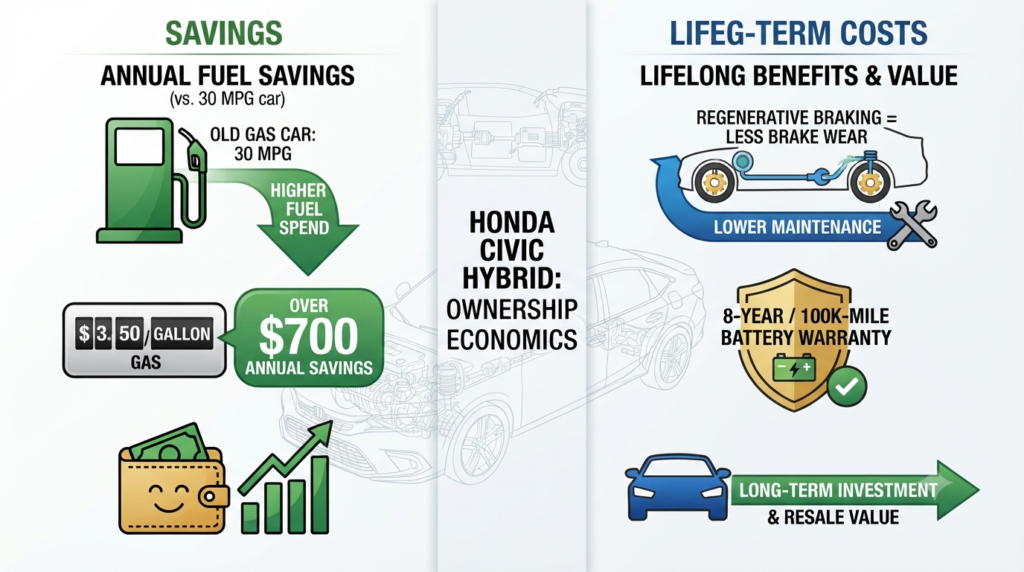
Buying a hybrid is an investment in future fuel savings. To see if the price makes sense, we have to look at long-term running costs:
- Official EPA Fuel Economy: The Civic Hybrid earns EPA ratings of roughly 50 mpg city and 45 mpg highway, giving drivers a combined average close to 49 mpg.
- Annual Dollar Savings: If you drive 15,000 miles per year and gas costs $3.50 per gallon, your fuel bill drops significantly. Compared to a standard 30 mpg gas car, you save over $700 annually.
- Lower Maintenance Costs: Regenerative braking takes strain off traditional brake pads, making them last much longer.
- Warranty Protection: Honda protects your investment with solid factory backing. The hybrid battery and electrical components include an 8-year or 100,000-mile warranty.
Community Real Talk: What Owners Are Saying
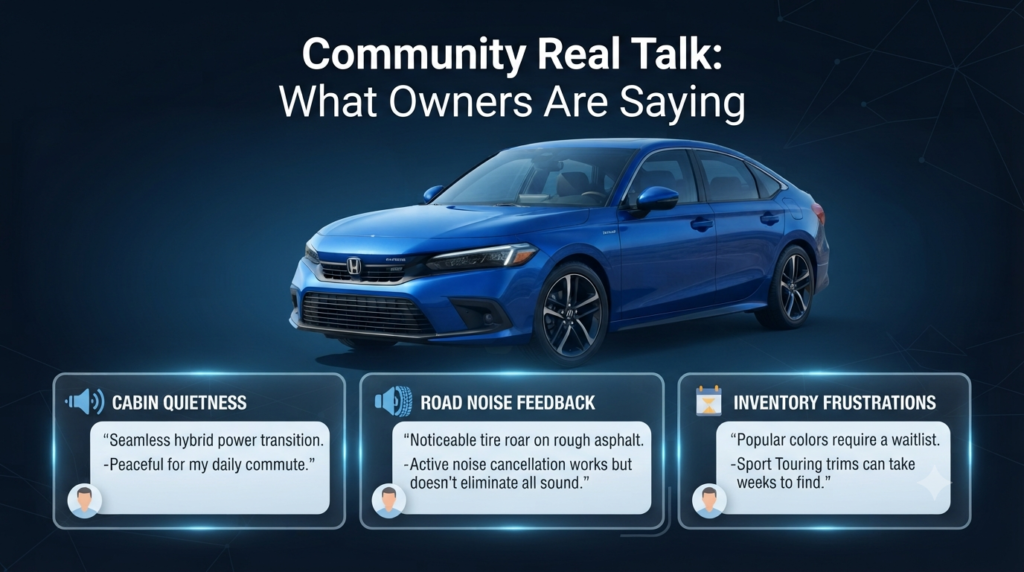
Real-world owners on forums and social media share honest details that marketing brochures leave out:
- Cabin Quietness: Drivers consistently praise the cabin quietness and smooth power delivery. The transition from electric power to the gas engine happens seamlessly in daily traffic.
- Road Noise Complaints: Cabin road noise on rough highway asphalt remains a frequent owner complaint. While Honda added active noise cancellation, some tire roar still filters into the cabin.
- Inventory Frustrations: Finding specific inventory tests buyer patience. Popular colors and top-tier Sport Touring trims often require waiting weeks for a fresh dealership allocation.
Frequently Asked Questions
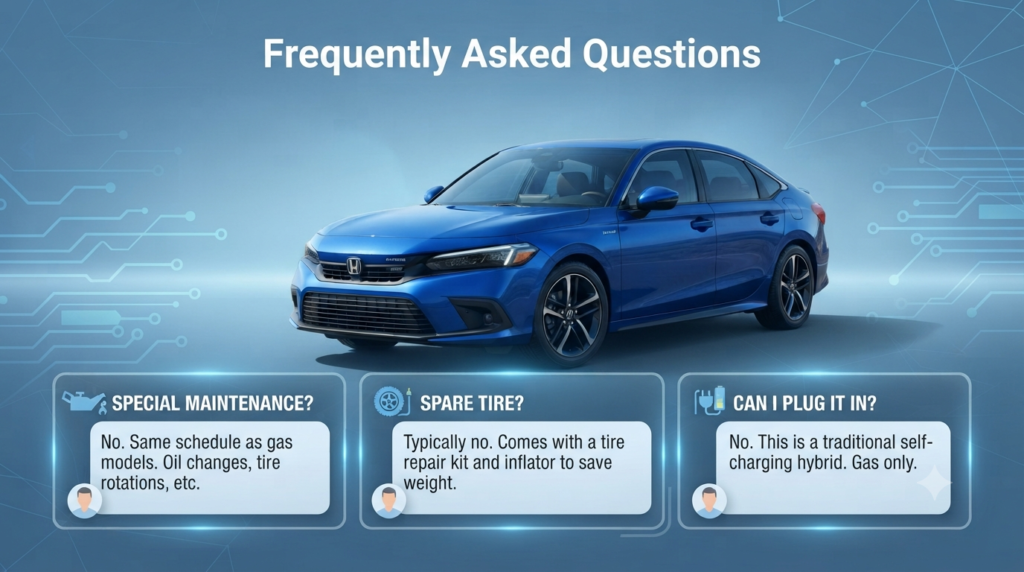
- Do hybrid cars require special maintenance?
No special maintenance routines are required. You follow the exact same oil change and tire rotation schedule as a regular gasoline car. - Does the Civic Hybrid come with a spare tire?
Like many modern fuel-efficient vehicles, it usually comes with a tire repair kit and inflator instead of a physical spare tire to save weight. - Can I plug in the Honda Civic Hybrid?
No. This is a traditional self-charging hybrid vehicle. You add regular gasoline, and the car charges its own battery automatically while driving.
Conclusion and Final Verdict
The Honda Civic Hybrid commands a fair price for what it delivers. Starting under $30,000, it blends 200-horsepower performance with incredible fuel efficiency.
If you want a reliable commuter car that saves money at the pump without sacrificing driving enjoyment, this vehicle earns a strong recommendation. Shop around, avoid excessive dealer markups, and enjoy your new ride.