
Shopping for a new car is always an exciting milestone. If you are eyeing a Honda Civic, you are likely looking at two of the most popular trims available today: the Civic Sport and the Civic Si. Both offer incredible exterior styling and modern interior features that make daily driving a blast.
However, before you sign the paperwork at the dealership, you need to look at the total financial picture. Insurance costs can easily sneak up on you and wreck your monthly household budget if you aren’t prepared.
Understanding what you will pay for insurance is just as important as knowing your monthly car payment. This comprehensive guide breaks down everything you need to know about insuring a Civic Sport or Si in the United States.
Average Insurance Cost Breakdown: Sport vs. Si
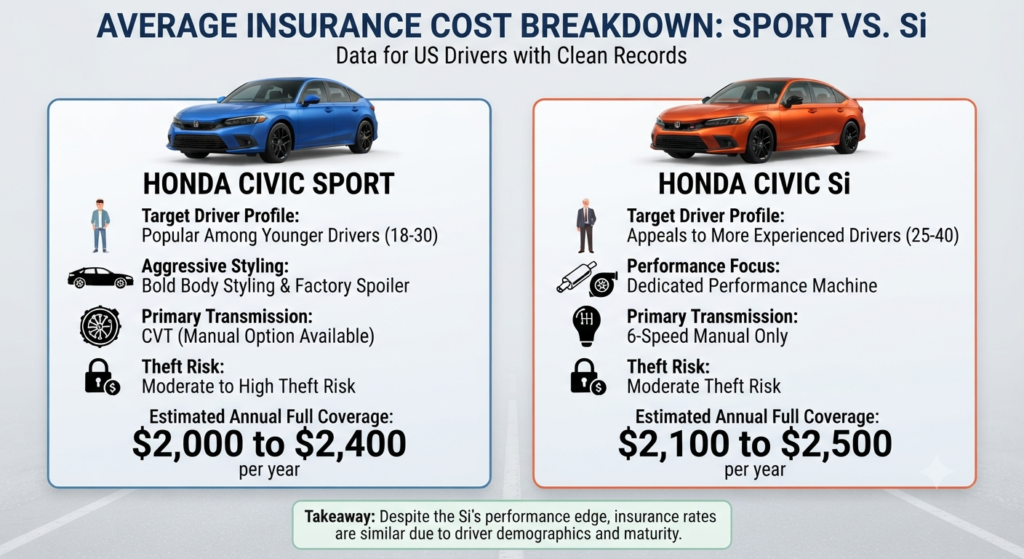
Insuring a standard compact car in the United States usually ranges from $1,800 to $2,400 per year for a driver with a clean record. When you step up to the Sport or Si trims, insurance companies evaluate them through a slightly different risk lens.
The Honda Civic Sport features aggressive styling, larger alloy wheels, and a sporty stance. Insurance companies know this trim is exceptionally popular among younger drivers who love spirited driving. Because of this demographic risk profile, full coverage for a Civic Sport generally averages between $2,000 and $2,400 annually.
The Honda Civic Si is a dedicated performance machine that only comes with a manual transmission. Industry data indicates that full coverage for the Civic Si hovers around $2,192 per year. Interestingly, while the Si is faster than the Sport, insurance rates are sometimes priced similarly or even lower. This happens because older, more experienced drivers frequently buy the Si, which helps balance out the overall risk pool.
Side-by-Side Comparison Table
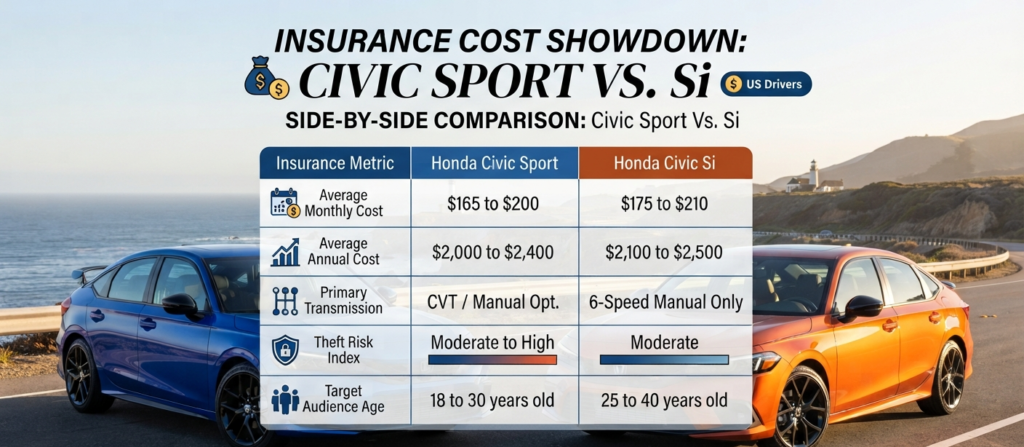
| Insurance Metric | Honda Civic Sport | Honda Civic Si |
| Average Monthly Cost | $165 to $200 | $175 to $210 |
| Average Annual Cost | $2,000 to $2,400 | $2,100 to $2,500 |
| Primary Transmission | CVT / Manual Option | 6-Speed Manual Only |
| Theft Risk Index | Moderate to High | Moderate |
| Target Audience Age | 18 to 30 years old | 25 to 40 years old |
Key Factors That Drive Up Your Civic Insurance
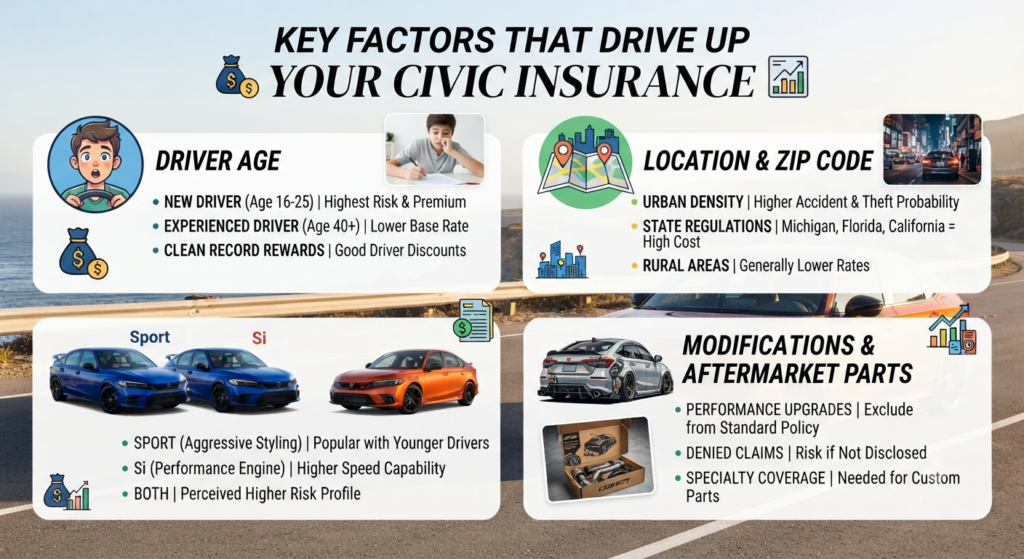
Insurance companies do not pull numbers out of a hat. They use complex algorithmic models to determine your exact monthly rate based on your unique personal profile.
- Driver Age and Experience:
Age is the single biggest factor affecting your insurance rate. An 18-year-old driver can easily expect to pay $6,900 to $7,500 per year for full coverage on either trim. On the flip side, a 40-year-old driver with a clean driving record will see rates much closer to the $2,200 mark. - Trim Specific Risks:
Underwriters look closely at how a car is driven on public roads. The Civic Sport attracts attention due to its bold factory spoiler and athletic body styling. The Civic Si attracts attention because of its turbocharged engine and manual shifter. Both traits signal a higher statistical likelihood of aggressive driving to insurance companies. - Location and ZIP Code:
Where you park your car matters immensely. Drivers in states like Florida, Michigan, and California face significantly higher insurance premiums due to high traffic density and local legal regulations. Drivers living in states like Ohio or Maine usually enjoy much lower baseline rates.
How Do Modifications Affect Your Policy?
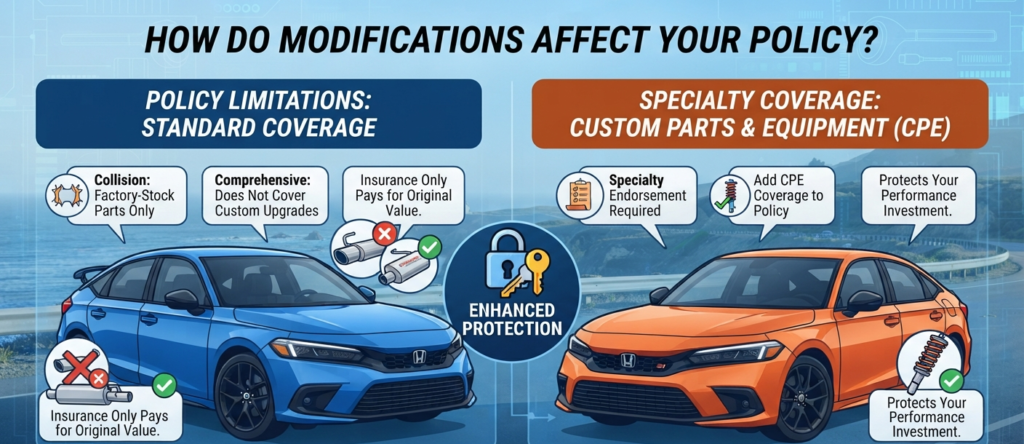
Many owners love to customize their Civic Sport or Si. Adding aftermarket exhausts, lowered suspension kits, or custom body panels is a rite of passage for many automotive enthusiasts.
However, standard insurance policies rarely cover aftermarket parts. If you get into a collision, the insurance company will only pay to replace factory-stock components.
Pro Tip: If you install expensive performance parts, you should look into specialty custom parts coverage. Otherwise, unannounced modifications can sometimes give insurance companies a valid excuse to complicate or deny payout claims after an accident.
Tips to Lower Insurance Rates for Your Honda Civic
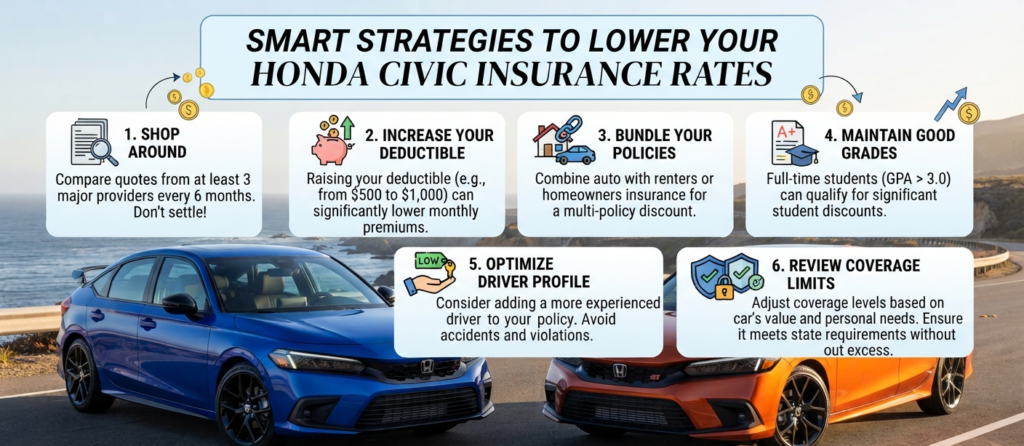
You do not have to accept an unaffordable insurance quote. There are several proven ways to lower your monthly payments:
- Shop Around:
Never stick with the first quote you receive. Compare rates from at least three different US insurance providers every six months. - Increase Your Deductible:
Raising your comprehensive and collision deductible from $500 to $1,000 will instantly lower your monthly premium. Just make sure you have that cash saved in case of an emergency. - Bundle Your Policies:
If you rent an apartment or own a home, bundle your renters or homeowners insurance with your auto policy for a multi-policy discount. - Maintain Good Grades:
If you are a student driver, keep your GPA above a 3.0 to qualify for good student discounts offered by most major carriers.
The Hidden Costs of Owning a Civic Sport vs. Si
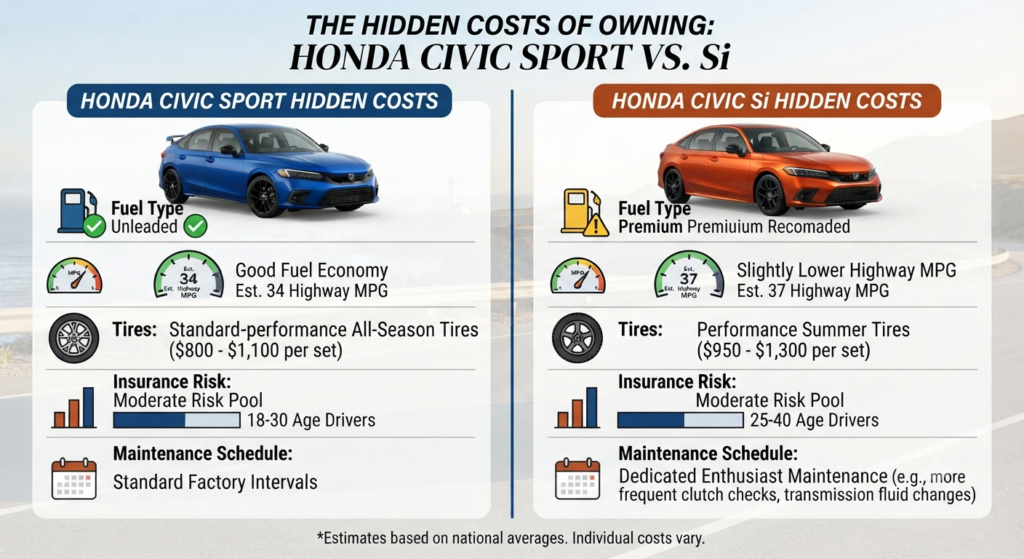
When calculating insurance, you must also look at total cost of ownership. The Sport and Si have different maintenance demands that indirectly affect your automotive budget.
Fuel Requirements and Efficiency
Both cars offer great fuel economy, but their engine tunings differ. The Civic Sport runs comfortably on regular unleaded gasoline. The Civic Si, however, is recommended or required to run on premium fuel depending on the model year generation. Over a year of daily commuting, premium gas adds up quickly.
Tires and Maintenance Expenses
The larger wheels and low-profile performance tires on the Sport and Si wear out faster than standard economy tires. Replacing a set of performance tires can cost upwards of $800 to $1,200. Insurance companies do not cover tire wear, but higher maintenance costs mean less cash flow for your auto policy.
Understanding State Minimum vs. Full Coverage
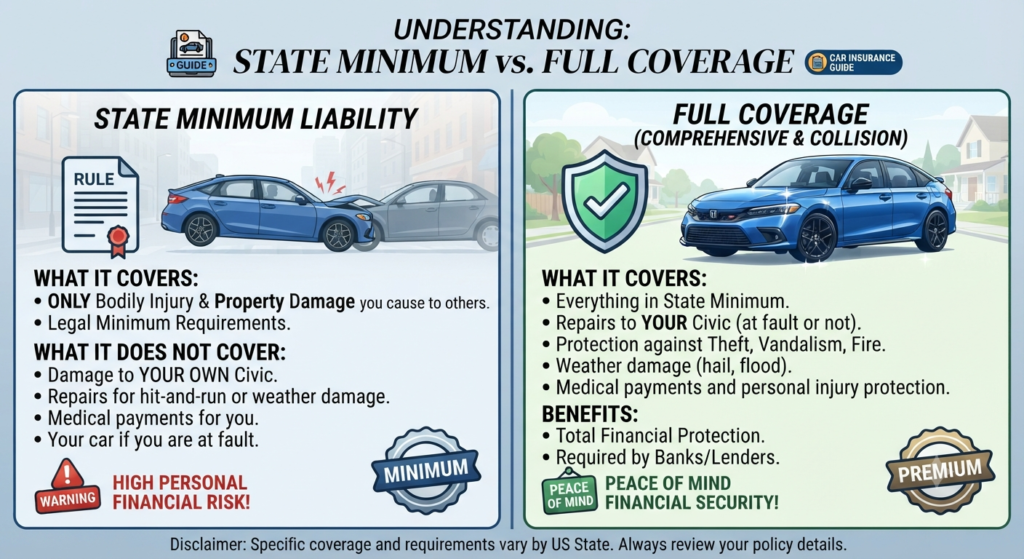
Many budget-conscious buyers look at state minimum liability insurance to save money. While this is legal, it is rarely a smart move for a newer Honda Civic.
- What State Minimum Covers:
- State minimum insurance only covers damage and injuries you cause to other people. It does nothing to fix your own car if you cause an accident, hit a pole, or get caught in a severe hailstorm.
- Why Full Coverage is Necessary:
If you finance your Civic Sport or Si through a bank or credit union, your lender will legally require you to carry full coverage. This includes collision and comprehensive insurance to protect their financial investment in the vehicle.
Frequently Asked Questions
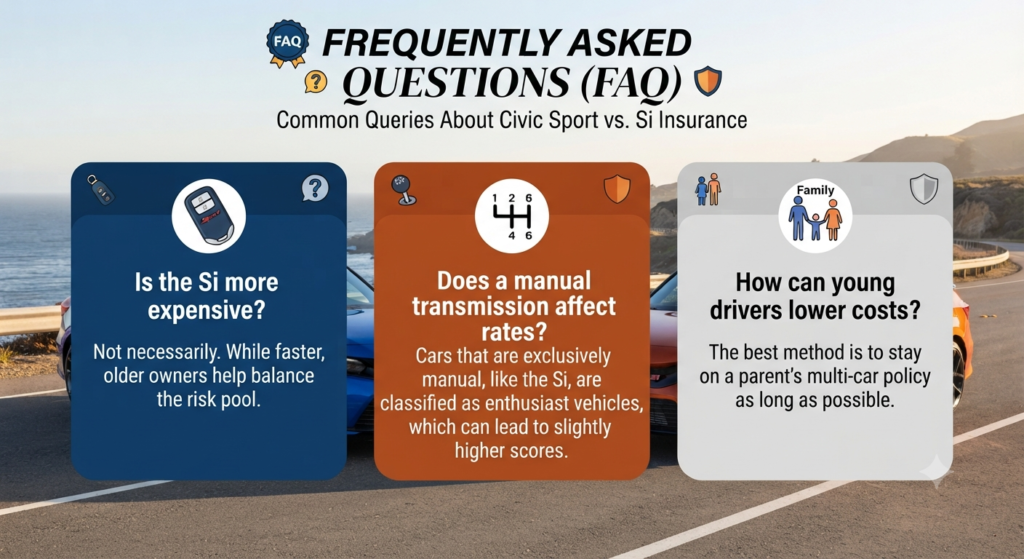
Is the Civic Si more expensive to insure than the Sport?
Not necessarily. While the Si has a more powerful engine, it is often purchased by slightly older and more mature drivers. This helps keep its insurance rates very close to the Civic Sport.
Does a manual transmission increase insurance rates?
A manual transmission itself does not automatically raise your rates. However, cars that only come in manual, like the Civic Si, are classified as enthusiast vehicles, which can lead to slightly higher underwriting scores.
What is the best way to get lower quotes as a young driver?
The best method is to stay on a parent or family member’s multi-car policy as long as possible. This approach is drastically cheaper than buying an independent standalone policy at age 18 or 19.