
Introduction
Is your Honda Civic making a loud squealing noise every time you start the engine in the morning?
That annoying sound is often the first warning sign of a failing serpentine belt. Ignoring this warning can lead to a sudden breakdown on a busy highway, leaving you stranded and facing expensive towing fees.
This comprehensive guide covers everything you need to know about Honda Civic serpentine belt replacement symptoms, costs, lifespan, and maintenance tips to keep your car running smoothly.
What is a Honda Civic Serpentine Belt?
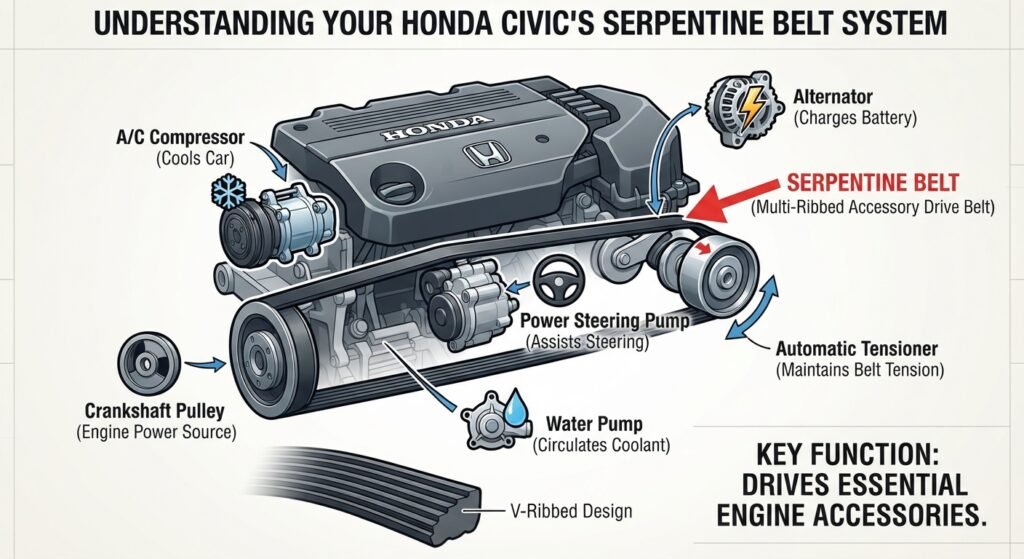
The serpentine belt is a single, long, winding rubber band located right at the front of your engine compartment.
Its primary job is to transfer rotational power from the engine crankshaft to vital engine accessories. These accessories include your alternator, air conditioning compressor, power steering pump, and water pump, depending on your specific model year.
Without a healthy belt transferring this power, your Civic cannot generate electricity to charge the battery or keep the engine cool. Modern Honda Civic engines rely heavily on this belt for everyday functionality. If it snaps completely, your car becomes unsafe and impossible to drive for more than a few minutes before overheating.
Top Symptoms of a Failing Honda Civic Serpentine Belt
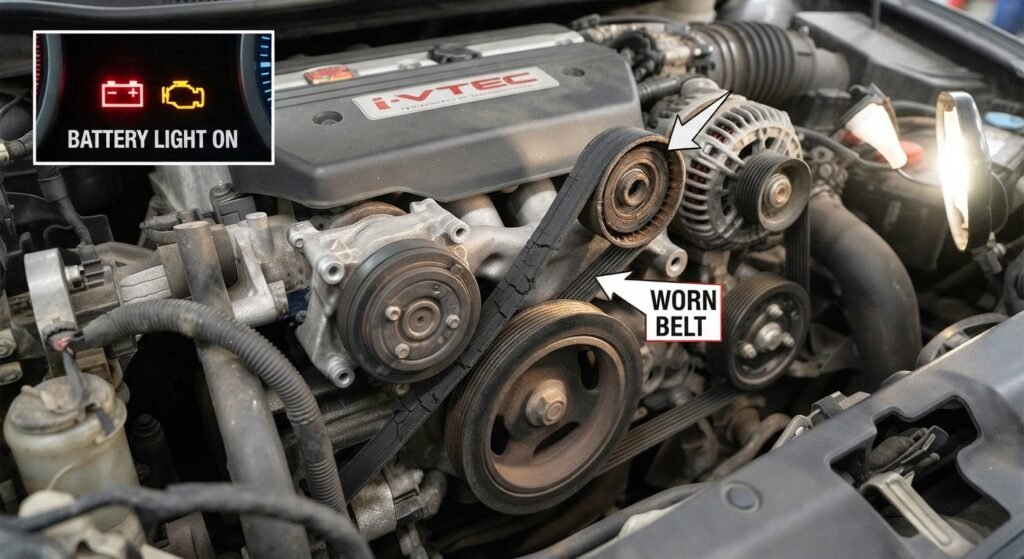
Spotting early warning signs saves you from unexpected mechanical failures and costly roadside assistance. Look out for these common red flags during your daily commutes:
- Loud Squealing or Chirping Noises:
A high-pitched chirping or squealing sound coming from under the hood usually means the rubber is slipping or worn thin. This noise is most noticeable when you first start a cold engine in the morning or when you accelerate quickly. - Visible Cracks and Wear:
Pop your hood and inspect the rubber surface of the belt using a flashlight. Look closely for deep transverse cracks, missing chunks of rubber, fraying edges, or a shiny glazed appearance on the underside. Glazing happens when the belt slips constantly against old pulleys, hardening the rubber. - Power Steering Failure:
Older Civic models utilized hydraulic power steering pumps driven directly by the serpentine belt. If your steering wheel suddenly feels heavy, stiff, and incredibly hard to turn at low speeds, your belt may have slipped off or snapped entirely. - Air Conditioning Malfunction:
A failing belt lacks the friction needed to spin the AC compressor effectively. If you notice that your air conditioning starts blowing warm ambient air instead of cold air, your accessory belt could be the root cause. - Battery Warning Light on Dashboard:
The serpentine belt spins the alternator, which continuously recharges your car battery while you drive. If the belt snaps or slips severely, the alternator stops charging. Your dashboard battery warning light will illuminate immediately to alert you of electrical failure.
Honda Civic Serpentine Belt Replacement Cost
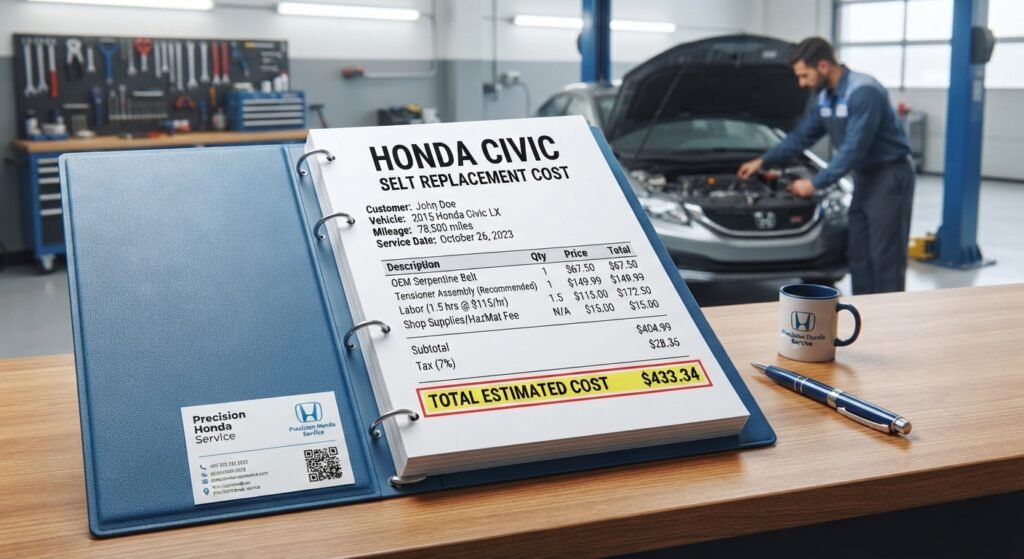
Replacing your drive belt is a very affordable maintenance task compared to major engine overhauls or transmission fixes. Professional replacement typically costs between $145 and $190 in total.
The price breaks down into two main categories at professional service shops:
- Parts Cost:
A brand new replacement belt generally costs between $64 and $69 for quality OEM or aftermarket parts. - Labor Cost:
Professional mechanics charge between $82 and $120 for their time, diagnostic check, and installation expertise. - Model Year Variations:
Newer turbocharged Civic models feature tighter engine bays, which may require slightly more complex labor and push costs toward the higher end of the range.
Do You Need to Replace the Tensioner Too?
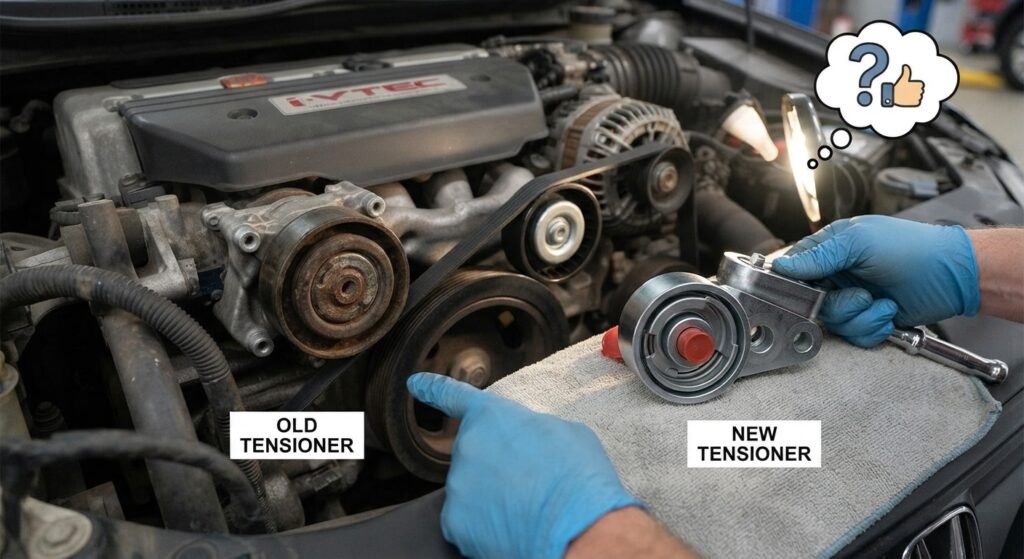
Many car owners make the common mistake of swapping only the rubber belt while completely ignoring the automatic belt tensioner. Over thousands of miles of driving, the internal spring inside the tensioner loses its calibrated strength.
If your tensioner is worn out, it will fail to maintain proper pressure on the new belt. This lack of tension causes your brand new serpentine belt to slip, squeal, and wear out prematurely within just a few months. Always ask your trusted mechanic to inspect the tensioner pulley and idler pulleys during the belt replacement service.
DIY vs. Professional Replacement
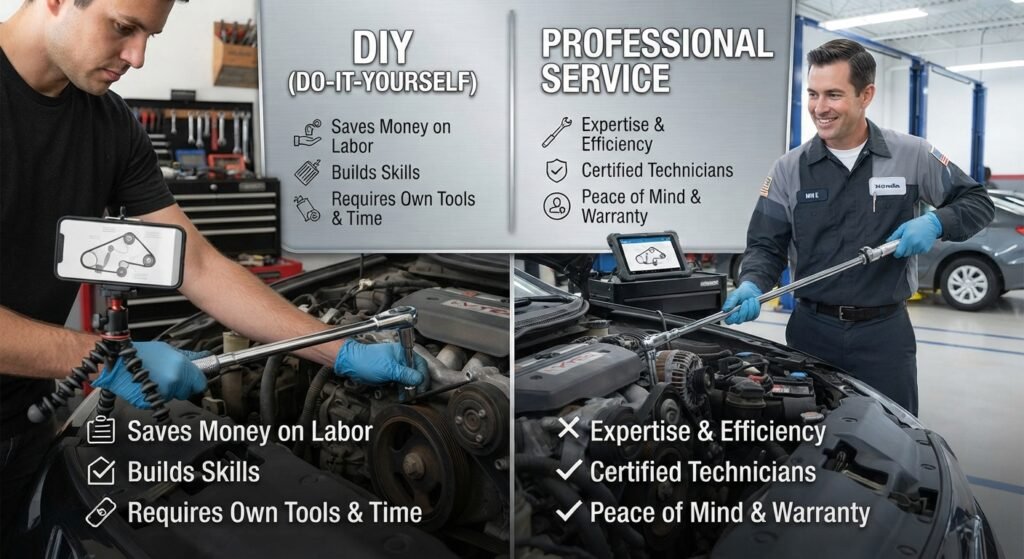
If you possess basic mechanical skills and standard garage tools, you can replace a Honda Civic serpentine belt at home in about thirty minutes.
You will need a socket set, a flashlight, and a long breaker bar or a special serpentine belt tool to release the tension on the pulley system. Make sure to take a clear photo of the belt routing path with your smartphone before taking the old one off so you can install the new one correctly.
If you prefer not to get your hands dirty, any local service shop or certified mechanic can handle this quick job efficiently. Professional installation ensures proper alignment and gives you peace of mind on long road trips.
How Often Should You Replace Your Civic Belt?
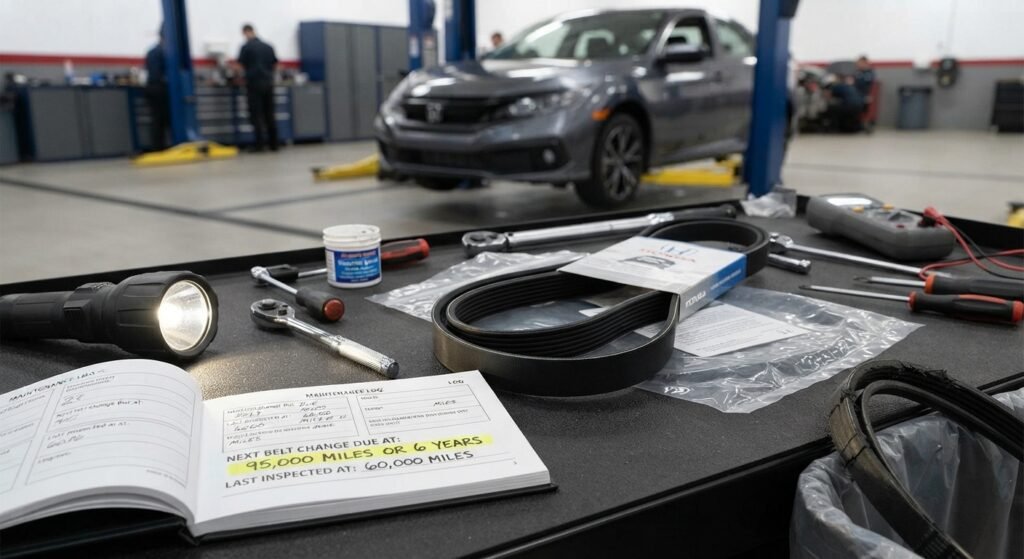
Preventative maintenance is the secret to avoiding unexpected breakdowns on the road. Most factory serpentine belts installed on Honda Civics last between 60,000 and 100,000 miles, or roughly five to seven years, depending on your local climate.
Extreme summer heat and freezing winter temperatures cause rubber to degrade faster. Have your mechanic check the belt during every regular oil change once your car crosses the 60,000-mile threshold.
Frequently Asked Questions
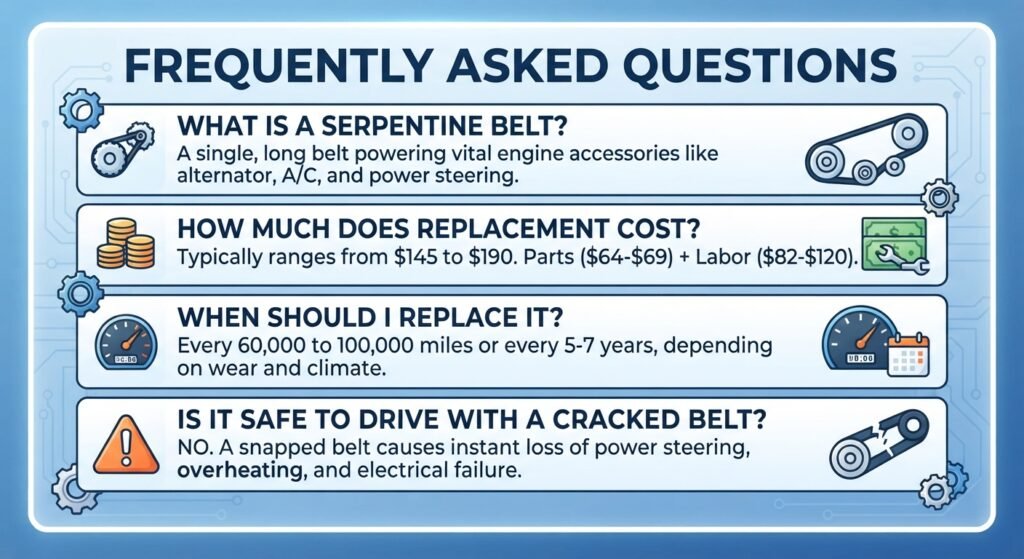
- Can I drive with a cracked serpentine belt?
Driving with a severely damaged or cracked belt is extremely risky. If it snaps while driving down the highway, you will instantly lose power steering, face severe engine overheating risks, and drain your battery completely. - Does a broken serpentine belt stop the engine?
It does not immediately destroy internal engine components like a timing belt does, but it stops vital accessories. You can only drive for a very short distance on remaining battery power before the car completely dies. - How long does the replacement procedure take?
For an experienced professional mechanic, replacing a Honda Civic serpentine belt usually takes less than twenty to thirty minutes.