
The Honda Civic has earned a reputation as one of the most dependable compact cars in America. That reputation is well deserved for most model years, but a handful of Civics have racked up serious complaints, expensive recalls, and repeat trips to the dealership.
This guide breaks down exactly which Honda Civic years to avoid, why they earned that reputation, and how to protect yourself if you are shopping for a used Civic right now.
Quick Answer: Honda Civic Years to Avoid
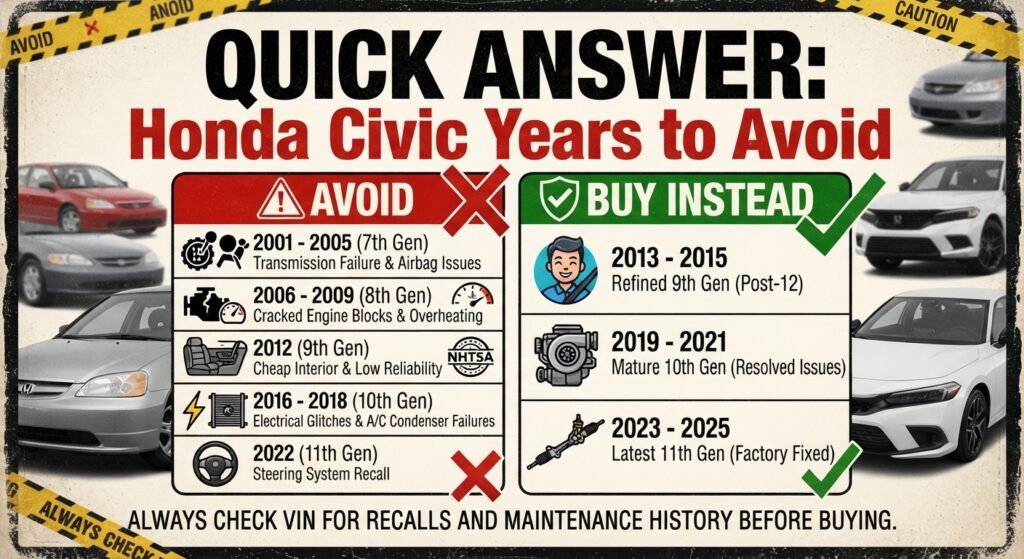
If you only remember one thing from this guide, remember this list. These are the Civic model years with the highest complaint counts, the most recalls, or the most expensive repair histories.
- 2001 to 2005 (7th generation): automatic transmission failures and Takata airbag defects
- 2006 to 2009 (8th generation): cracked engine blocks and coolant leaks
- 2012 (9th generation): interior quality complaints and above average NHTSA filings
- 2016 to 2018 (10th generation): electrical glitches, air conditioning failures, and turbo oil dilution
- 2022 (11th generation): steering gearbox and power steering rack recalls
The generations built between these problem years, especially 2012 to 2015 and 2019 to 2021, tend to be the safer bets for used car shoppers.
7th Generation (2001 to 2005): The Riskiest Civics on the Road
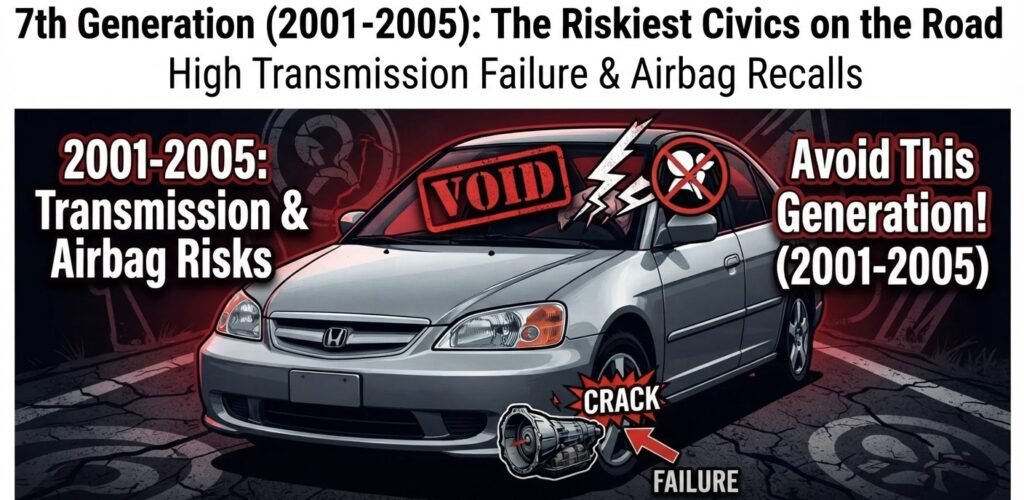
Most mechanics and reliability trackers agree that the 7th generation Civic is the generation to be most cautious about. It combines a weak automatic transmission with a messy airbag recall history.
2001 Honda Civic
The 2001 model year is widely considered the single worst Civic ever built. Owner complaint databases show well over 1,000 reports, and NHTSA recorded dozens of recalls tied to this model year alone.
The transmission is the headline issue. Owners frequently report slipping gears, hard shifting, and full transmission failure well before 100,000 miles, often costing 2,000 dollars or more to replace.
2002 to 2005 Honda Civic
These years share the same transmission weakness as the 2001 model, along with recurring paint defects and Takata airbag inflators that were later subject to a nationwide recall.
The 2005 model year is technically the most refined of the bunch, but it still carries the same underlying transmission design, so it does not fully escape the generation’s reputation.
8th Generation (2006 to 2009): Cracked Engine Blocks
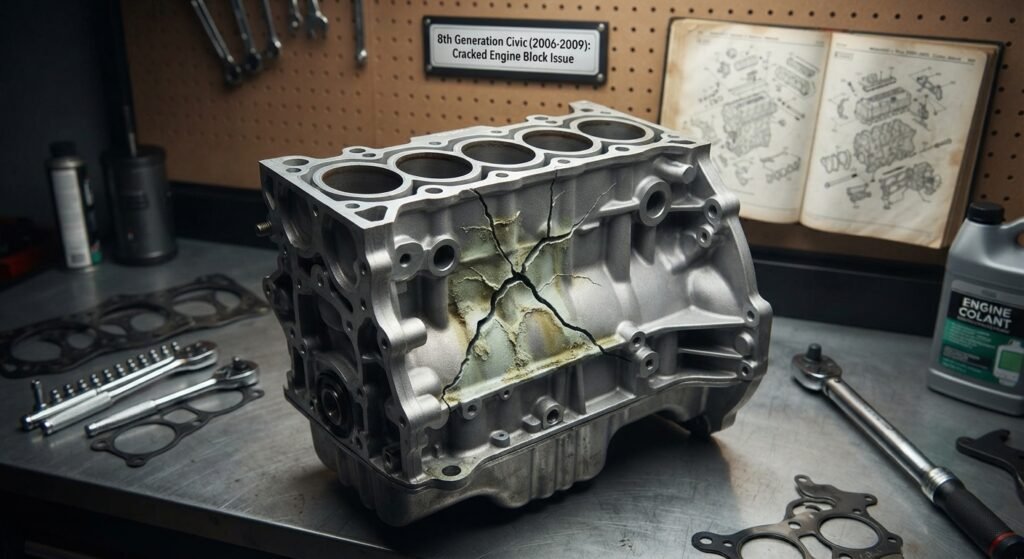
Honda redesigned the Civic for 2006, but a batch of 1.8 liter engines from this generation developed a defect that let coolant leak into the engine oil.
Left unaddressed, this leads to overheating and, in the worst cases, a fully cracked engine block. Honda extended the powertrain warranty on affected vehicles, but many owners only discovered the issue after the original warranty had expired.
The 2007 model year has the highest complaint volume in this generation, largely tied to this coolant and overheating problem. Early production 2009 Civics can carry the same defect, so always check the build date, not just the model year.
9th Generation (2012): A Step Backward in Quality
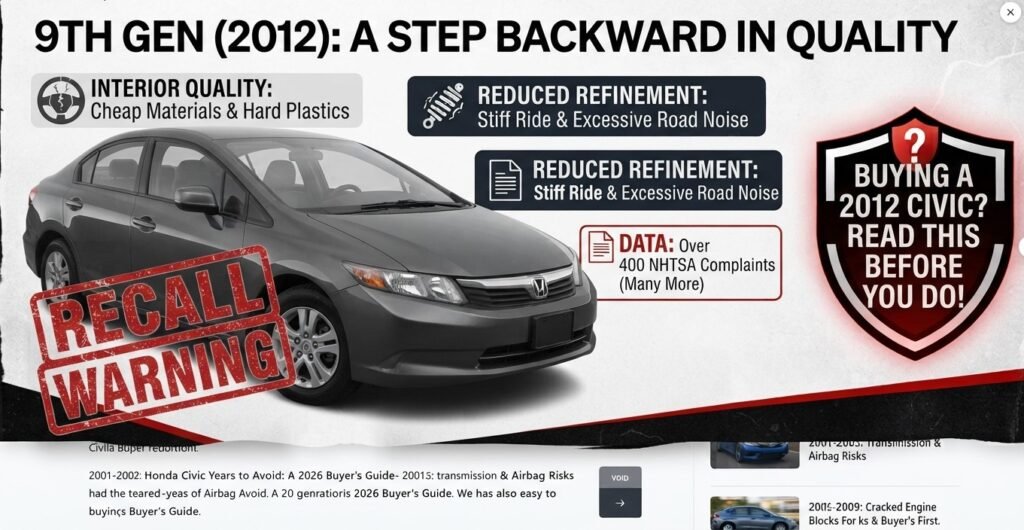
The 9th generation Civic, sold from 2012 to 2015, is generally reliable from a mechanical standpoint. The 2012 model year is the exception.
Honda rushed the 2012 redesign and it showed. Owners complained about cheap interior materials, road noise, and a noticeably less refined ride compared to the outgoing model.
NHTSA data shows the 2012 Civic logged over 400 complaints and multiple recalls, making it the clear outlier in an otherwise dependable generation. Honda quietly refreshed the interior for 2013, which is a much stronger pick.
10th Generation (2016 to 2018): Electrical Gremlins and Turbo Trouble

The 10th generation Civic brought a sleeker design and a new turbocharged 1.5 liter engine option, but the early years introduced fresh headaches.
2016 and 2017 Honda Civic
These model years saw a spike in electrical complaints, touchscreen infotainment glitches, and air conditioning condenser failures. Honda later issued a 10 year, unlimited mileage extended warranty covering the A/C condenser and compressor shaft seal on affected 10th generation Civics.
A VIN check through a Honda dealer will confirm whether a specific car is covered under that extended warranty or has already had the repair done.
2018 Honda Civic with the 1.5 Liter Turbo
The turbocharged engine introduced a separate concern known as oil dilution, where unburned fuel seeps into the engine oil during cold starts and short trips.
This is most common in colder climates and for drivers who rarely take longer highway drives. Diluted oil loses lubricating strength over time, which accelerates engine wear if oil changes are not kept current.
11th Generation (2022): Steering Recalls to Watch
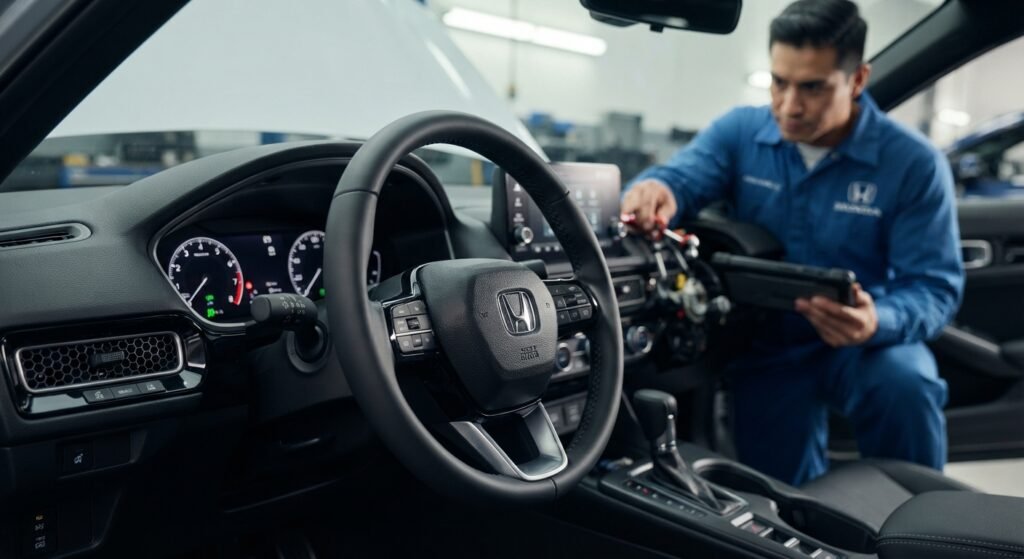
The redesigned 2022 Civic scores well on most reliability indexes, but it stands out for steering related recalls rather than engine or transmission problems.
NHTSA opened an investigation after receiving over 140 complaints from Civic drivers about stiff or difficult steering. That investigation led to a recall covering the steering gearbox worm gear assembly on 2022 through 2025 Civic models.
A separate, earlier recall covered an incorrectly assembled power steering rack on 2022 through 2024 Touring and Sport trims that had already received a replacement rack through a dealer service visit.
Both repairs are free at any Honda dealership. If you are looking at a 2022 Civic, running the VIN through NHTSA’s recall lookup tool before you buy is a quick way to confirm the work has been completed.
Common Honda Civic Owner Complaints, By System
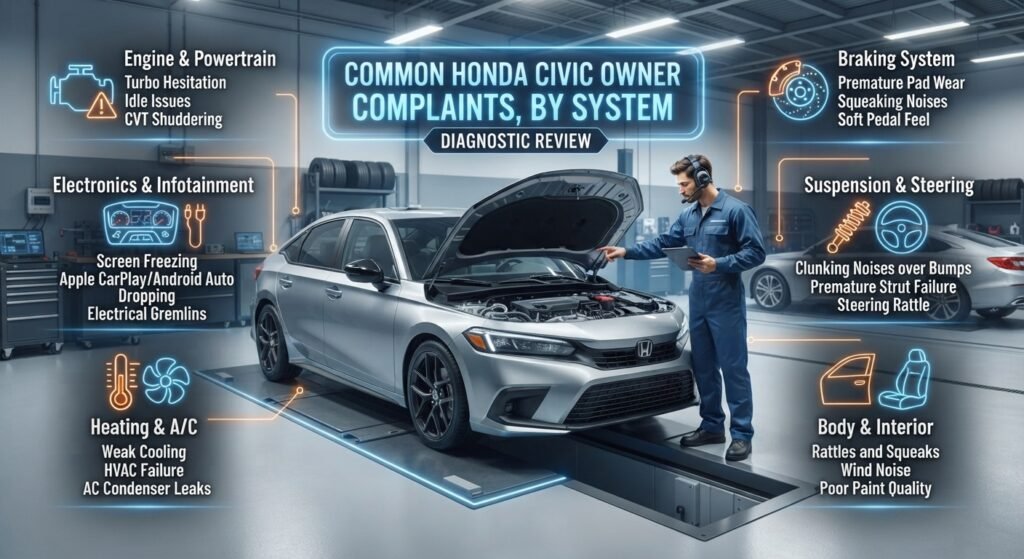
Complaint patterns tend to cluster around a handful of systems across the Civic’s history. Here is a breakdown of what shows up most often in owner reports and repair databases.
| System | Typical Complaint | Years Most Affected |
|---|---|---|
| Transmission | Slipping gears, hard shifts, full failure | 2001 to 2005 |
| Engine | Coolant leaks, cracked blocks, overheating | 2006 to 2009 |
| Engine (turbo) | Oil dilution from short trips and cold starts | 2016 to 2018 |
| Electrical | Infotainment glitches, wiring faults, dash warnings | 2016 to 2017 |
| Climate control | A/C condenser and compressor failures | 2016 to 2021 |
| Steering | Stiff steering, gearbox and rack defects | 2022 |
| Airbags | Takata inflator recalls | 2001 to 2011 |
Recent Reliability Updates Worth Knowing

Reliability data on the Civic keeps shifting as more recalls close out and more owner mileage accumulates. A few recent developments matter if you are shopping today.
- The 2022 steering gearbox recall (NHTSA 24V744) was still being processed into 2025, so plenty of 2022 to 2025 Civics on used lots may not have the fix yet
- Honda’s 10 year A/C warranty extension for 10th generation Civics remains active for eligible vehicles, so a failed condenser on a 2016 to 2021 Civic may still be a free repair
- Newer reliability indexes place the 2020 and 2025 model years among the strongest in the car’s history, both scoring well above the Civic’s own long term average
- The 9th generation (2012 to 2015) continues to post a strong long term reliability record once you get past the 2012 launch year
Reliability scores are not static. A Civic that looked shaky at launch can look much better five years later once recalls are closed and design flaws are corrected in later production runs.
Best Honda Civic Years to Buy Instead

If you want the Civic’s famous dependability without the drama, these years consistently rank as safer used car choices.
- 2013 to 2015: refined interior, strong reliability, and simple naturally aspirated engines
- 2019 to 2021: mature version of the 10th generation with most early bugs resolved
- 2023 to 2025: benefits from steering recall fixes applied at the factory on later production runs
None of these are completely complaint free, since no mass produced car is. They simply have far fewer serious, repeat, or expensive issues reported per vehicle.
Buyer Protection Tips for a Used Honda Civic

A little homework before you sign anything can save you thousands of dollars in repair costs down the road.
1. Run the VIN Through NHTSA’s Recall Tool
NHTSA’s free VIN lookup tool tells you instantly whether a specific Civic has open recalls, including the steering and airbag campaigns covered above.
2. Pull a Full Vehicle History Report
A Carfax or AutoCheck report will flag prior accidents, title issues, and service records, including whether a car had a known engine or transmission replacement.
3. Get a Pre Purchase Inspection
Pay an independent mechanic, not the seller’s mechanic, to inspect the car before you buy. Ask them specifically to check transmission fluid condition, look for coolant leaks, and test the A/C system.
4. Ask for Maintenance Records
Consistent oil change history matters most on turbocharged 2016 to 2018 Civics, where oil dilution makes frequent oil changes especially important.
5. Test Drive With a Purpose
Drive the car long enough to feel the transmission shift through every gear, run the A/C on high, and turn the steering wheel lock to lock while listening for unusual noise.
6. Confirm Extended Warranty Coverage
Ask a Honda dealer to check the VIN against any active extended warranty campaigns, such as the A/C condenser coverage on 10th generation Civics, before you pay for a repair out of pocket.
Frequently Asked Questions

Is the Honda Civic reliable overall?
Yes. Across its full production history, the Civic is one of the more dependable compact cars sold in the United States. The problem years covered in this guide are the exceptions, not the rule.
What is the single worst Honda Civic year?
Most reliability trackers point to the 2001 model year, based on its combination of high transmission failure rates and a heavy recall count.
Are 2022 to 2025 Civics safe to buy?
Yes, as long as the steering recall has been completed. Check the VIN before purchase, since the recall repair is free at any Honda dealer.
Do 10th generation Civics still have A/C problems?
Some do, but Honda’s extended warranty on the A/C condenser and compressor shaft seal often covers the repair even after the original warranty expires.
Final Thoughts
The Honda Civic’s reputation for reliability is largely earned, but it is not universal across every single model year. Steering clear of 2001 to 2005, 2006 to 2009, 2012, 2016 to 2018, and unrepaired 2022 models will put you in a much stronger position as a used car buyer.
Pair that knowledge with a VIN check, a vehicle history report, and an independent inspection, and you can shop for a used Civic with real confidence instead of guesswork.