
It’s the worst feeling. You’re cruising down the highway, focused on the road ahead. You go to make a slight, routine steering adjustment to stay centered in your lane. Suddenly, the wheel fights back. It feels stuck. It’s stiff. It’s completely unnatural.
If you own a 2022–2025 Honda Civic, you aren’t imagining it. You aren’t losing your touch as a driver. This “sticky steering” issue is a documented reality. It is deeply frustrating. More importantly, it is a significant safety concern that demands your attention.
We know exactly how much this affects your peace of mind. You trust your Honda to respond precisely when you need it most. When that trust is broken by a mechanical glitch, it changes the way you view your commute.
As of July 2026, the NHTSA (National Highway Traffic Safety Administration) has issued critical updates regarding this recall. Whether you have already felt that unsettling “stick” in your hands or are simply staying informed to protect your investment, this guide is designed for you. We are going to break down exactly what is happening under your dashboard, why it’s happening, and the definitive steps you need to take to get your car back to factory-smooth performance. Your safety on the road and your confidence behind the wheel comes first.
Why Does It Get “Sticky”? The Mechanical Truth
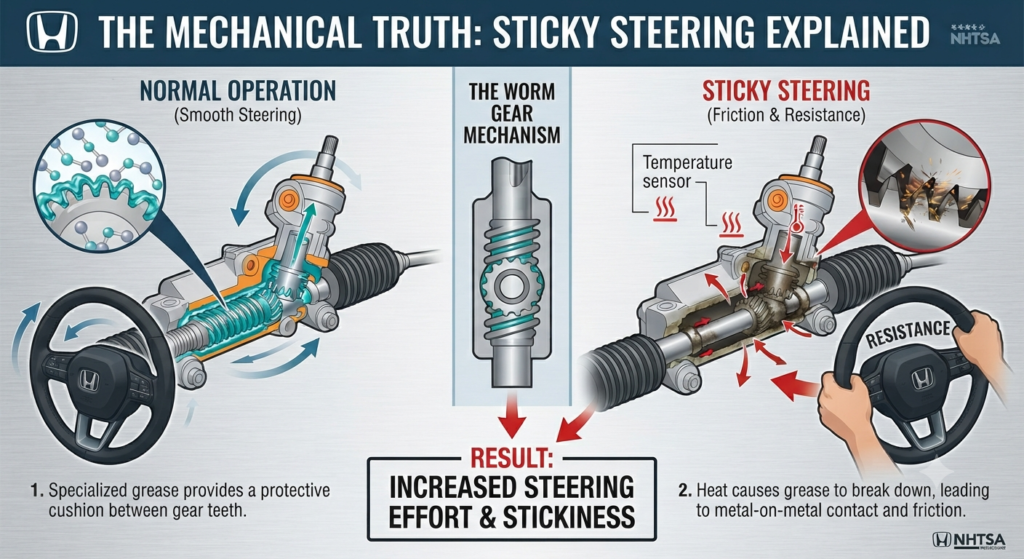
To understand this problem, you don’t need an engineering degree. You just need to think of your steering system like a common door hinge.
Imagine a door hinge that has been used thousands of times. If the lubricant inside that hinge dries up or gets pushed out, the metal begins to rub directly against metal. What happens? It sticks. It becomes heavy. It stops swinging smoothly and starts resisting your touch.
Your Honda Civic has a sophisticated component called a worm gear located inside the electric power steering (EPS) rack. This gear is the heart of your steering system; it is the physical mechanism that translates the movement of your steering wheel into the turning of your front wheels.
For this gear to function perfectly, it needs a consistent, thin layer of specialized grease. This grease acts as a protective cushion, ensuring that the metal teeth of the gear glide past each other without resistance.
However, in certain driving conditions, things get complicated.
When you drive, especially in stop-and-go traffic or during long trips in warm climates, the steering rack naturally generates heat. In affected vehicles, this heat can cause the factory-applied grease to break down. When the grease degrades, it loses its thickness and its ability to cling to the gears. It essentially migrates away from the critical contact points.
Once that protective layer is gone, the metal gear teeth start to make direct contact. This creates friction. That tiny amount of metal-on-metal friction is exactly what you feel as “stickiness” in your hands. It isn’t a computer glitch or a sensor error; it is a physical resistance caused by the lack of lubrication in a high-precision component.
The Road Ahead: Understanding the Recall Process
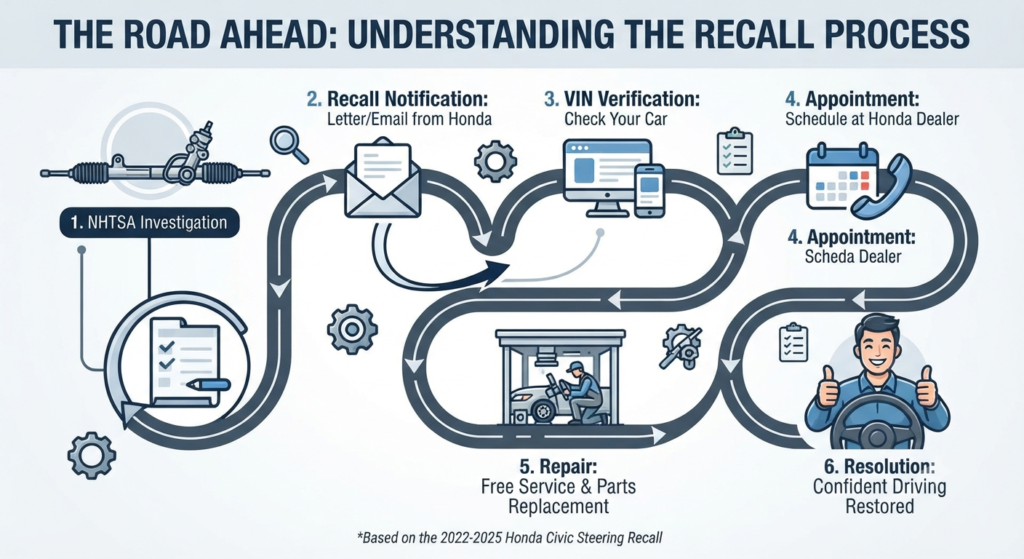
When a manufacturer like Honda issues a recall, it is a formal acknowledgment that a safety-related defect exists. For the 2022–2025 Civic models, the recall is the result of a long, data-driven investigation by the NHTSA.
The goal of the recall is simple: to restore the steering to the level of precision and safety that you expected when you bought the car. It is not something you should ignore, even if your steering feels fine today. “Sticky steering” can be intermittent, meaning it might feel normal for days and then act up exactly when you need to make a quick maneuver.
Frequently Asked Questions (FAQ)
Is the repair free?
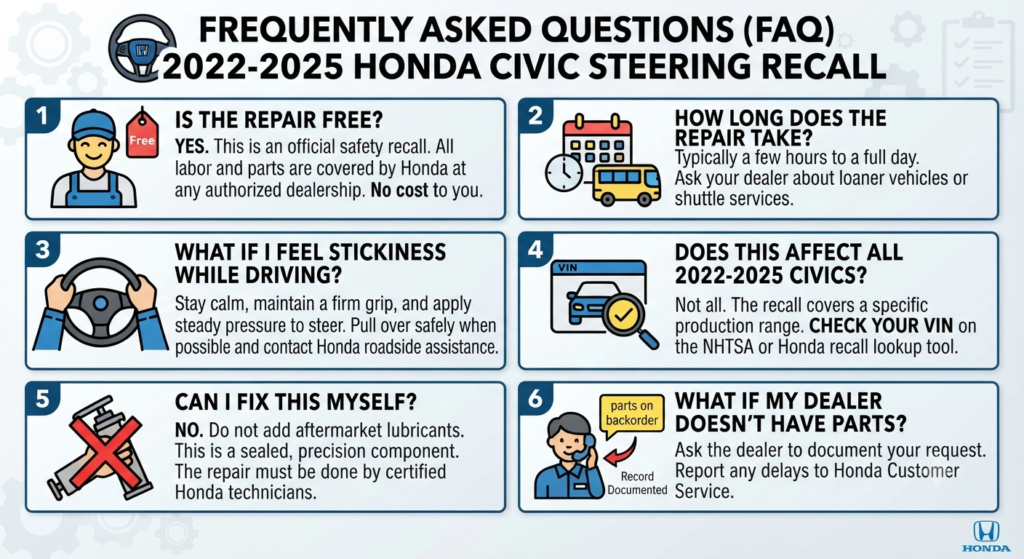
Yes. Because this is an official safety recall initiated under the oversight of the NHTSA, Honda is legally and ethically obligated to perform the necessary repairs or parts replacements at no cost to you. This includes both the labor and the parts at any authorized Honda dealership. You should not have to pay a cent for this service.
How long does the repair take?
Repair times can vary depending on the workload at your local dealership and how quickly they can source the necessary replacement parts. Generally, once the technician begins the work, it can take anywhere from a few hours to a full day. Some dealerships may offer a loaner vehicle or shuttle service, so be sure to ask about these options when you call to schedule your appointment.
What should I do if I feel the stickiness while driving?
If you feel resistance while driving, stay calm. The vehicle is still steerable, but it requires more effort than usual. Maintain a firm, two-handed grip on the steering wheel. Do not panic or make sudden, jerky, or violent movements. Apply steady, controlled pressure to steer in the direction you need to go. Once you reach a safe location, pull over, check your surroundings, and contact your local Honda dealer or a roadside assistance service to have your vehicle inspected as soon as possible.
Does this affect all 2022–2025 Civics?
Not every single unit may exhibit the defect, but the recall covers the specific production range where the potential for this issue was identified. It is vital to check your Vehicle Identification Number (VIN) on the official NHTSA website or the Honda Recall Lookup tool to see if your specific car is included.
Can I fix this by adding more grease myself?
No. Please do not attempt to lubricate the steering rack yourself. The steering system is a sealed, high-precision assembly. Adding aftermarket lubricants can actually cause further damage to the sensitive electronics and sensors contained within the EPS unit, potentially voiding your warranty and creating further safety hazards. Leave this repair to certified Honda technicians who have the correct tools and authorized materials.
What if my dealer says they don’t have the parts?
Parts supply chains for recalls can sometimes be constrained. If your dealership tells you that parts are on backorder, ask them to document your request in their system. This establishes a record that you are seeking the recall service. You can also contact Honda Customer Service directly to report the delay; they may be able to expedite the process or provide alternative solutions for your situation.
Taking Action Today
Your safety is not something to leave to chance. If your vehicle is part of the recall, take the time to contact your dealership this week. Even if the steering feels perfectly fine, getting the work done provides long-term peace of mind and ensures your car remains reliable for the road ahead.