
The Honda Civic Type R is a masterpiece of modern automotive engineering. It delivers world class handling and a driving experience that few other front wheel drive cars can match. However, many owners quickly discover an expensive reality. This car is notorious for its aggressive appetite for tires.
If you are running the Michelin Pilot Sport 4S, you are using one of the best summer tires available for high performance vehicles. Yet, many owners are shocked when their tread depth vanishes in record time. The reality of your tire lifespan depends on more than just the brand name. It is a mix of your specific driving habits, the car’s aggressive factory alignment, and the way the Type R delivers its massive torque to the pavement. In this guide, we will break down exactly what you should expect from your Michelin tires and how to manage them like a pro.
What Is the Real World Lifespan?
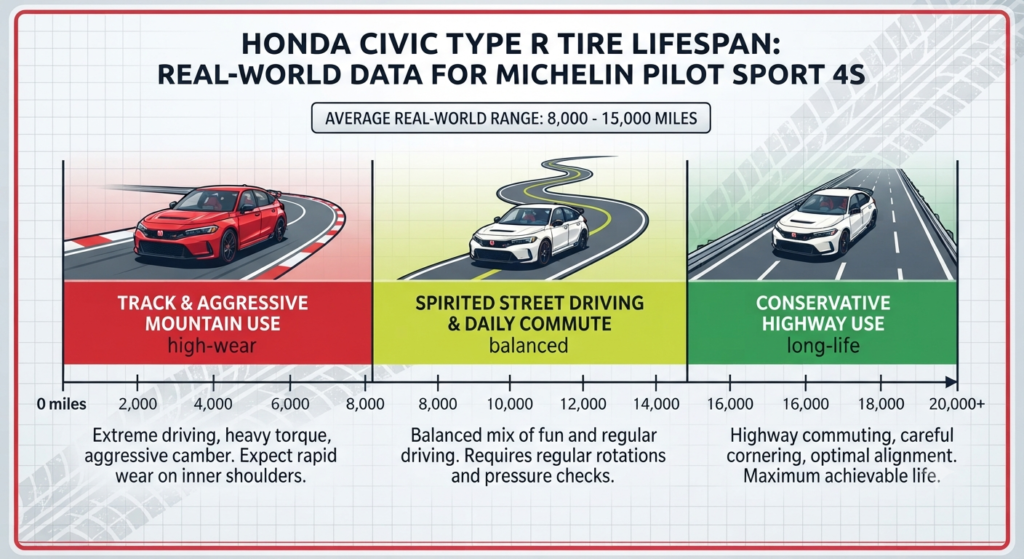
Most Type R owners report getting between 8,000 and 15,000 miles out of a set of Pilot Sport 4S tires. If you are a commuter who sticks to highways and drives very conservatively, you might be able to stretch that to 20,000 miles. However, the Type R was not built to be driven conservatively.
If you enjoy your car on mountain roads or attend track days, do not be surprised to see those numbers drop significantly. Some aggressive drivers report needing new rubber in as little as 6,000 miles. The Michelin Pilot Sport 4S is a max performance summer tire. It prioritizes extreme grip over longevity. Given the Type R’s torque steer and heavy front end load, these tires work overtime to keep you planted in every corner.
The Hidden Impact of OEM Tuning
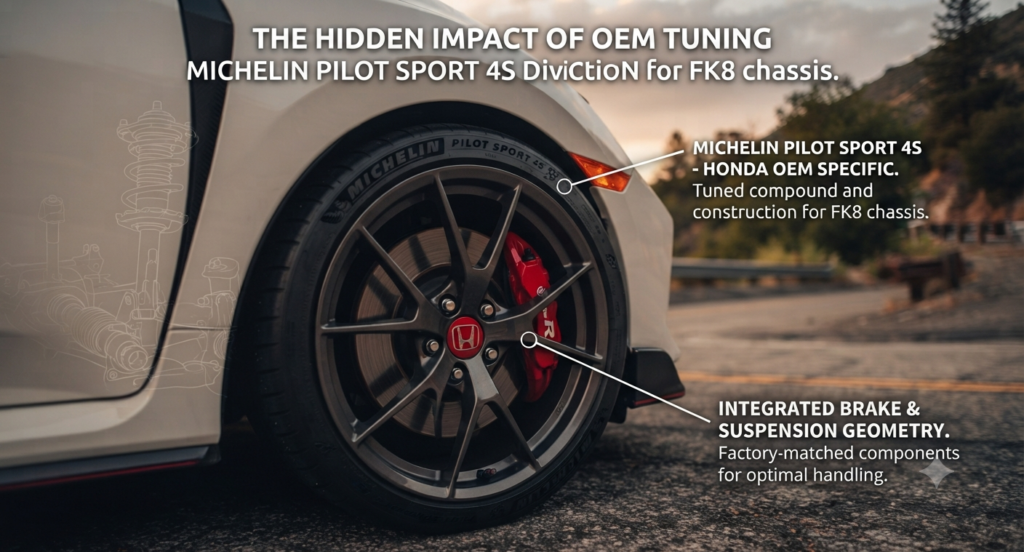
Many owners replace their tires with the standard retail version of the Pilot Sport 4S. While this is an excellent choice, it is worth noting that the tires installed at the factory are sometimes unique. These tires are often developed through a partnership between Honda and Michelin.
These OEM spec tires are specifically tuned for the Type R chassis. They may have slight variations in the rubber compound or the internal carcass construction. They are designed to work in harmony with the car’s specific suspension geometry.
When you switch to an off the shelf set, you might notice slight differences in road noise, steering feel, or even wear rates. These differences are normal and usually negligible for daily driving. Always check your tire sidewall markings to see if your replacement tires match the original specifications.
The Alignment Trap: Why Tires Wear Unevenly
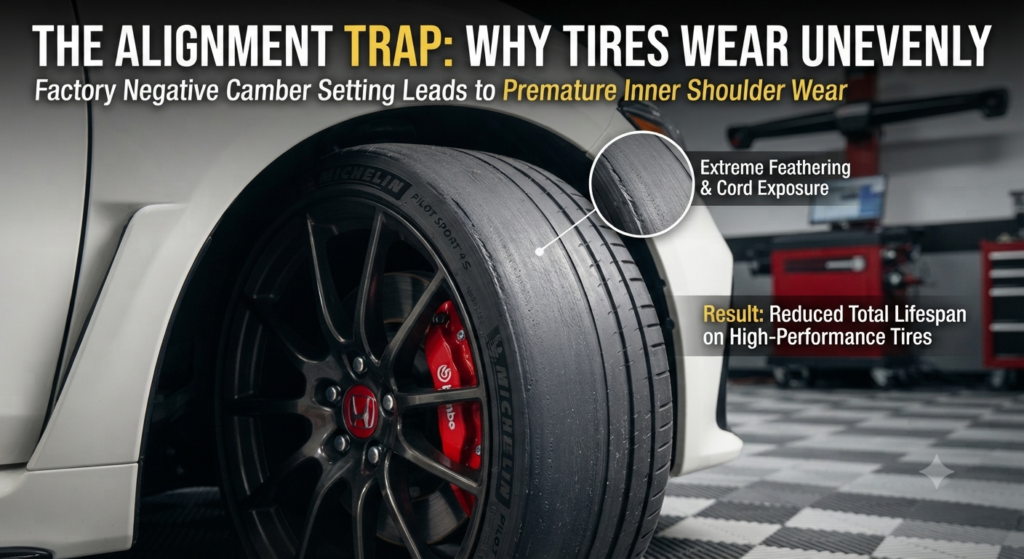
The biggest factor in premature wear is not just your right foot. It is the factory alignment. Honda prioritizes handling and turn in precision above all else. To achieve this, the car comes from the factory with aggressive camber settings.
This setup is wonderful for track performance, but it often results in the inner shoulders of the front tires wearing out long before the center. If you notice your tires are bald on the inside but have plenty of tread in the middle, your alignment is the primary culprit.
Many veteran owners choose to run a slightly more neutral alignment to balance out the wear. By reducing the negative camber, you can extend the life of your Michelin tires by several thousand miles. You will sacrifice a tiny bit of ultimate cornering speed, but your wallet will thank you during your next tire purchase.
Temperature Sensitivity and Performance
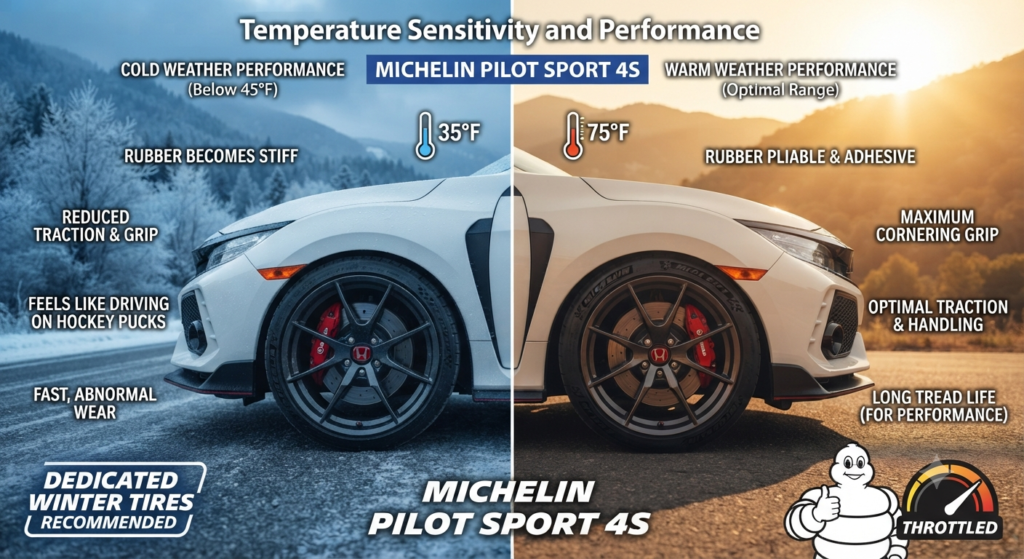
Temperature plays a major role in how your tires perform and how quickly they degrade. The Pilot Sport 4S is a summer tire that thrives in warmth. When temperatures drop below 45 degrees Fahrenheit, the rubber compound becomes very stiff.
Driving on these tires in near freezing conditions can accelerate wear. It also significantly reduces your traction, making the car feel like it is driving on hockey pucks. If you live in an area with harsh winters, you should absolutely invest in a dedicated set of winter tires. Using your Pilot Sport 4S during the winter is both unsafe and a fast way to ruin an expensive set of rubber.
Essential Maintenance for Longevity
You cannot change the nature of the car, but you can manage it. Proper maintenance is the only way to get the most out of your investment.
Check your pressure monthly. The Type R is extremely sensitive to PSI changes. Always use the recommended cold tire pressure found in your door jamb. Do not use the maximum number printed on the tire sidewall.
Rotate your tires. On a front wheel drive car like the Type R, the front tires do the heavy lifting for steering and acceleration. Rotate them every 5,000 miles to ensure even wear across all four corners.
Keep an eye on tread depth. The performance of the Pilot Sport 4S drops as the tread wears down, especially in wet weather. Use a simple depth gauge or the penny test to keep track of your progress. If your tread is low, the tire becomes much more susceptible to hydroplaning.
When Is It Time to Switch?
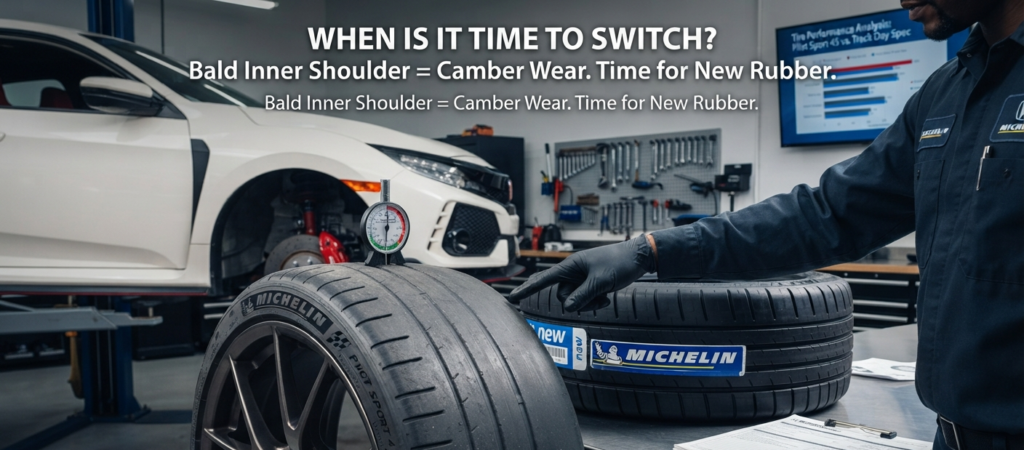
If you find yourself hitting the track more often than you expected, the Pilot Sport 4S might not be the right choice for you long term. It is a fantastic street tire that handles the occasional track day with ease.
However, if you start pushing for faster lap times, you should look into dedicated 200 treadwear tires. These are specifically designed to handle the high heat cycles of a track environment without losing their structure or grip.
For 90 percent of Type R owners, the Pilot Sport 4S remains the perfect balance of daily comfort and weekend performance. It is quiet, predictable, and offers class leading wet weather capability. Just be prepared for the maintenance that comes with owning a high performance vehicle. By staying proactive, you can ensure that your Type R remains as sharp and fast as the day it rolled off the assembly line.