
Honda Motor Co. Ltd. has transitioned from a founder-driven entity to one dominated by institutional investors. This shift aligns with the company’s recent strategic focus on electrification, software integration, and the reduction of traditional cross-shareholdings.
Major Institutional Shareholders
As of the first quarter of 2026, institutional investors hold the majority of Honda’s outstanding shares. The ownership structure reflects a mix of global asset managers and large Japanese financial institutions.
- BlackRock, Inc:
Remains one of the largest shareholders, with a reported stake of approximately 8.74% as of March 31, 2026. - Nomura Asset Management Co, Ltd:
Holds a significant position of approximately 6.98%. - Sumitomo Mitsui Trust Asset Management Co, Ltd.:
Maintains a stake of approximately 4.39%. - Meiji Yasuda Life Insurance Company:
Holds approximately 3.55% of the company. - Vanguard Capital Management, LLC:
Continues to be a key institutional player with a stake of approximately 2.86%.
These percentages are based on the latest available 13F and institutional holdings data. Note that these figures can fluctuate due to active trading and the passive nature of index fund rebalancing.
Corporate Governance and Board Strategy
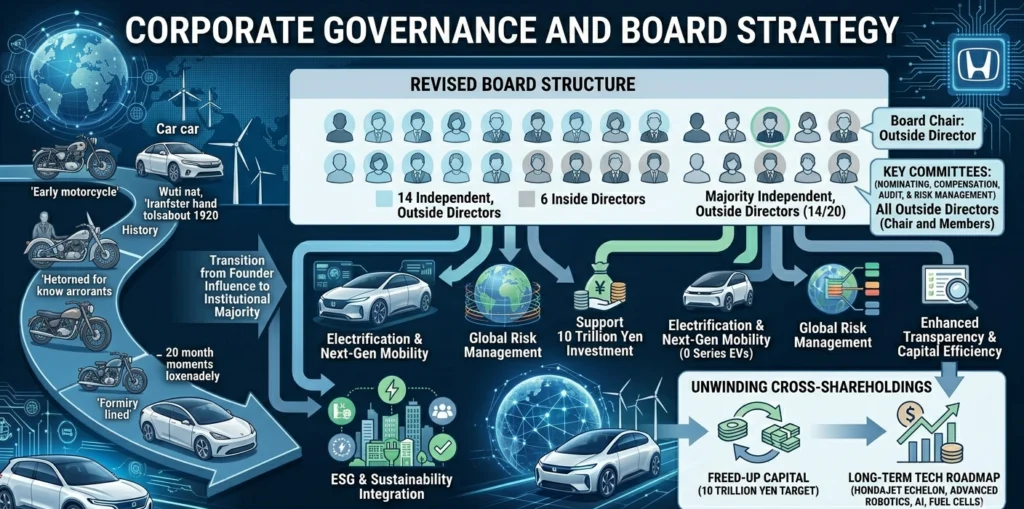
Honda is actively reshaping its governance to improve transparency and decision-making efficiency. This is part of a broader strategy to support a 10 trillion yen investment in electrification and next-generation mobility.
The board structure has been revised to ensure that a majority of members are independent, outside directors. This move is designed to strengthen oversight and provide objective guidance during the company’s transition to its “0 Series” EV lineup and other high-tech ventures.
As of June 2026, the company has implemented further changes to its executive and director composition. These adjustments include promoting new leadership from within the R&D and executive divisions to ensure business continuity while maintaining a focus on global operational risk management.
Key committees, including the Nominating and Compensation committees, are now composed entirely of outside directors. By appointing an outside director as the Chair of the Board, Honda aims to bolster the effectiveness of its corporate oversight and demonstrate a commitment to shareholder value.
Strategic Context
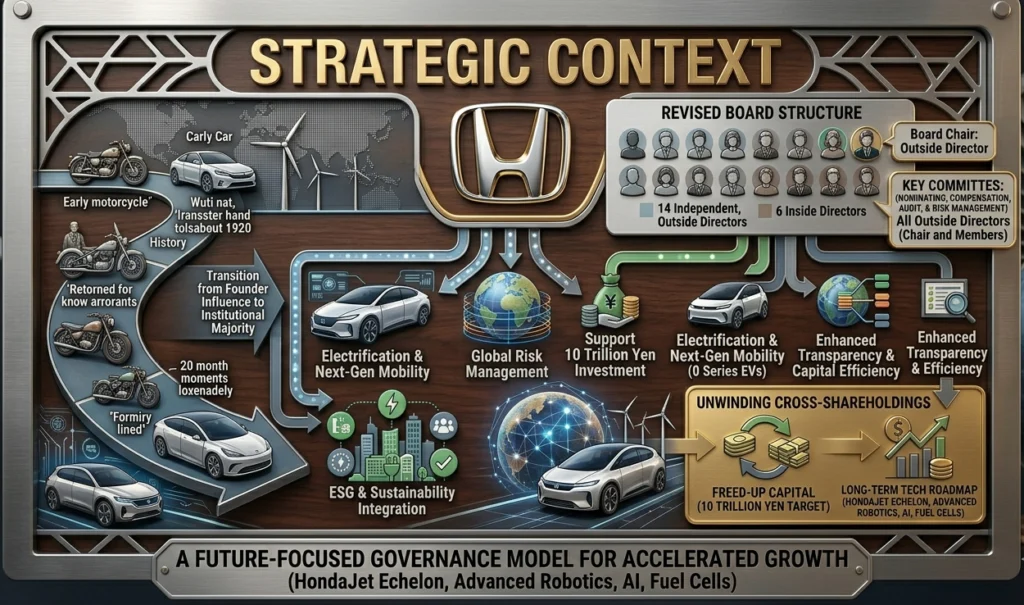
Honda’s ownership landscape is influenced by its ongoing commitment to unwind historical cross-shareholdings. By freeing up capital, the company is prioritizing its long-term technology roadmap, including HondaJet Echelon and advanced robotics.
The company maintains a “one-share-one-vote” policy, ensuring that voting power remains aligned with equity ownership. This transparency, combined with the presence of global institutional investors, creates a governance environment focused on sustainable growth and capital efficiency.
How would you like to further analyze these shareholder trends or the impact of these governance changes on Honda’s long-term stock performance?