
We have all been there. You pull into the gas station with the fuel light glowing, certain that you need to fill up every drop your tank can hold. You watch the numbers climb on the pump, only for the nozzle to click off prematurely. You look at the total, realize you have put in significantly less fuel than your owner’s manual suggests your tank can handle, and wonder what is going on. It feels like the pump is lying to you, or perhaps your car is keeping secrets about its true capacity.
If you are a Honda Civic owner in the United States, this is a very common point of confusion. You are not alone in wondering why your tank capacity never seems to match what you can actually squeeze in at the pump. It is a frustrating experience that leads many drivers to question if their fuel gauge is broken or if they are misreading their vehicle’s specifications. Let us clear up the mystery once and for all and help you understand exactly how your car manages its fuel, why the system is designed this way, and how you can better predict your real-world range.
Understanding Honda Civic Fuel Tank Capacities
The capacity of your fuel tank depends on the specific model year, trim level, and engine configuration of your vehicle. While most standard Civics share a similar platform, some newer hybrid variants are built differently to accommodate complex battery placements and electric motor systems.
- 10th and 11th Generation (Standard Gas Models): Most of these popular models are equipped with a 12.4-gallon fuel tank, providing a solid balance between weight and range.
- Newer Hybrid Models: To make room for the hybrid powertrain and the necessary battery systems, these specialized models typically feature a slightly smaller 10.6-gallon fuel tank.
It is important to check your specific owner’s manual or the inside of your fuel door to confirm the exact capacity for your particular vehicle, as mid-cycle refreshes or specialized trims can occasionally vary. Understanding your specific capacity is the first step in mastering your vehicle’s range.
Why Can’t You Fill the “Full” Amount?
You might notice that even when your dashboard gauge shows you are almost empty, you still cannot fit the full 12.4 gallons into the tank at the pump. Many drivers assume this means their tank is smaller than advertised, but this is actually a deliberate design feature meant to protect your engine and its components.
Automotive manufacturers include a “fuel reserve” in the tank, which is usually around 1.5 to 2 gallons of gas. This reserve stays in the bottom of the tank even when your dashboard gauge reads empty. The primary reason for this is your fuel pump. In modern vehicles, the fuel pump is located inside the tank, and it relies on the gasoline itself as a liquid coolant to keep the pump’s internal motor from overheating.
If you were to run the tank completely dry, the pump would lose its cooling source, potentially causing it to overheat and fail. By keeping the pump submerged in these last few gallons of fuel, the car prevents the pump from burning out, which helps you avoid a very costly repair bill and the inconvenience of being stranded. Essentially, that “empty” mark on your gauge is a safety buffer designed to keep you on the road and out of the mechanic’s shop.
Calculating Your Driving Range and Real-World Efficiency
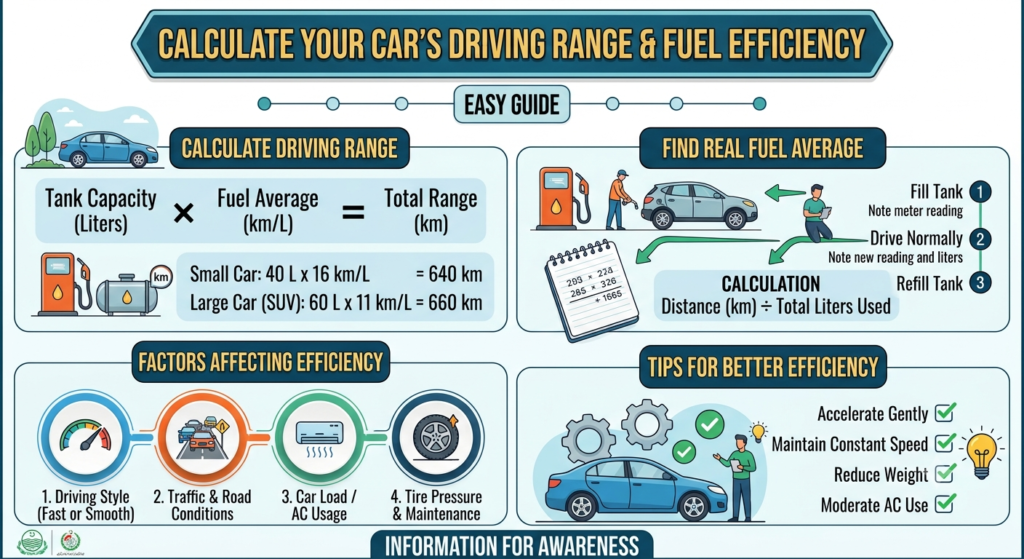
Understanding your range helps you avoid the anxiety associated with a blinking fuel light. To get a reliable estimate of how far you can drive on a single tank, you can use a straightforward calculation based on your driving habits.
Total Tank Capacity $\times$ Average MPG = Estimated Range
For example, if you have a standard 12.4-gallon tank and you are averaging 35 miles per gallon in mixed driving conditions, your math would look like this:
$$12.4 \times 35 = 434 \text{ miles}$$
While your dashboard’s “Distance to Empty” feature is a fantastic tool for quick reference, remember that it is just an estimate based on your recent driving history. Several factors can influence this:
- Driving Style: Aggressive acceleration and high-speed highway driving burn through fuel much faster than steady, moderate cruising.
- Traffic Conditions: Stop-and-go city traffic is the biggest enemy of fuel economy.
- Extreme Weather: Cold temperatures can affect engine efficiency, and the use of heaters or air conditioning puts an extra load on the engine, which can slightly reduce your miles per gallon.
It is always a good practice to treat your dashboard’s range estimate as a general guide rather than an absolute, set-in-stone limit, especially when you are planning a long road trip through remote areas. If you find your “Distance to Empty” dropping quickly, it is always safer to find a station sooner rather than later. By keeping these factors in mind, you can master your Honda Civic’s fuel system and drive with total confidence.
Tips for Maximizing Your Fuel Efficiency
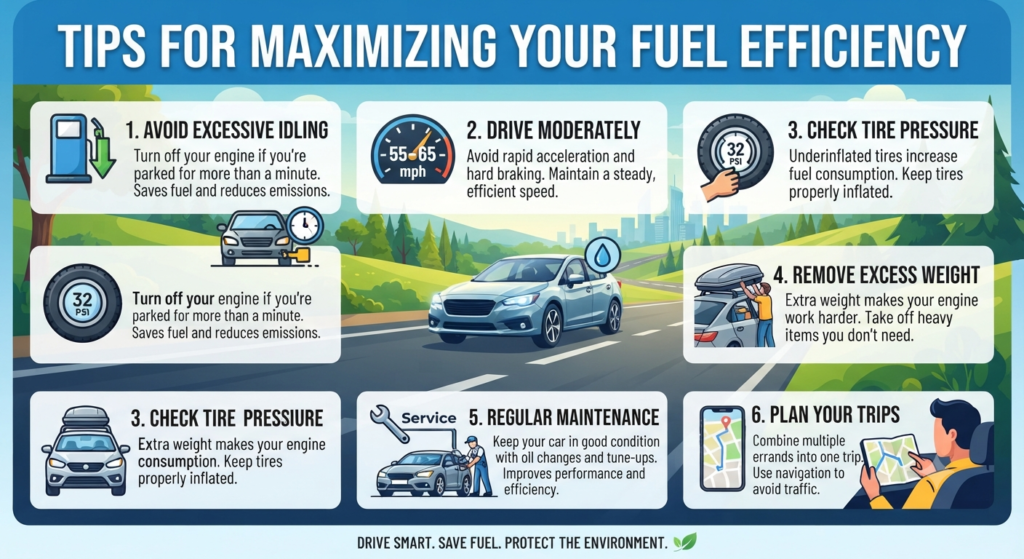
Since we have addressed the capacity and the “empty” light mystery, it is worth discussing how to get the most out of every gallon. Even with a 12.4-gallon tank, your driving habits significantly influence how often you need to visit the pump.
- Maintain Steady Speeds: Using cruise control on the highway helps maintain a consistent speed, which improves fuel economy significantly.
- Check Your Tire Pressure: Under-inflated tires create more rolling resistance, forcing the engine to work harder. Keeping tires at the manufacturer-recommended pressure is one of the easiest ways to save fuel.
- Minimize Idling: If you are waiting for someone, it is more efficient to turn off the engine rather than letting it run. Modern Honda engines warm up quickly, so extended idling is rarely necessary.
- Reduce Excess Weight: Carrying unnecessary items in your trunk reduces your fuel efficiency over time. A lighter car is a more efficient car.
- Smooth Acceleration: Avoid “jack-rabbit” starts at traffic lights. Accelerating smoothly allows the transmission to shift optimally, keeping your engine in its most efficient power band.
We have all been there.