
That rattling sound coming from your dashboard can completely ruin a daily commute. If you drive a Honda Civic, you definitely aren’t alone in this struggle cabin buzzes and squeaks seem to be a rite of passage across several model years.
The good news? You don’t need to spend hundreds of dollars on a diagnostic fee at the dealership. Most of these annoying noises can be tracked down and silenced right in your driveway with basic tools, some cheap materials, and a little bit of patience.
Step 1: Track Down the Exact Source
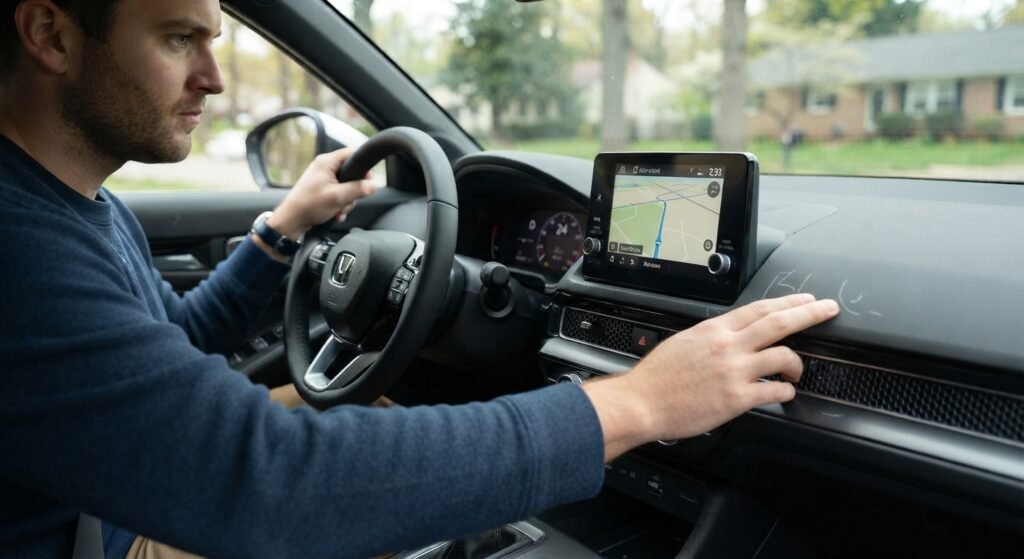
Finding the noise is always the hardest part of the job. Take your Civic for a quick spin on a rough road or a highway stretch with plenty of concrete expansion joints.
- Press your hand firmly against different parts of the dashboard while driving. Notice if the buzzing suddenly stops when you touch the infotainment screen, the air vents, the steering column, or the glove box.
- If you have a passenger, have them help pin down the location by pressing on various trim pieces.
- Driving alone? Safely test different areas while parked by gently tapping plastic surfaces with your knuckles to replicate the frequency.
Step 2: Check the Engine Bay First (The Windshield Washer Line)

A lot of owners tear apart their entire interior dashboard only to find nothing loose. Often, a noise that sounds like it’s right in front of your face is actually coming from under the hood.
- Pop the hood and inspect the passenger side near the firewall. You’ll usually spot a plastic windshield washer fluid hose, a coolant overflow tube, or the washer reservoir neck.
- These lines love to vibrate against the metal chassis at specific engine RPMs. Secure any loose lines using a zip tie or wrap them in a bit of electrical tape to stop the noise instantly.
Step 3: Silence the Infotainment and Touchscreen Trim
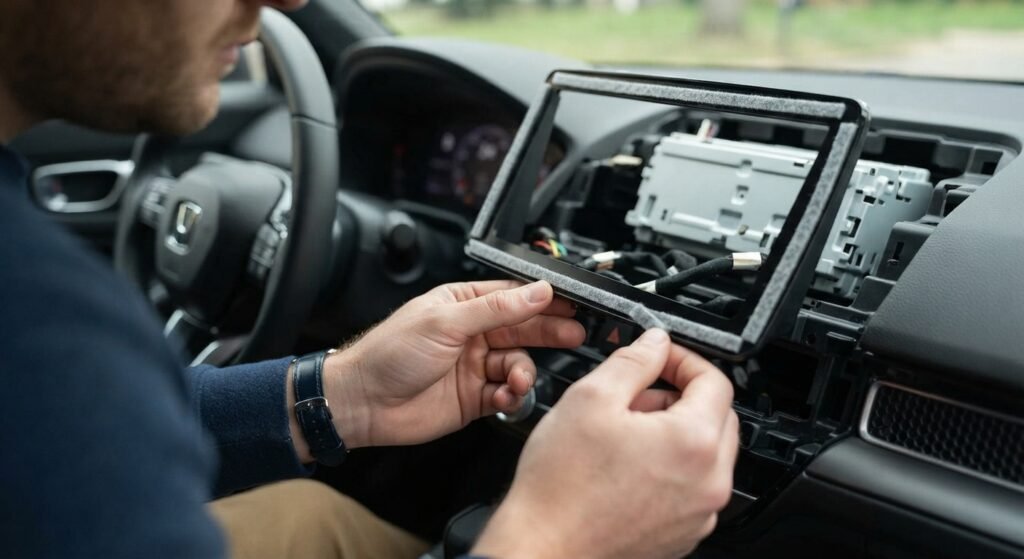
Modern Civics feature prominent touchscreens and digital clusters, and the plastic bezels surrounding them frequently vibrate against the dashboard frame.
- Use a plastic trim removal tool to gently pop off the outer screen bezel or decorative dashboard strip. Take your time and apply even pressure so you don’t snap any fragile plastic alignment clips.
- Apply thin strips of high-density felt tape or closed-cell foam along the back edges of the trim piece.
- Snap the bezel back into place to create a tight, cushioned fit that kills high-frequency buzzing.
Step 4: Fix the Glove Box and Lower Dash Buzzes
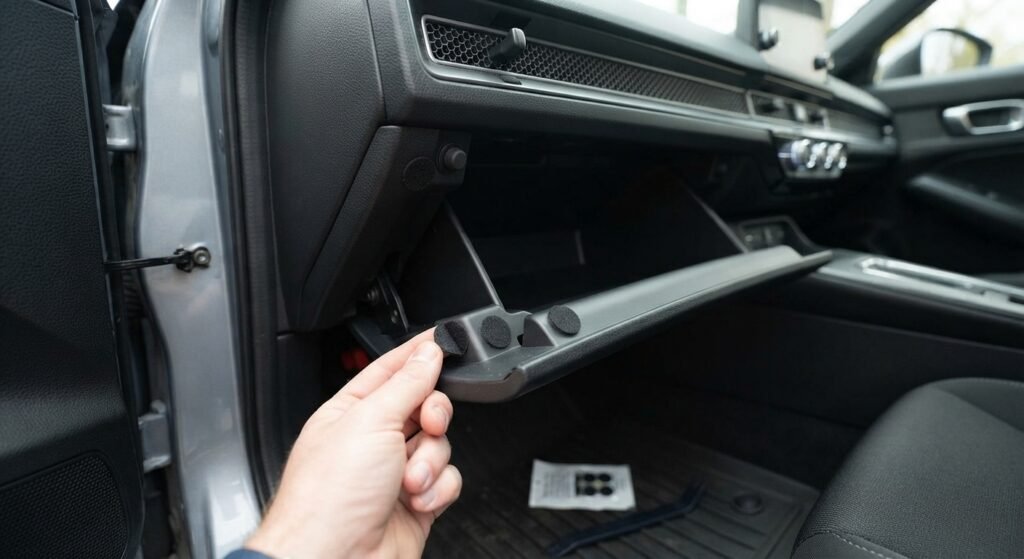
The passenger-side lower dash is another hot spot. The glove box door and surrounding lower panels tend to develop tiny gaps over time due to temperature changes.
- Open the glove box and check the rubber stoppers on both sides. If they are worn down or missing, the door will bounce against the frame every time you hit a bump.
- Stick small rubber pads or adhesive felt dots to the contact points where the glove box latches shut. This adds a little extra tension and silences lower dash rattles for good.
Step 5: Tame Loose Internal Wiring Harnesses
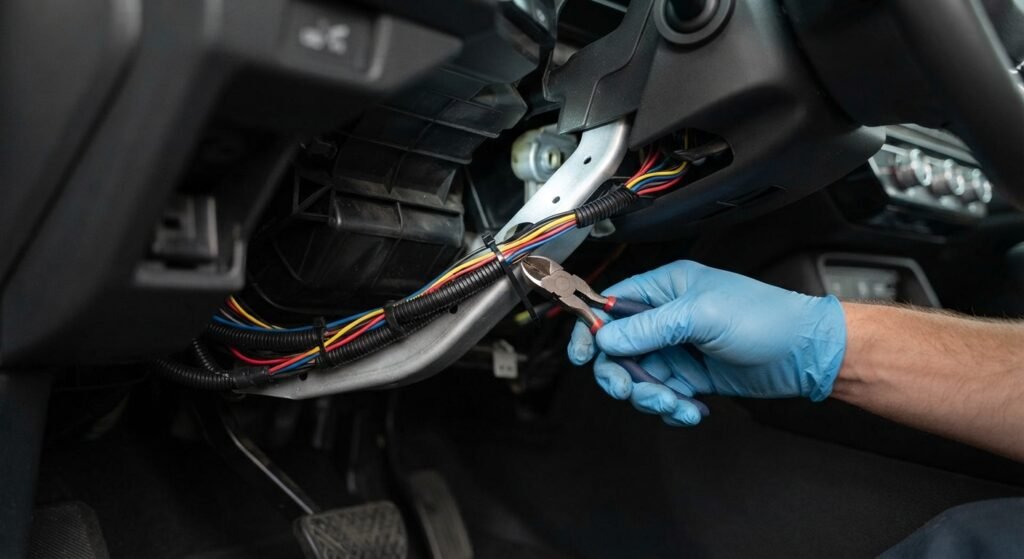
Sometimes the rattle is coming from deep inside the center console or behind the radio stack, where factory wire bundles lack enough zip ties or protective wrapping.
- Look underneath the steering column or reach up behind the center stack with a flashlight. You might spot loose plastic corrugated wire tubing hitting against sharp metal structural braces.
- Reach in and secure those loose wire harnesses with snug zip ties to nearby brackets. Just remember to snip off the excess tail completely so it doesn’t create a secondary rattle!
Step 6: Address Instrument Cluster and Steering Column Squeaks

The cluster area right in front of the driver can develop annoying plastic-on-plastic squeaks, usually where the clear plastic lens meets the textured shroud.
- Adjust your steering wheel to its lowest and furthest position to give yourself some working room.
- Use a microfiber cloth and a plastic card to wedge a tiny sliver of clear silicone lubricant or ultra-thin felt into the seam.
- Also, check the plastic tilt lever underneath the steering column the adjustment mechanism itself sometimes has play that causes a persistent highway rattle.
Step 7: Secure Air Vents and Climate Control Knobs

Honda Civic air vents have directional louvers that can wear out over time. When the internal dampening tabs get tired, the louvers rattle constantly whenever the AC fan is running.
- Turn your blower fan to the highest setting and feel each vent. If a specific one buzzes, gently pull the louver assembly out or wedge a small piece of dark foam inside the outer edge.
- If your model has physical climate control buttons or knobs, wiggle them gently. A tiny drop of dielectric grease or a felt ring behind loose knobs will stop rotational vibration in its tracks.
Conclusion
Fixing dashboard rattles takes a bit of detective work and patience, but having a dead-quiet cabin is totally worth the effort. Keep a roll of felt tape and a trim removal tool in your garage, and you’ll be ready to tackle any new noises the road throws your way.
Are you trying to fix a rattle on a specific generation of Civic (like a 10th or 11th gen)?