
Insuring a Honda Civic usually feels like a breeze. Drivers love these cars because they are fuel-efficient, dependable, and super practical for everyday life.
However, everything changes the moment you enter the high-risk pool. A recent speeding ticket, an at-fault fender bender, or a brief gap in your coverage can quickly turn an affordable monthly bill into a heavy financial burden.
Insurance companies look at high-risk drivers through a very strict lens. This guide breaks down what you can expect to pay, how different providers compare, and actionable steps you can take to lower your monthly rates over time.
Why Honda Civic Insurance Rates Spike for High-Risk Drivers
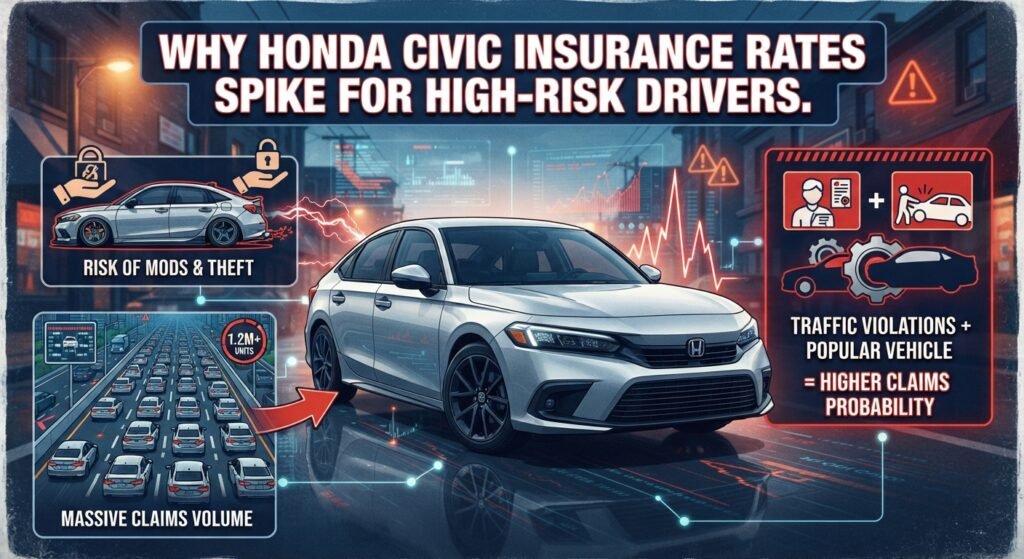
Underwriters don’t just look at your personal driving record they also closely analize the vehicle itself.
- High Volume on the Road:
Honda Civics are among the most popular cars in the country. Because there are so many of them on the road, insurance companies process a massive number of claims for them every year. - Modifications and Theft:
Many insurance algorithms assume that younger drivers modify Civics or drive them aggressively. Coupled with a higher rate of parts theft, the vehicle profile alone carries some extra scrutiny. - Combined Risk:
When you add traffic violations to a popular vehicle profile, risk models react strongly, assuming you are statistically more likely to file another claim soon.
High-Risk Insurance Rates Comparison
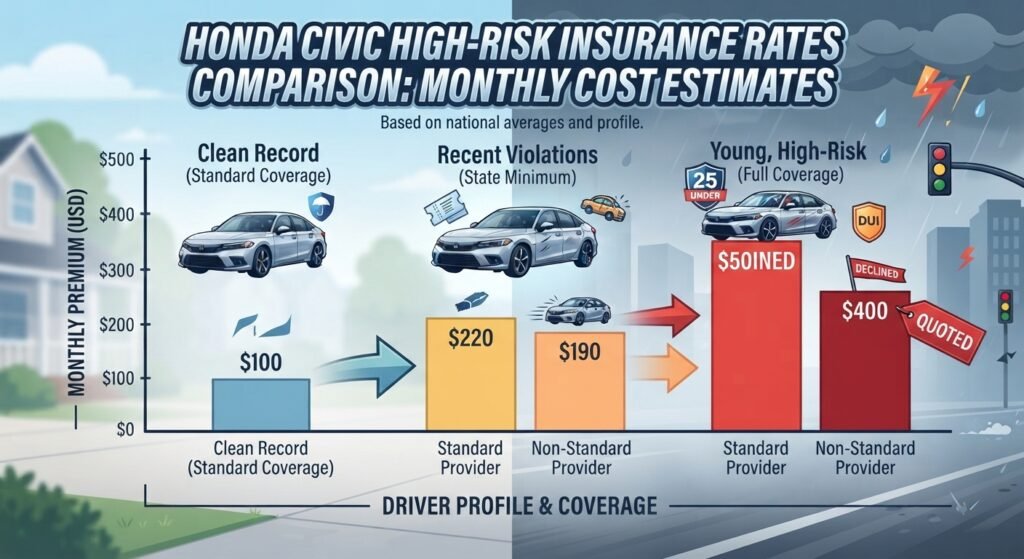
While standard providers like State Farm, GEICO, and Progressive offer great rates for clean records, high-risk drivers often face steep quotes or even direct denials. Instead, non-standard insurance companies specialize entirely in drivers who need a second chance.
- State Minimum Coverage:
Usually starts around $180 to $250 per month, depending heavily on where you live. - Full Coverage (Comprehensive & Collision):
Can easily range from $350 to over $600 per month. - Young High-Risk Drivers:
Drivers under 25 face the steepest spikes, with annual premiums often exceeding $4,000 to $5,000.
Major Factors That Push Your Civic Into the Danger Zone
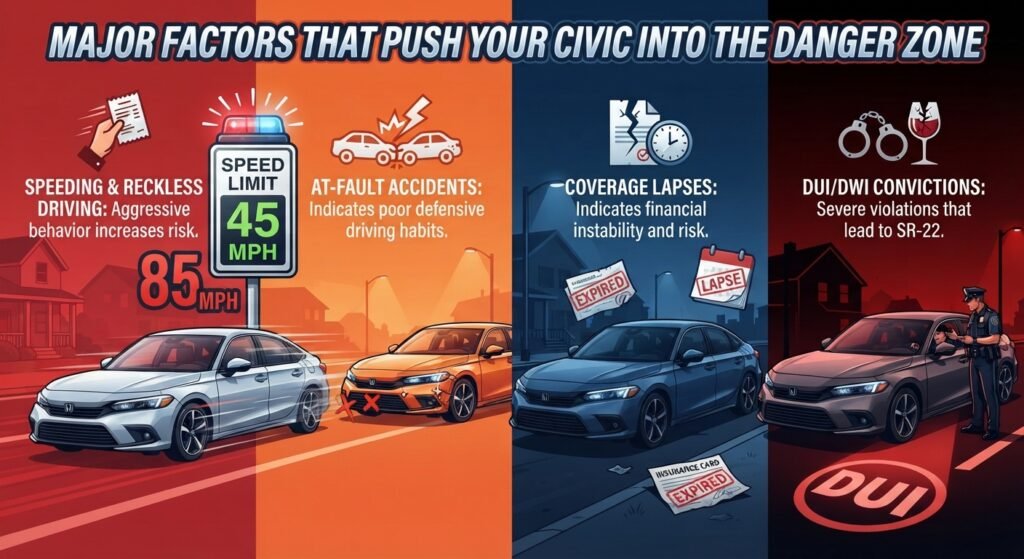
Several specific violations trigger high-risk status under standard insurance guidelines:
- Speeding and Reckless Driving:
Tickets for driving 20+ mph over the limit signal aggressive behavior and can hike your rates for three straight years. - At-Fault Accidents:
Cause a collision, and underwriters will assume you lack defensive driving habits. - Coverage Lapses:
Driving without active insurance even for a few weeks marks you as a financial liability when you try to restart a policy. - DUI or DWI Convictions:
These trigger the most severe rate increases and usually require you to file an SR-22 or FR-44 certificate to prove financial responsibility.
Proven Strategies to Lower Your High-Risk Premiums
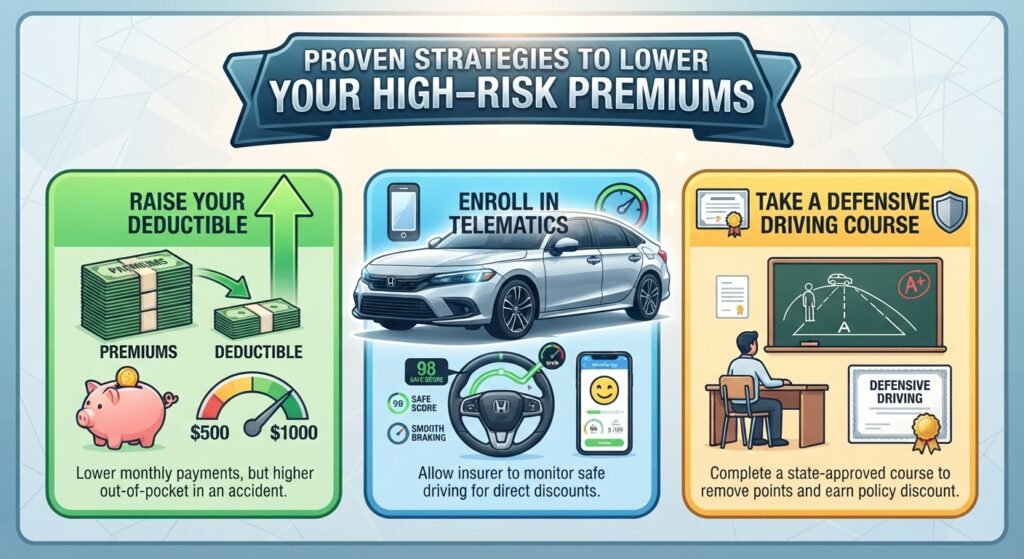
You don’t have to stay trapped with high insurance bills forever. Your record will heal, and you can take active steps today to drop your costs:
- Raise Your Deductible:
Moving your deductible from $500 to $1,000 lowers your monthly premium immediately (just make sure you keep that cash saved for emergencies). - Enroll in Telematics:
Safe-driving tracking apps monitor your speed, braking habits, and phone usage, letting insurers see your safe driving firsthand. - Take a Defensive Driving Course:
Completing a state-approved course can remove points from your motor vehicle record and often earns you a direct policy discount.
Frequently Asked Questions
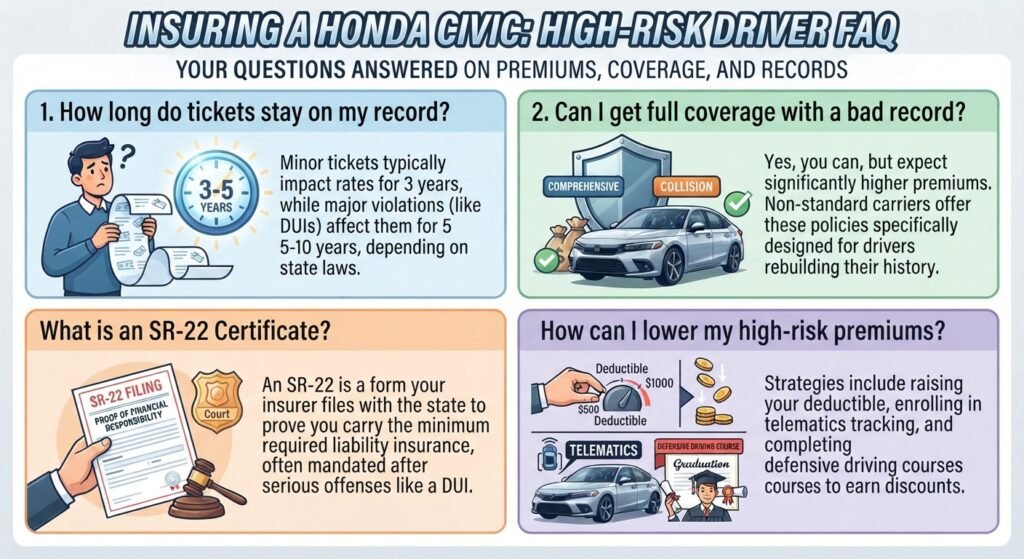
How long do tickets stay on my insurance record?
Most minor speeding tickets and traffic infractions affect your rates for three years. Major violations like DUIs or reckless driving can impact your wallet for five to ten years, depending on state laws.
Can I get full coverage on a Honda Civic with a bad driving record?
Yes, you can secure full coverage, but the monthly premiums will be significantly higher. Non-standard carriers offer comprehensive and collision options specifically tailored for drivers rebuilding their history.
What is an SR-22 certificate?
An SR-22 is a form your insurance company files with your state to prove you carry the minimum required liability insurance. It is typically mandated by courts or the DMV after major offenses like a DUI or driving without insurance.
Conclusion
Insuring a Honda Civic as a high-risk driver takes patience and strategic shopping. The rates might feel punishing right now, but driving records heal over time.
Be sure to compare quotes from multiple non-standard and standard carriers every six months. Maintaining a clean record for just 12 to 36 months will drop your rates significantly and put your car ownership costs back under control.
Are you currently shopping for a high-risk policy, or are you trying to figure out how to drop points from a recent ticket? Let me know your specific situation so I can give you more tailored advice!