
Seeing an A12 code on your Honda Civic dashboard might feel like a surprise, but it is actually your car’s way of staying ahead of potential issues. This intelligent system tracks your specific driving habits to ensure you only perform maintenance when your vehicle truly needs it. By understanding what this code means, you can take control of your vehicle’s health, save significant money, and ensure your car stays on the road for years to come.
Understanding the A12 Code
The A12 code is a simple combination of routine tasks designed to keep your Civic running at its peak. It is not a sign of mechanical failure, but rather a manufacturer recommended reminder to keep your performance optimized.
- A: Replace engine oil. This is the lifeblood of your engine, ensuring that all moving parts are lubricated and protected from friction.
- 1: Rotate your tires to ensure even tread wear. This simple step extends the life of your tires and improves your vehicle’s handling and fuel economy.
- 2: Replace the air cleaner element, swap out your cabin dust and pollen filter, and have your drive belt inspected.
These tasks, when combined, address the most critical aspects of your vehicle’s daily operation. Addressing them early prevents smaller issues from becoming expensive repairs later on.
The Warranty Reality
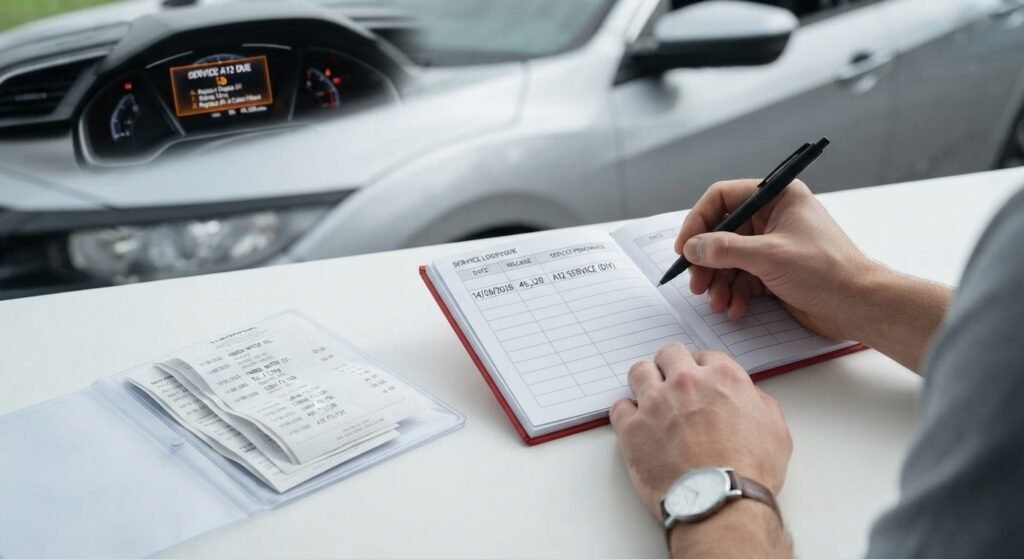
Many owners worry that skipping the dealership will void their factory warranty. You can breathe a sigh of relief because federal law is on your side.
- Performing your own maintenance does not void your warranty.
- The Magnuson Moss Warranty Act protects your right to maintain your own vehicle.
- You simply need to prove the work was done at the correct intervals.
- Keep all your receipts for parts, fluids, and filters in a dedicated folder.
- Maintain a simple, handwritten, or digital log of the date and your odometer reading for every service performed.
- As long as you use parts that meet manufacturer specifications, your coverage remains fully intact.
Taking the time to organize your records is the only homework required to keep your warranty valid. This small effort gives you the freedom to choose who works on your car without fearing a loss of coverage.
Why DIY Maintenance Matters
Beyond the financial savings, performing your own A12 service offers several intangible benefits. You gain a deeper understanding of your vehicle’s mechanical heart.
- Quality Control: You know exactly what oil and filters are being installed.
- Convenience: You do not have to schedule an appointment or wait in a dealership lobby.
- Learning Experience: It builds confidence in your mechanical abilities.
- Peace of Mind: You can personally verify that the work was completed correctly.
When you work on your own car, you treat it with the care that only an owner can provide. You are not just checking boxes; you are ensuring that every nut, bolt, and filter is handled with precision.
DIY vs. Dealership Cost Comparison
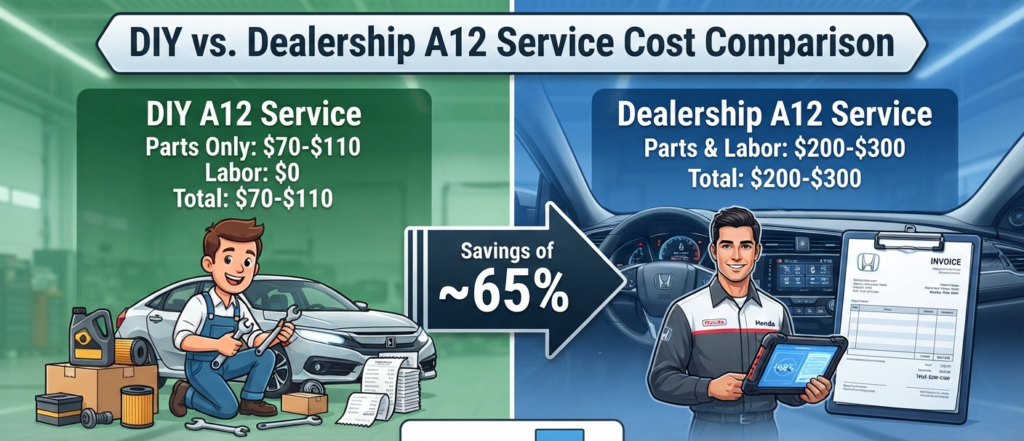
Performing these tasks yourself is a great way to save money. Below is an estimate of average costs for the A12 service in the United States market as of 2026.
| Service Item | DIY Cost (Parts Only) | Dealership Cost (Parts + Labor) |
| Engine Oil & Filter | $40 to $60 | $90 to $130 |
| Tire Rotation | $0 | $30 to $50 |
| Air & Cabin Filters | $30 to $50 | $80 to $120 |
| Drive Belt Inspection | $0 | $0 (Usually complimentary) |
| Total Estimated | $70 to $110 | $200 to $300 |
Note: Prices vary based on your location and whether you choose OEM or aftermarket parts. DIY costs assume you already have basic hand tools.
Essential Tools for the Modern Civic
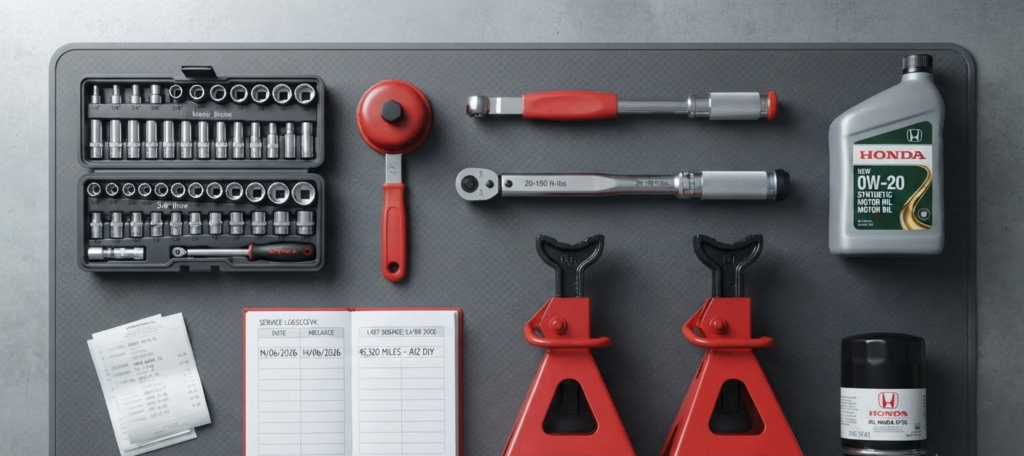
For 2026 and 2027 Honda Civic models, the maintenance requirements remain consistent with previous generations, but the focus on precision has increased. To handle this service yourself, you will need a few standard tools.
- Socket Set: A basic metric set is essential for oil pan bolts and various under-cover fasteners.
- Oil Filter Wrench: This makes removing the old filter significantly easier and cleaner.
- Jack and Jack Stands: Never rely solely on a floor jack while working under your car.
- Torque Wrench: Ensures you do not over-tighten your drain plug or wheel nuts.
- Cabin Filter Access: Note that on newer Civics, this is often located behind the glove box and requires no tools to access.
Always ensure you are using the specific oil weight recommended in your manual, usually 0W-20 for most recent Civic models, as modern engines are built to extremely tight tolerances.
Staying Future-Proof
Whether you are driving the 2026 model or looking ahead to 2027, the core requirements for the A12 service remain consistent. Modern Civics, including the new Hybrid powertrains, continue to rely on the sophisticated Honda Maintenance Minder system to monitor engine oil life and component health.
The inclusion of more advanced technology in newer trims does not change the fundamental need for clean oil and clear air paths. The basic mechanical systems that require lubrication and filtration remain the foundation of Honda’s legendary reliability.
Empowerment Through Knowledge
You do not need to be a professional mechanic to maintain your Civic. You just need to be organized and methodical. Every time you perform your own service, you are investing in the longevity of your machine and the security of your wallet.
Always consult your owner’s manual or the digital service portal for specific part numbers tailored to your exact trim and powertrain. You have the power to maintain your car’s longevity and save money in the process. When you take the initiative to understand your vehicle, you become a better, safer driver who is prepared for anything the road throws at you.