
The Honda Civic is more than just a reliable daily driver. It is a canvas for enthusiasts who love to personalize their rides. Among all the available upgrades in the aftermarket world, sequential tail lights stand out as the most impactful choice.
They transform the rear end of your car instantly. They add a modern, luxury aesthetic that catches everyone’s eye on the road. But beyond the striking visuals, there is a lot to consider before you make the switch. In this comprehensive guide, we will cover everything you need to know about upgrading your Civic with sequential tail lights.
Why Choose Sequential Tail Lights?
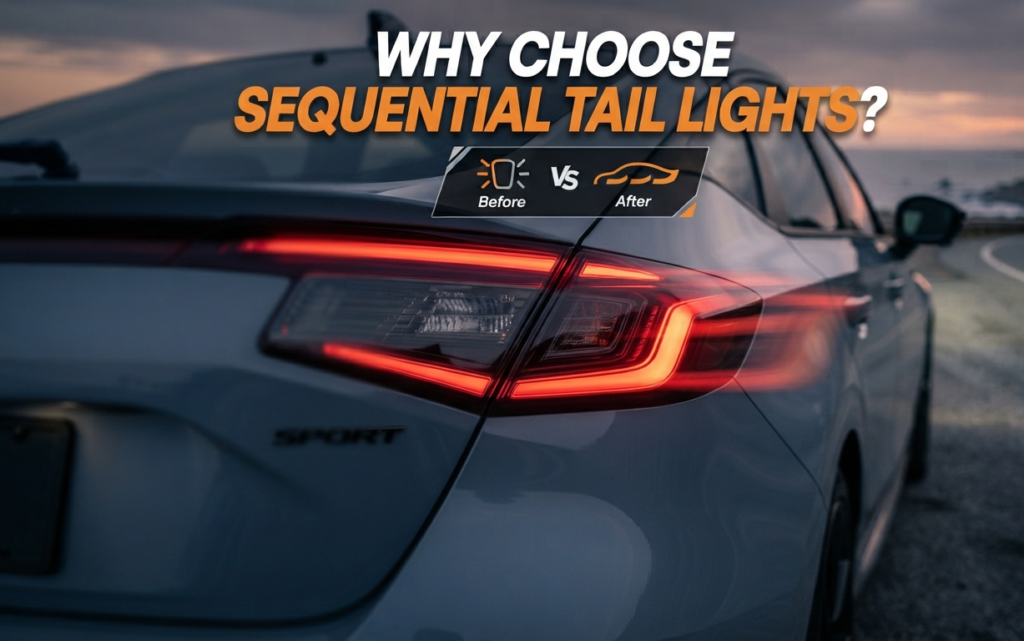
Elevating Your Civic’s Aesthetic Appeal
Sequential lights do more than just blink. They feature a flowing light pattern that moves from the inside out. This design mimics the high-end look of luxury European sports cars.
The aesthetic appeal is the primary reason most owners make the switch. It makes your Civic look significantly more expensive and modern. Whether you are driving a stock model or a modified build, these lights change the car’s personality.
The Safety Benefits of Sequential Lighting
Beyond style, there is a clear safety benefit. The flowing motion is far more noticeable to the drivers behind you. It communicates your intention to turn much more effectively than a standard blinking light. This extra visibility can help prevent rear-end collisions in heavy traffic.
Understanding Compatibility and Generation Differences
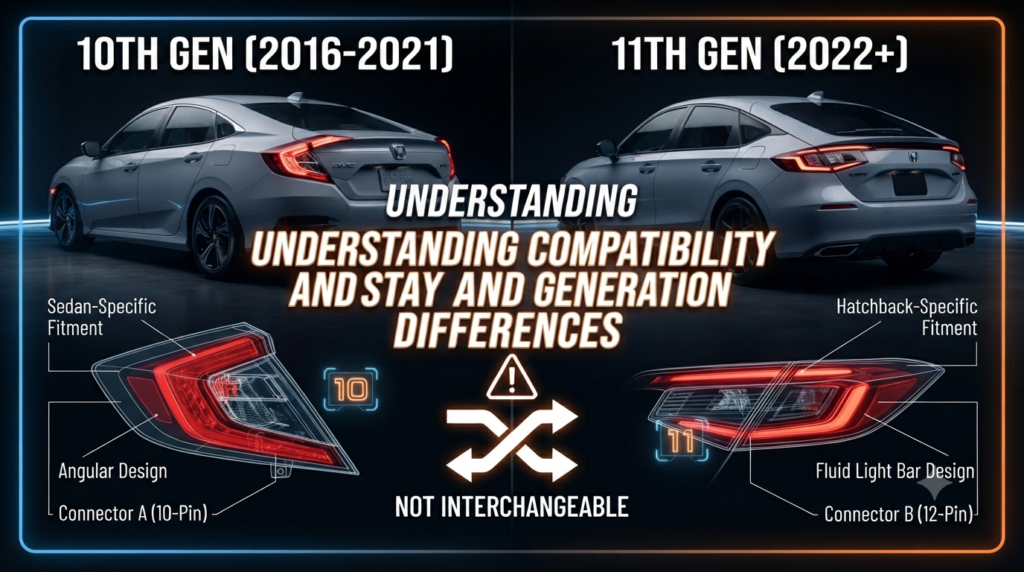
Finding the Perfect Fit for Your Model
Not all aftermarket tail lights are created equal. You must ensure you buy the right set for your specific model year and trim.
The 10th generation Civic (2016 to 2021) and the 11th generation (2022 to present) have different rear end designs. An assembly designed for a Sedan will not fit a Hatchback or a Coupe.
Sedan vs. Hatchback: What You Need to Know
Always verify the fitment guide on the product page. Check your VIN or look at your owner’s manual to confirm your exact body style. Using a part designed for a different model can lead to gaps in the bodywork, which invites water and debris inside the trunk.
Decoding Lens Styles and Build Quality
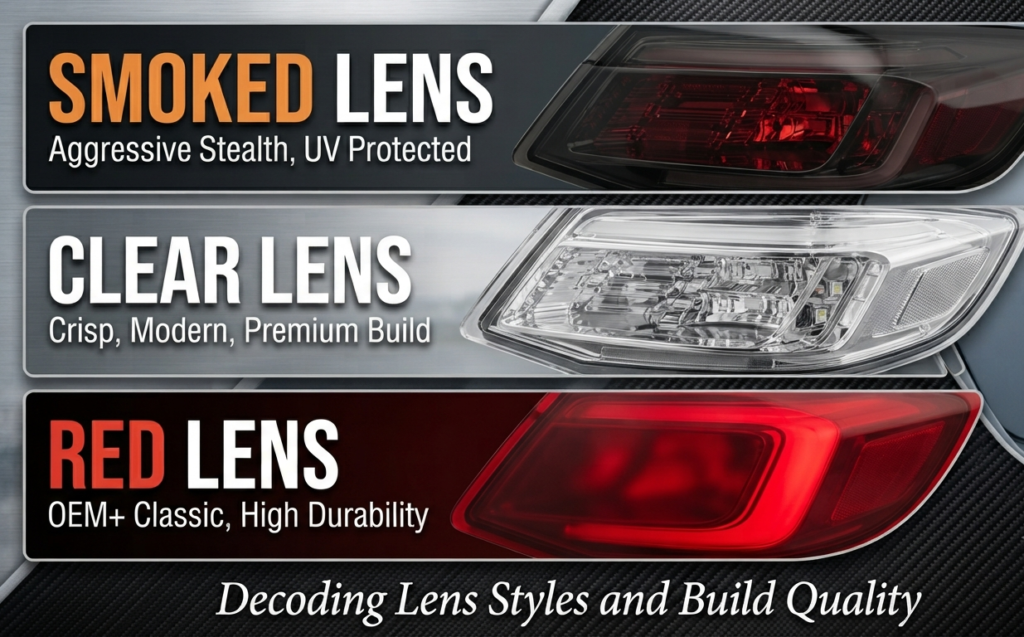
Choosing Between Smoked, Clear, and Red Lenses
When you browse online stores, you will see various lens options. Your choice depends on the look you want to achieve.
Smoked lenses offer a sleek, aggressive, and stealthy look. They blend perfectly with black or grey paint. Clear lenses provide a crisp, modern appearance that looks very technical. Red lenses offer a classic, OEM plus look that feels factory original but with a modern twist.
Why UV Coating and Water Resistance Matter
Regardless of the color, focus on the build quality. Look for products that feature UV coated polycarbonate. This material is essential because it prevents the lights from turning yellow or cloudy under the intense sun.
Check the IP66 or IP67 water resistance rating. This ensures that the internal electronics stay dry during heavy rain or car washes. Cheap, unsealed lights are the leading cause of condensation and electrical failures in the aftermarket world.
The Installation Process: A Step-by-Step Guide
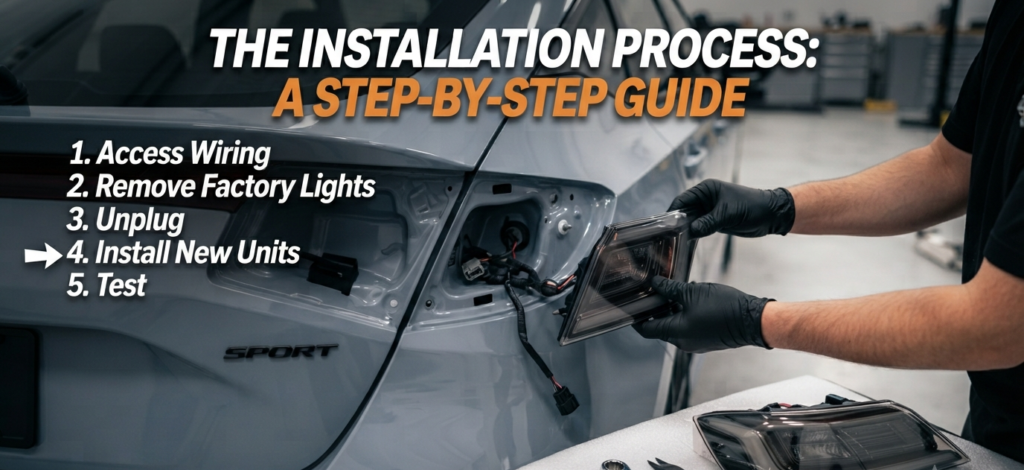
Essential Tools for a Smooth Install
Many owners are hesitant about the installation process. They worry about the complexity of the wiring or the risk of damaging their vehicle’s electrical system.
The good news is that most modern aftermarket tail lights are designed to be plug and play. They use the same connectors as your factory lights. You do not need to splice, solder, or cut any wires.
You will need:
- A plastic pry tool.
- A 10mm socket wrench.
- A pair of clean work gloves.
Simple Steps to Plug-and-Play Success
- Access the Wiring: Open your trunk and remove the plastic clips holding the lining in place.
- Remove Factory Lights: Use your 10mm wrench to loosen the nuts holding the light assembly.
- Unplug: Carefully disconnect the factory harness by pressing the release tab.
- Install New Units: Align your new sequential lights with the factory studs.
- Test: Before you bolt everything down, plug in the new lights to test the turn signals and brake lights.
The Legal and Safety Reality in the US

Staying DOT-Compliant on the Road
When buying aftermarket parts, safety and legality are your top priorities. In the United States, all vehicle lighting is regulated by the Department of Transportation.
Look for lights that carry a DOT compliant stamp. This ensures that the brightness and beam pattern meet federal standards. Using non compliant lights can result in failing a safety inspection.
Understanding State Laws for Turn Signals
Stick to red turn signals whenever possible. While some regions allow amber, red is the standard in many US states. Using red signals prevents confusion and keeps you on the right side of the law.
Troubleshooting Common Aftermarket Issues
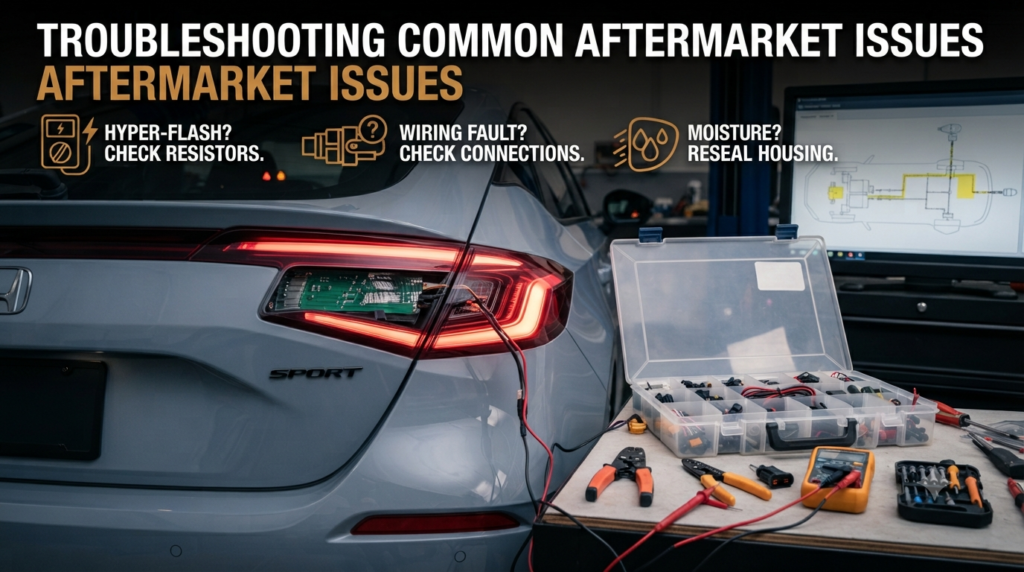
How to Fix Hyper-flashing Easily
Hyper-flashing occurs when your new lights blink too fast. It happens because LED lights draw less power than factory filament bulbs. Your car’s computer thinks a bulb is burnt out.
Most quality kits include a resistor box to fix this. If your kit does not include one, you can buy an LED flasher relay to solve the issue instantly.
Managing Condensation and Moisture
If you see light fog inside the lens, do not panic. It is often just temporary condensation caused by temperature changes.
However, if water droplets pool inside, the seal may be faulty. Check the rubber gasket around the assembly to ensure it is seated flush against the body of the car.
Resolving Simple Wiring Faults
If the lights do not turn on, check the connection. Often, the plug is simply not pushed in all the way. Ensure the locking tab clicks firmly into place.
Why Quality Matters for Longevity
It is tempting to buy the cheapest lights you find. However, cheap lights often use low quality LEDs that burn out quickly.
They also suffer from poor wiring that can cause flickering. When you invest in a reputable brand, you are paying for reliability and a warranty. A high quality set of sequential tail lights should last as long as the car itself.