
Seeing your dashboard light start flashing can be terrifying. When you are driving your Honda Civic and the check engine light begins to blink instead of staying solid, your car is trying to tell you something urgent.
Knowing what this warning means can save you from a massive repair bill and keep you safe on the road.
What Does a Blinking Check Engine Light Mean on a Honda Civic?
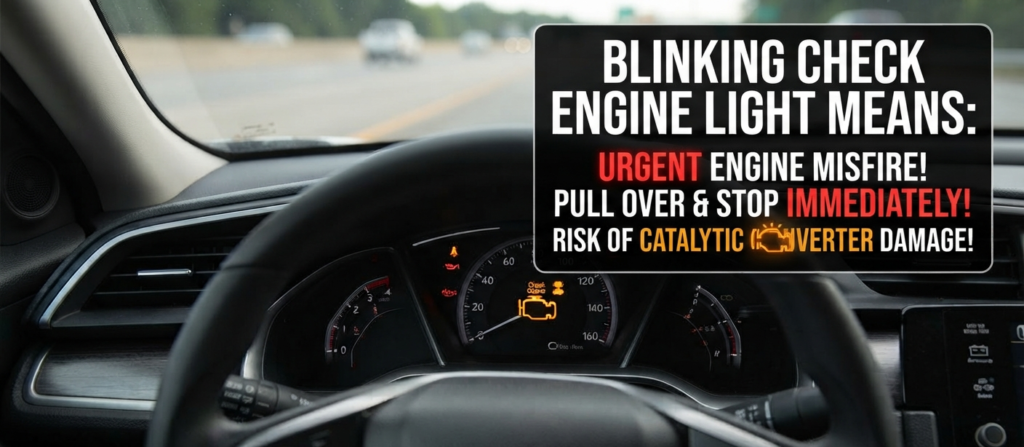
There is a huge difference between a solid check engine light and a flashing one.
A solid light usually points to a minor emissions issue, like a loose gas cap or a faulty oxygen sensor. You can usually drive to a mechanic safely when that happens.
A flashing or blinking check engine light means one thing: an active engine misfire is happening right now inside your engine cylinders.
Unburned fuel is being dumped directly into your exhaust system. This raw fuel enters the hot catalytic converter and ignites inside it.
The extreme heat melts the internal components of the catalytic converter within minutes. What could have been a simple spark plug fix turns into a very expensive exhaust replacement.
Immediate Action: Should You Keep Driving?
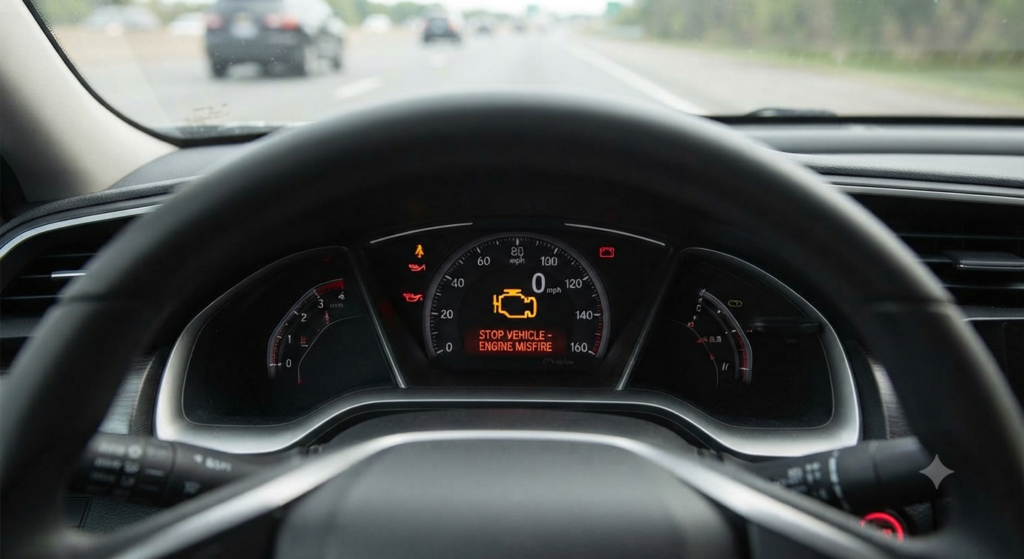
The short answer is no. You should never continue driving when your check engine light is flashing.
If you are currently on the highway, safely signal and move to the shoulder or the nearest exit as soon as traffic permits.
Turn off the engine immediately. Give the car time to cool down before you attempt any inspection.
If the engine is shaking violently, losing power, or making strange popping noises, do not try to limp home. Call a tow truck.
Continuing to drive with an active misfire guarantees catastrophic damage to your vehicle emission control system.
Top Causes and Diagnostic Trouble Codes
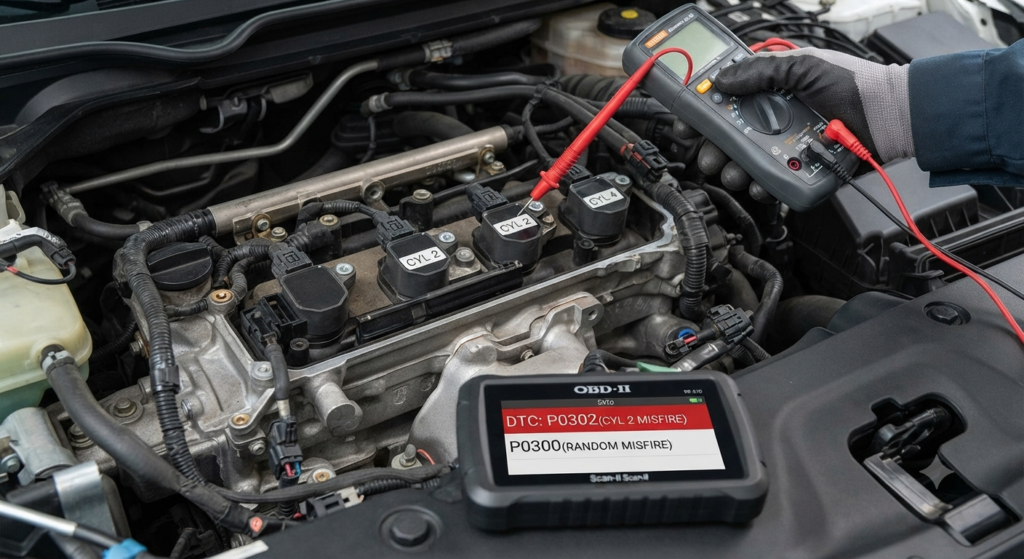
An active misfire always triggers specific Diagnostic Trouble Codes in your Honda Civic computer.
The most common codes you will see include P0300 for a random multiple cylinder misfire.
You might also see codes P0301, P0302, P0303, or P0304. These point directly to cylinder one, two, three, or four respectively.
Several primary mechanical failures cause these codes to trigger in your car.
Worn out or fouled spark plugs are the most frequent culprits. When the gap becomes too wide, the spark cannot ignite the air and fuel mixture properly.
Failing ignition coil packs are another notorious Honda issue. If a coil loses its electrical strength, the cylinder misfires completely.
Faulty fuel injectors, vacuum leaks, or low cylinder compression can also create the exact same symptoms.
How to Diagnose a Blinking Check Engine Light at Home
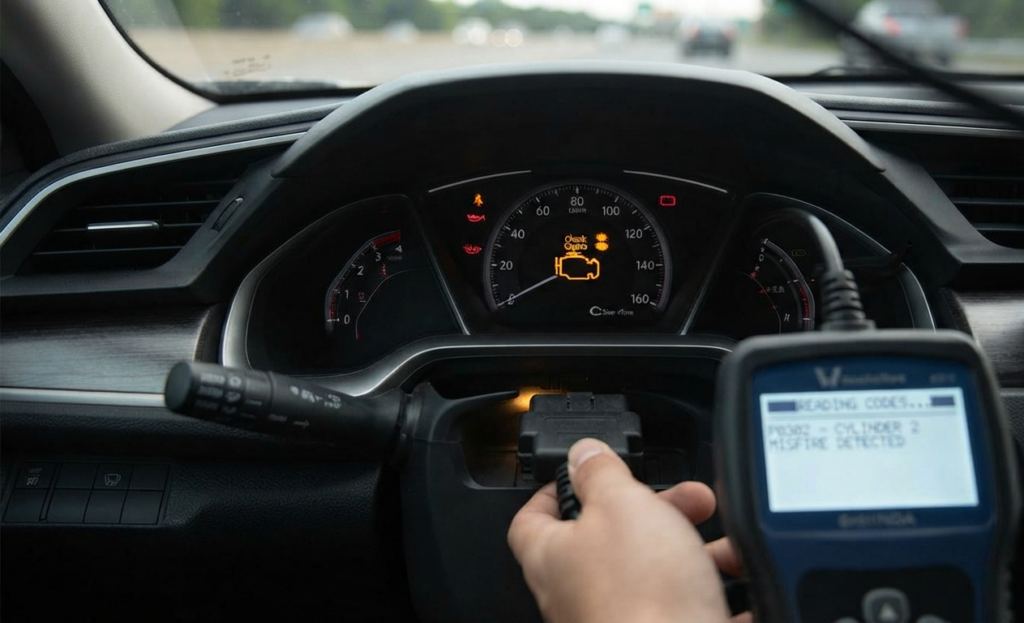
You can perform some basic troubleshooting at home before sending your car to a professional shop.
Plug a standard OBD-II scanner into the diagnostic port located under your dashboard. Read all active and pending codes to see which cylinder is misfiring.
If your scanner points to cylinder two, try the swap test method. Move the ignition coil from cylinder two over to cylinder one.
Next, move the spark plug from cylinder two over to cylinder three. Clear the codes using your scanner and start the engine again.
Drive the car gently until the light returns. Scan the car again to see if the misfire code followed the spark plug or the ignition coil.
If the code moves to a different cylinder, you have found your broken part instantly.
Preventative Maintenance to Avoid Misfires
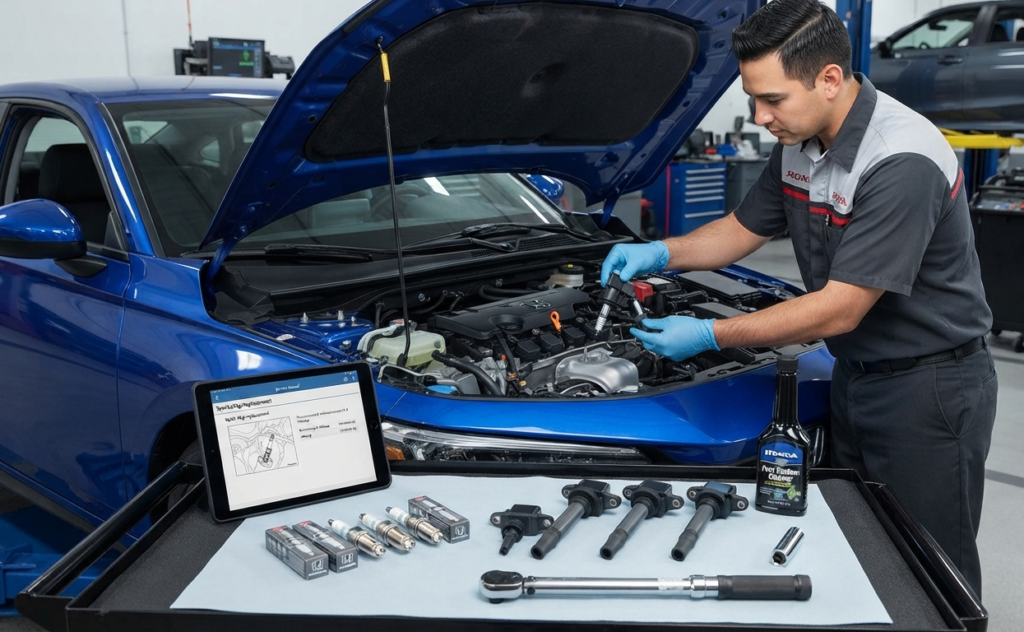
Prevention is always cheaper than a major engine repair.
Inspect your spark plugs every thirty thousand miles if you drive an older Civic generation.
For newer turbocharged models, keep an eye on your fuel injectors and use high quality gasoline to prevent carbon buildup.
Always replace worn ignition coils in sets if your vehicle has high mileage.
Generation Specific Civic Diagnostic Tips
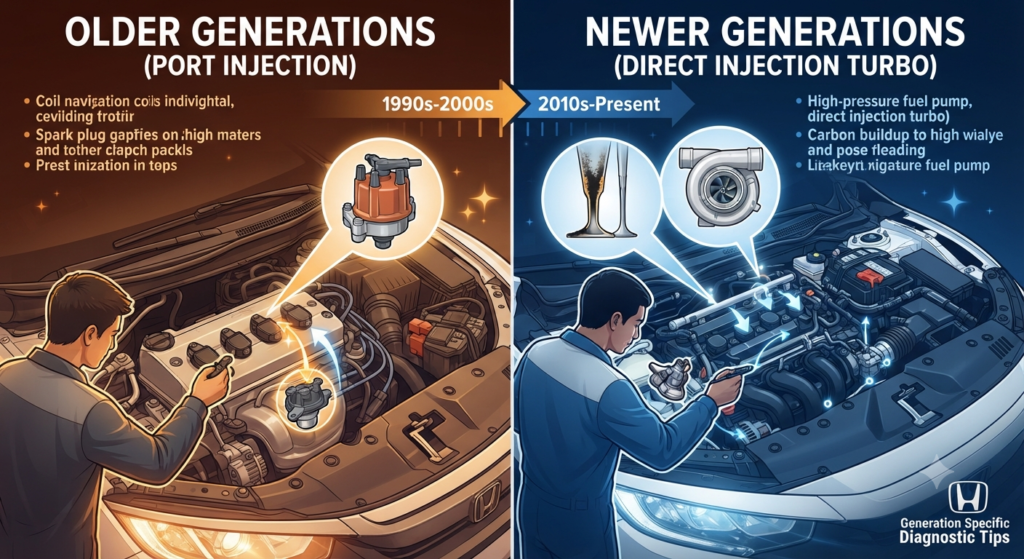
Older generations of the Honda Civic rely on traditional port fuel injection systems.
These older models usually experience misfires directly due to worn spark plug wires or failing distributor caps in older models, or individual coil packs in eighth and ninth generation models.
Newer generations like the tenth and eleventh generation Civics utilize direct injection turbo engines.
These newer engines are more sensitive to carbon buildup on the intake valves, which can mimic a misfire code.
Always check your specific model generation service manual before replacing expensive electronic components.
Understanding Live OBD-II Data Parameters
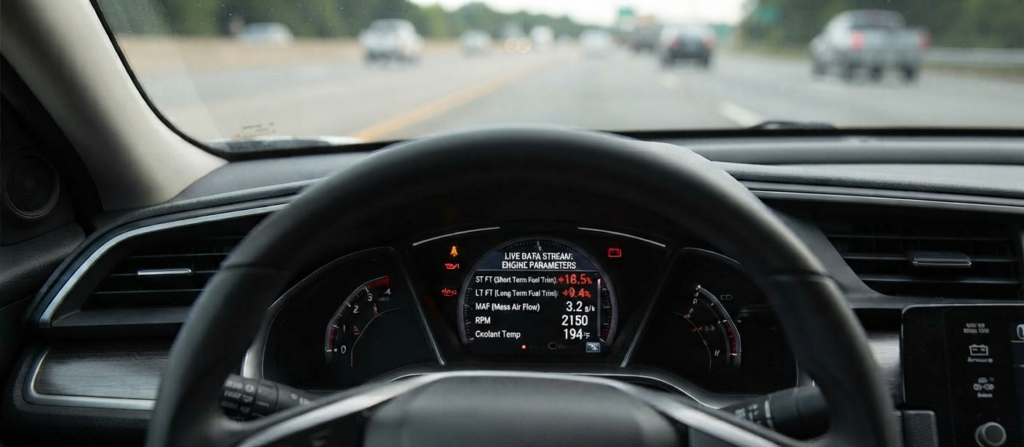
When your check engine light flashes, pulling codes is only the first step.
Advanced DIY mechanics should look at live data streams on their OBD-II scanner.
Check your short term and long term fuel trim numbers while the engine is running.
If fuel trims are heavily positive, it means the computer is adding extra fuel to compensate for a vacuum leak or a failing fuel injector.
Monitoring live data helps you separate an electrical ignition fault from a fuel delivery problem without guessing.