
Seeing a maintenance code pop up on your Honda Civic dashboard can be stressful. You might wonder if it is a major repair or just routine maintenance. If your dashboard shows Service Code 5, your car is telling you it is time to replace the engine coolant.
This guide will explain what this code means, how much you should expect to pay, and how to avoid overpaying at the shop.
What Does Service Code 5 Actually Mean?
The Honda Maintenance Minder system is a smart feature. It tracks the condition of your fluids and parts based on your actual driving habits, not just mileage.
Code 5 is specifically triggered when the engine coolant has reached the end of its effective life. Coolant is the lifeblood of your engine. It circulates through the radiator and the engine block to regulate temperature and prevent overheating.
However, its job is not just about temperature. It also contains vital corrosion inhibitors. These additives prevent rust from forming on internal metal surfaces like the water pump and the engine block.
Over time, these inhibitors lose their effectiveness. When the coolant gets old, it becomes acidic. This acidity can eat away at the rubber seals, the water pump, and the heater core.
Failing to change the coolant on time can lead to catastrophic failures. This includes a clogged radiator, a leaking water pump, or even a blown head gasket.
Why Honda Civic Engines Are Picky About Coolant
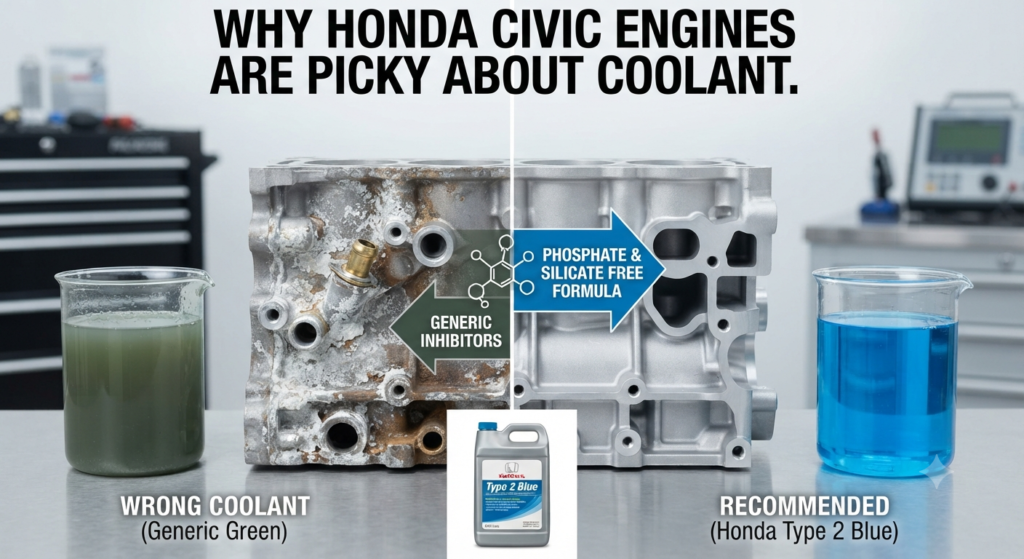
Not all engine coolants are created equal. You may see universal green coolant at your local auto parts store, but you should never use it in your Honda.
Modern Honda engines use specific components like aluminum engine blocks and specialized radiator seals. Honda Type 2 Blue coolant is phosphate-free and silicate-free. It is chemically engineered to protect Honda’s specific cooling system components.
Using the wrong coolant can cause a chemical reaction called “electrolysis” inside the engine. This accelerates corrosion and can lead to expensive radiator failures within just a few thousand miles.
Always ensure that any shop you visit is using the specific Honda blue fluid. If they suggest using a “cheaper” universal green coolant, you should walk away immediately.
The Cost Breakdown: What Should You Pay?
The cost for a Honda Civic coolant service varies depending on several factors. Knowing the breakdown helps you spot a fair deal.
Dealership Pricing
Dealerships provide the most consistent service. They use factory-trained technicians who know exactly how to handle Honda cooling systems.
On average, you can expect to pay between $220 and $350 for a professional coolant flush at a Honda dealership.
This price covers the cost of genuine Honda Type 2 fluid, which is more expensive than generic brands. It also covers the labor cost for a certified technician.
Independent Mechanic Pricing
Local independent shops are often more affordable for routine maintenance.
You might pay between $150 and $250 at a reputable independent shop.
Always verify that the shop is willing to use OEM-grade blue coolant. If they offer a lower price, ask them to show you the bottle of coolant they plan to put into your car.
Factors That Affect the Total Price
- Regional Labor Rates: Prices in major cities like New York or Los Angeles will be significantly higher than in rural areas.
- Service Type: A simple drain and fill is cheaper than a full-system machine flush.
- Model Year: Newer Civic models may require specific diagnostic tool resets that can slightly increase the billed labor time.
- Additional Parts: Sometimes, a mechanic might suggest replacing the thermostat or radiator hoses while the system is open. This will add to the final bill.
Drain and Fill vs. Full System Flush
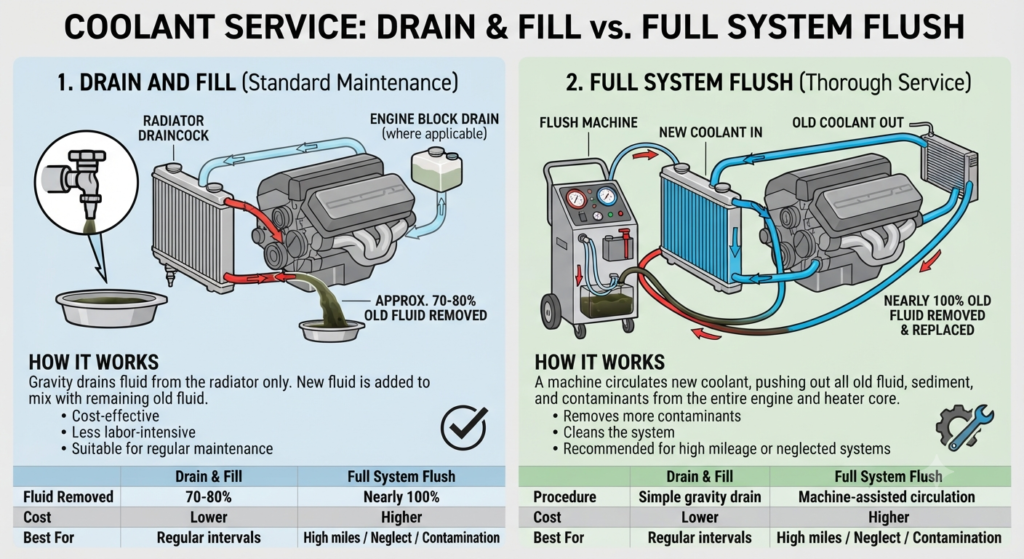
When you call a shop, you might hear these two terms. It is important to know which one you are paying for because the effort required is different.
The Drain and Fill
This is the standard procedure. The mechanic drains the fluid from the radiator petcock and adds new fluid.
This is the most common method. It is cost-effective and sufficient for most vehicles that have followed a regular maintenance schedule. It replaces roughly 70 percent to 80 percent of the old fluid.
The Full System Flush
A full flush uses a machine to cycle new coolant through the entire system. It pushes out old sediment, debris, and stubborn trapped fluid that a simple drain cannot reach.
You should consider a full flush if your car has over 100,000 miles or if the previous owner neglected the maintenance schedule. It is a more thorough way to ensure the system is clean.
The Dangers of Neglecting Code 5
Some drivers believe that if the car is not overheating, the coolant is fine. This is a dangerous myth.
The most critical job of your coolant is to prevent internal corrosion. You might not see the damage until it is too late.
If the radiator becomes clogged with rust, the engine temperature will spike. This can lead to a warped cylinder head or a cracked engine block.
A warped head is a massive repair that can easily cost upwards of $2,000. Paying for a $250 coolant flush is cheap insurance for your engine.
Should You DIY This Service?
You might be tempted to do this yourself to save on labor costs. However, there are significant risks involved.
The biggest challenge is “burping” the cooling system. If air pockets get trapped in the lines, your engine will overheat within minutes of driving. This can cause more damage than the cost of the repair.
Furthermore, you must handle the disposal of the old coolant carefully. Old coolant is sweet-smelling and highly toxic to pets and wildlife.
Many local recycling centers require you to drop it off during specific hours. You cannot pour it down the drain, as it pollutes the water supply.
If you are not comfortable working with pressurized hot fluids and handling hazardous waste, it is best to leave this job to a professional.
How to Find a Reliable Mechanic
If you are not going to the dealer, follow these tips to find a great shop:
- Check Reviews: Look for shops with specific, positive mentions of “Honda” in their customer reviews.
- Ask About Fluids: Ask, “Do you use the blue Honda Type 2 coolant?” If they hesitate, go elsewhere.
- Get a Quote in Writing: Always ask for an itemized estimate before they start the work.
- Verify the Warranty: A good shop will stand behind their work for at least 12 months or 12,000 miles.
Frequently Asked Questions
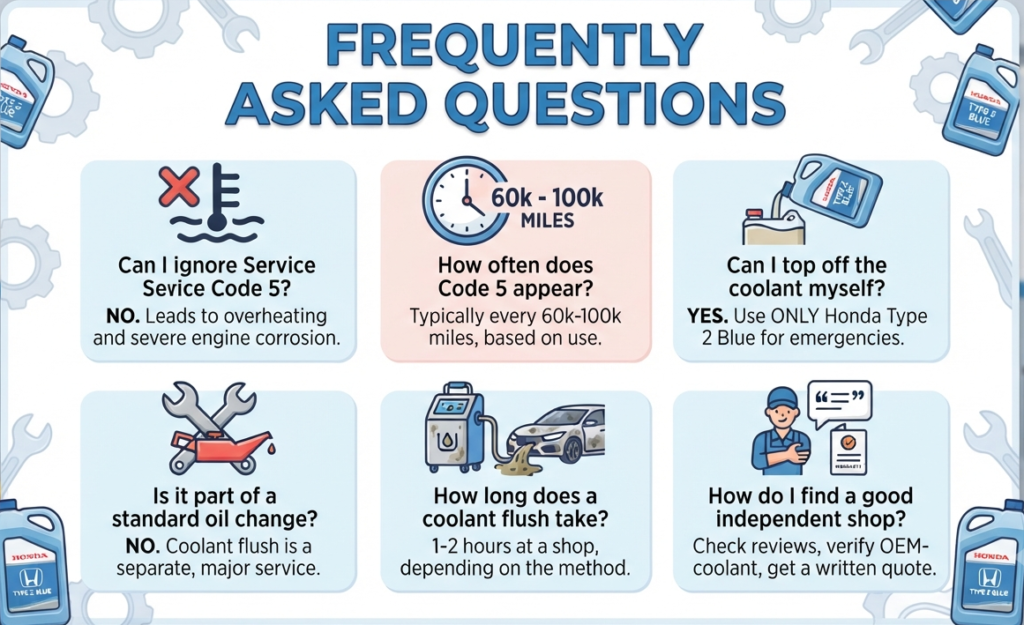
Can I ignore Service Code 5? Absolutely not. Ignoring this code can lead to overheating and long-term corrosion that will cost much more than a simple fluid change.
How often does Code 5 appear? For most Honda Civics, this code typically appears every 60,000 to 100,000 miles, depending on the age of the car and your driving environment.
Can I top off the coolant myself? Yes. If your reservoir is low, you can top it off with Honda Type 2 Blue coolant. This is fine for emergency maintenance, but it does not replace the need for a full flush when the service code appears.
Is a coolant flush included in a standard oil change? No. A coolant flush is a separate, more involved service that requires specialized tools and handling.
How long does a coolant flush take? At a shop, a standard drain and fill or flush usually takes between one to two hours, depending on their current workload.