
Seeing a maintenance code on your dashboard can feel like a setback. You are driving along, and suddenly, a symbol pops up that demands attention. If your Honda Civic is displaying the B17 maintenance code, do not panic.
This is not a “check engine” emergency. It is simply Honda’s sophisticated way of telling you that your vehicle is due for specific, scheduled maintenance. Keeping up with these codes is the secret to getting 200,000+ miles out of your Civic.
In this guide, we will break down exactly what B17 means, why each component matters, and how you can manage this service efficiently to keep your car running like new.
What Does Code B17 Actually Mean?
The Honda Maintenance Minder system is brilliant because it tracks your specific driving habits. It does not just look at a calendar; it analyzes how hard you drive, the climate you live in, and your actual mileage.
The B17 code is a combination of three distinct service requirements:
- B: This is the most comprehensive service. It includes an engine oil and filter change, plus a multi-point inspection of your car’s vital safety and mechanical systems.
- 1: This indicates it is time to rotate your tires. This ensures even tread wear and extends the life of your tires.
- 7: This is the specialized part of the code. It signals that it is time to replace your brake fluid.
When you see all three together, your car is telling you it is time for a thorough health check to keep you safe on the road.
The Importance of Routine Maintenance
Many drivers think they can skip services to save money. However, deferred maintenance is the fastest way to turn a $200 service into a $2,000 repair bill.
The Maintenance Minder system is programmed to keep your engine and braking systems in top condition. Ignoring these codes can void your factory warranty, significantly decrease your fuel efficiency, and ultimately compromise your safety during heavy traffic or highway driving.
Deep Dive: Why Code 7 (Brake Fluid) Matters
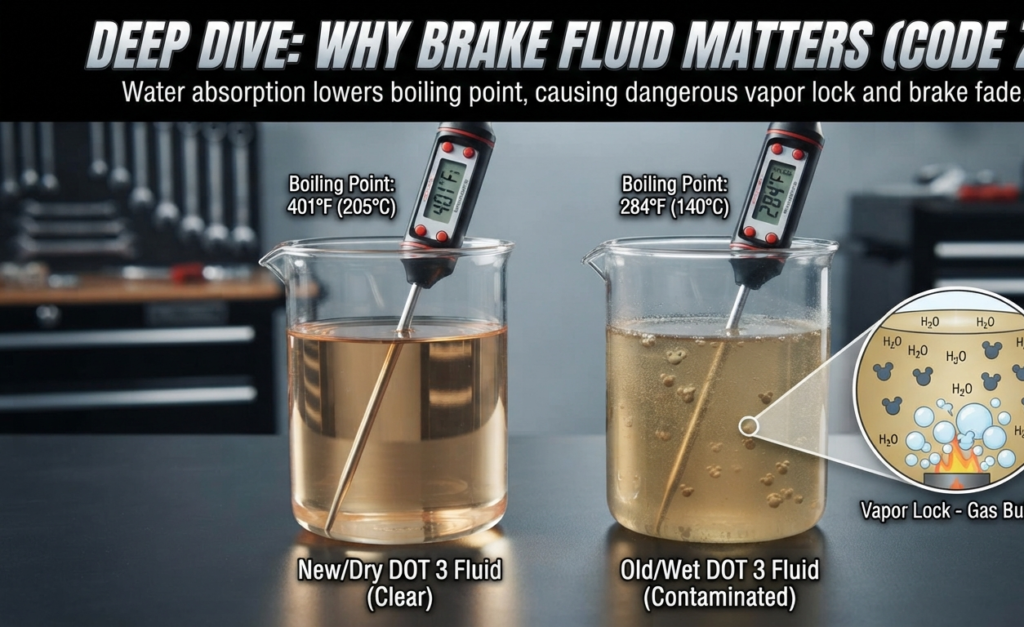
Many drivers mistakenly believe they only need to worry about oil changes. They see the “7” and think it can wait until next time.
This is a dangerous misconception. Brake fluid is a hydraulic fluid, and its job is to transfer the force from your foot on the pedal to the brake pads at the wheels.
Brake fluid is hygroscopic. This is a scientific term meaning it naturally absorbs moisture from the air over time. Even in a closed system, microscopic amounts of water seep in through the hoses and seals.
When your brake fluid absorbs water, its boiling point drops. If you ever have to slam on your brakes during a highway emergency, the heat generated could cause the water in the fluid to boil, creating gas bubbles.
Since gas is compressible and fluid is not, your brake pedal will feel “spongy” or go straight to the floor. Replacing the fluid according to the B17 schedule prevents this risk entirely.
The Hidden Costs of Neglect
If you ignore the “7” in your B17 code for too long, you aren’t just risking a soft pedal. You are inviting expensive mechanical damage.
Over time, moisture in the brake fluid causes internal corrosion. This can rust the delicate inner components of your brake calipers, your ABS modulator, and the master cylinder.
Replacing a rusted ABS modulator can cost upwards of $1,000. By spending a small amount to flush your brake fluid on time, you are protecting these high-value components from long-term decay.
Understanding the “B” Service Inspection
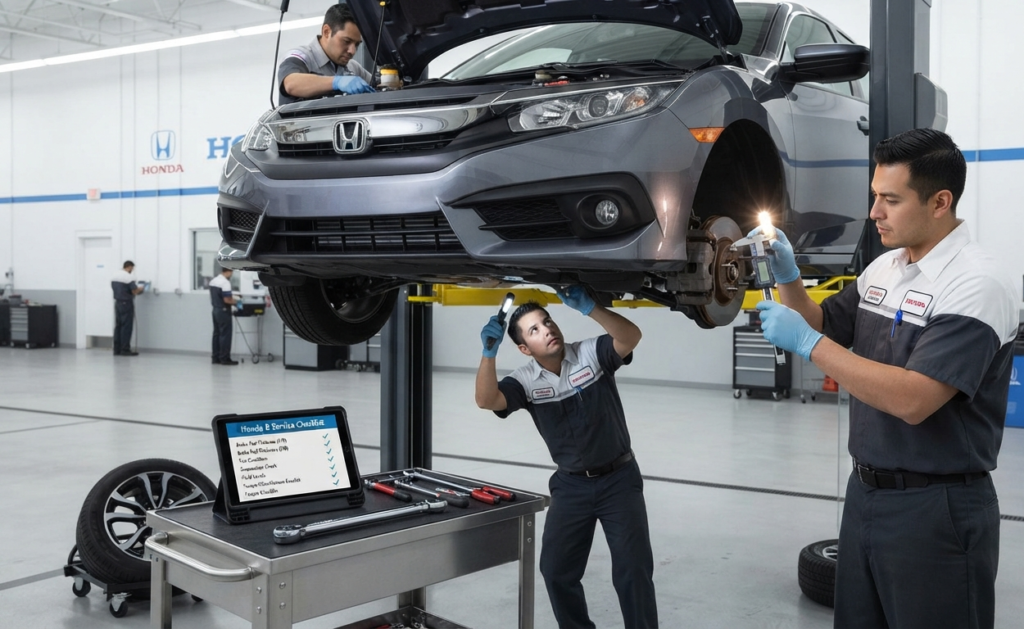
The “B” service is essentially a physical exam for your car. Because it includes an inspection, it is much more valuable than a simple oil change.
During a professional B service, a technician will check:
- Front and Rear Brakes: They will check the thickness of the brake pads and the condition of the rotors.
- Parking Brake Adjustment: They ensure the cable has the right amount of tension.
- Steering and Suspension: They look for torn boots or worn joints that could lead to alignment issues.
- Fluid Levels: They check the transmission fluid, coolant, and wiper fluid.
- Fuel Lines and Exhaust: They look for signs of corrosion or leaks that might not be visible from the driver’s seat.
This inspection often catches small issues before they turn into expensive repairs later on.
Choosing the Right Fluids and Parts
Not all parts are created equal. When your Civic calls for service, stick to high-quality standards.
Brake Fluid: Always use the type specified in your owner’s manual, usually DOT 3 or Honda Heavy Duty DOT 3. Never mix different types of brake fluid.
Oil Filters: Use a genuine Honda oil filter if possible. They are designed with bypass valves specifically calibrated for your engine’s oil pressure requirements.
Aftermarket vs. OEM: If you are using aftermarket parts for your brakes, ensure they meet or exceed OEM specifications. Cheap, low-quality brake pads can cause excessive noise and dust, and they may wear out your rotors prematurely.
DIY vs. Professional: How to Save Money
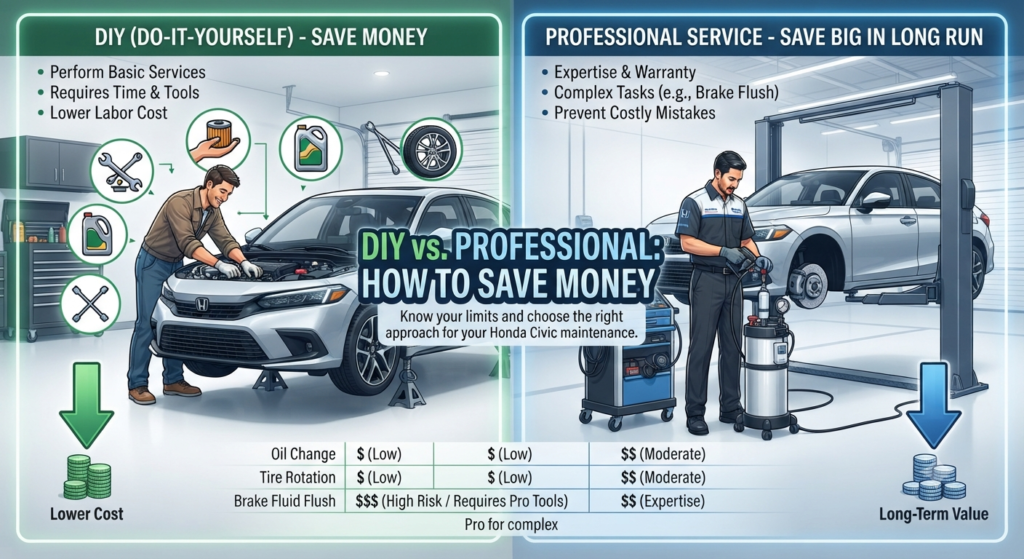
One of the best things about owning a Honda Civic is how easy it is to work on. However, you need to know where to draw the line between a fun weekend project and a safety risk.
Tasks You Can Handle at Home
If you have a basic set of tools, you can save a significant amount of money by handling these:
- Engine Oil and Filter: You only need a jack, jack stands, a drain pan, and a wrench.
- Tire Rotation: If you have a decent floor jack, this is a great way to save money and inspect your tires for nails or uneven wear.
- Air Filters: While not explicitly part of B17, it is a great time to check your engine and cabin air filters.
Tasks Best Left to Professionals
The Brake Fluid Flush (Code 7) is the exception.
- Specialized Equipment: A proper flush requires a pressure bleeder or a vacuum pump to ensure every drop of old fluid and all air bubbles are removed from the lines.
- Safety Critical: Because this is your stopping system, there is zero room for error. If you are not an experienced mechanic, leave this for the shop.
Estimated Cost Breakdown
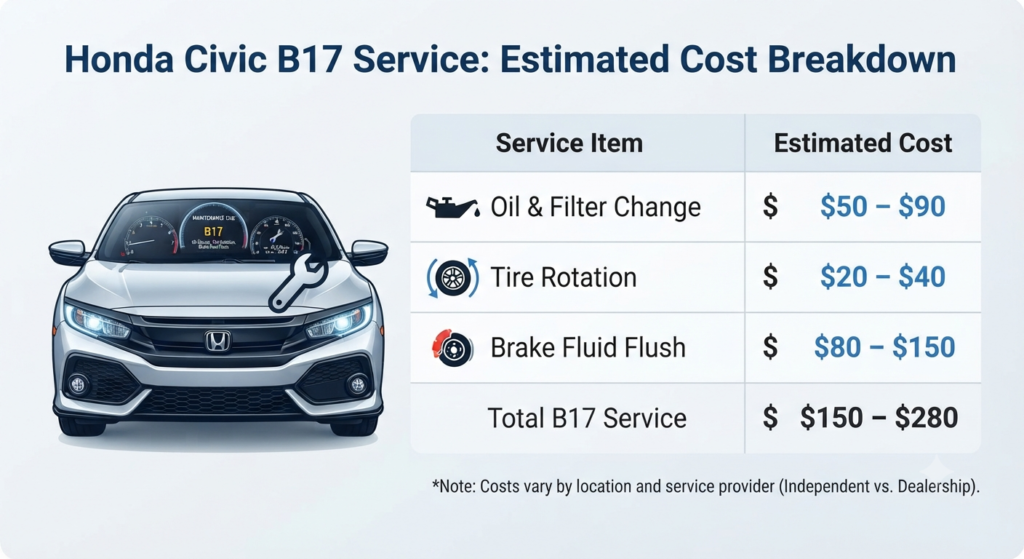
It is helpful to know what to expect when you walk into a service center. While prices vary by city, here is a general expectation:
| Service | Estimated Cost |
| Oil & Filter Change | $50 – $90 |
| Tire Rotation | $20 – $40 |
| Brake Fluid Flush | $80 – $150 |
| Total B17 Service | $150 – $280 |
Note: Dealerships may charge on the higher end of these estimates, while independent shops might offer more competitive pricing.
How to Reset the Maintenance Minder
Once you have performed the work, you need to turn off the alert. If you do not reset it, the system will continue to remind you, which can be annoying.
- Turn the Ignition to ON: Make sure your car is in Park. Do not start the engine.
- Access the Menu: Use the steering wheel buttons (usually the “i” or the scroll wheel) to find the “Maintenance Minder” screen in your driver information display.
- Enter Reset Mode: Press and hold the “Enter” or “Reset” button for roughly 10 seconds.
- Confirm the Reset: The system will ask you to confirm if you want to reset the code. Select “Yes” or “Reset” using your steering wheel controls.
- Verify: Turn the ignition off, then start the car. The B17 message should now be gone.
Note: If you have a touchscreen infotainment system instead of steering wheel controls, you will find this menu under “Vehicle Settings” > “Maintenance” > “Reset.”
Frequently Asked Questions (FAQs)
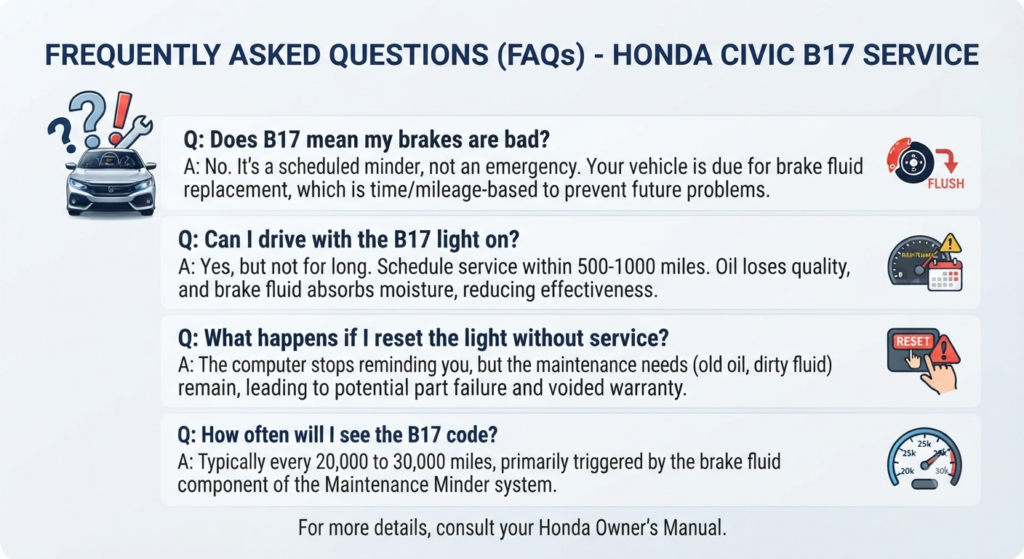
Q: Does the B17 code mean my brakes are already bad?
A: No. It is a time-based or mileage-based reminder. It simply means it is time for a scheduled service to prevent future problems.
Q: Can I drive with the B17 light on?
A: You can, but you should not ignore it for months. Your oil is getting old, and your brake fluid is becoming less effective. Try to schedule the service within 500 to 1,000 miles of the light appearing.
Q: What happens if I reset the light without doing the service?
A: You are essentially lying to your car’s computer. The system will stop reminding you, but the underlying maintenance needs will still exist, which can lead to part failure.
Q: How often should I see the B17 code?
A: It depends on your driving. Most drivers see this code every 20,000 to 30,000 miles, specifically for the brake fluid component.
Maintaining Your Civic for the Long Haul
The Honda Civic is legendary for its reliability. But even the best-engineered machines require maintenance.
By treating the B17 code as a priority rather than an inconvenience, you are taking a proactive stance on your safety. You are ensuring that your car stops as well as it accelerates and that your engine stays lubricated for hundreds of thousands of miles.