
When you ask about the 2015 Honda Civic life expectancy, the answers are usually very encouraging. This vehicle is famous for being incredibly reliable and cost effective. Many drivers consider it one of the best compact cars Honda ever produced.
However, a car only lasts as long as you take care of it. You might be wondering if your current Civic can survive another decade. Alternatively, you might be looking to buy a used model and want to know if it is a smart purchase.
Let us dive into the deep data. We will look at exactly how many miles you can realistically get out of this vehicle. We will also explore the secret habits that keep these cars on the road for a very long time.
The Engineering Behind the 2015 Honda Civic
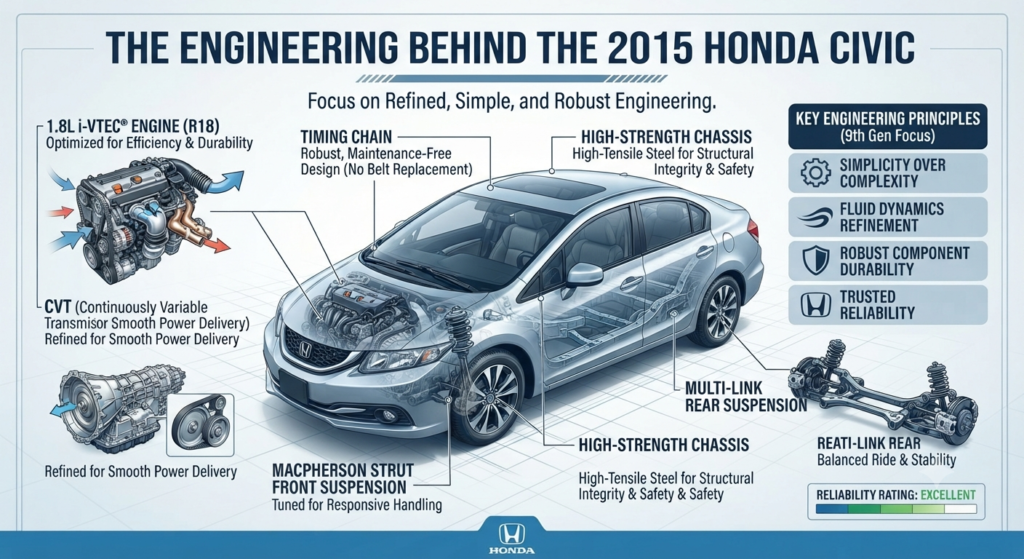
The 2015 model belongs to the 9th generation of Civics. This generation is highly respected by mechanics for its simple and robust engineering. Honda focused on refining the engine and transmission rather than adding complex, breakable tech.
Because of this solid foundation, these cars can handle high mileage with ease. A well maintained 2015 Honda Civic can easily reach 200,000 to 300,000 miles. Some owners have even reported crossing the 350,000 mile mark with original parts.
Industry averages often quote around 167,000 miles for typical compact cars. However, that number is quite conservative. It usually includes vehicles that were heavily neglected or never had their fluids changed.
If you drive the average of 15,000 miles a year, a 300,000 mile lifespan equals about 20 years of driving. That makes the 2015 Civic a brilliant investment for anyone looking for long term, affordable transportation.
Understanding the CVT Transmission Factor
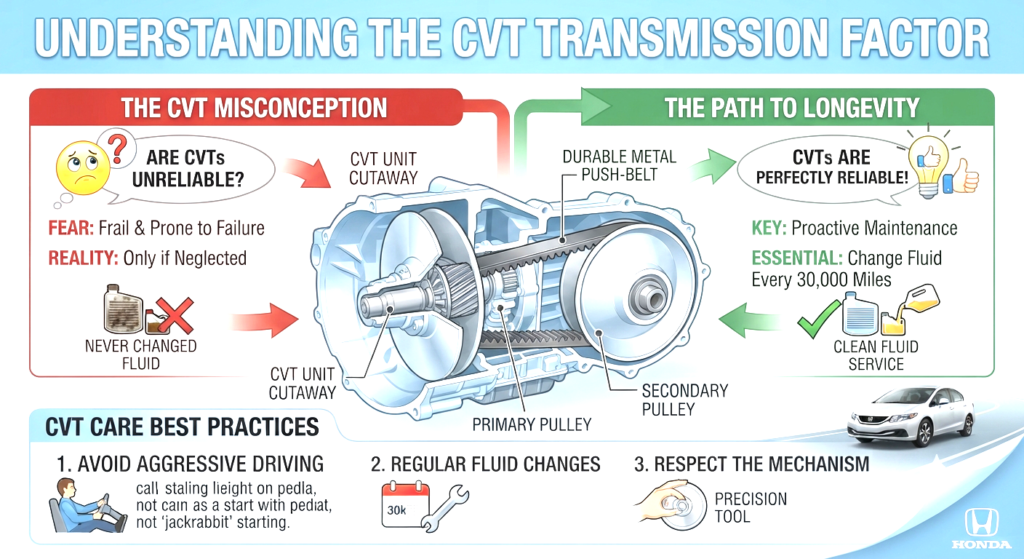
One major question buyers have is about the Continuously Variable Transmission (CVT). The 2015 model was part of the era where Honda transitioned to CVTs for better fuel efficiency.
Some people worry that CVTs are not as durable as traditional automatic transmissions. While they do behave differently, they are perfectly reliable if maintained correctly. The “fear” around them usually comes from people who never change the transmission fluid.
If you treat the CVT with respect, it will last as long as the engine. The key is to avoid aggressive driving and “jackrabbit” starts. Treat it like a precise tool, not a race car.
Common Roadblocks And How to Fix Them
No car is completely perfect. Even a legendary vehicle like the 2015 Civic has a few known quirks. The good news is that these common issues are rarely fatal to the vehicle.
Many owners report occasional problems with the battery or the starter motor. Another common complaint involves minor air conditioning leaks. You might also see occasional glitches with the tire pressure sensors or infotainment system.
The important thing to remember is that these are simple maintenance items. They do not mean your car is dying. Fixing an AC leak or replacing a starter is much cheaper than buying a brand new vehicle.
Addressing these small issues early prevents them from becoming major headaches. If you hear a weird noise or see a warning light, do not ignore it. A stitch in time saves nine.
The Secret Maintenance Schedule for 200k Plus Miles
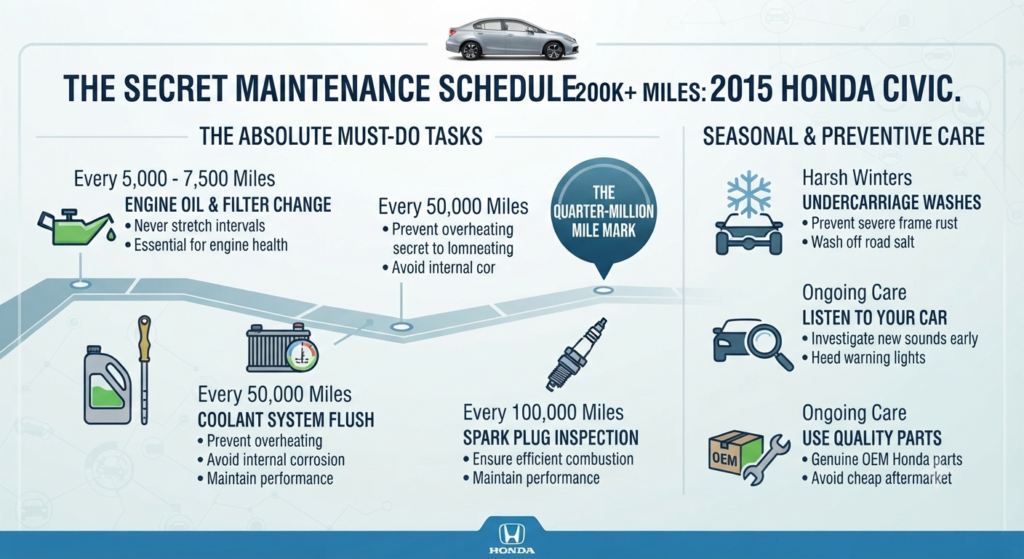
Reaching the maximum 2015 Honda Civic life expectancy is not about luck. It is entirely about proactive maintenance. You need a strict schedule if you want to hit the quarter million mile mark.
The Absolute Must Do Tasks
- Change the engine oil and filter every 5,000 to 7,500 miles. Never stretch this interval too far.
- Replace the CVT transmission fluid every 30,000 miles. This is the single most important secret to longevity.
- Flush the coolant system every 50,000 miles to prevent engine overheating and internal corrosion.
- Inspect the spark plugs every 100,000 miles to ensure efficient combustion.
Seasonal care is also incredibly important for US buyers. If you live in a state with harsh winters, road salt will eat your car alive. Make sure you get regular undercarriage washes during the winter to prevent severe rust.
Rust is the silent killer of cars in the Northern US. Once it starts on the frame, it is very difficult and expensive to stop. A clean undercarriage is the best insurance policy you can buy.
Is Your 2015 Civic Worth the Repair?
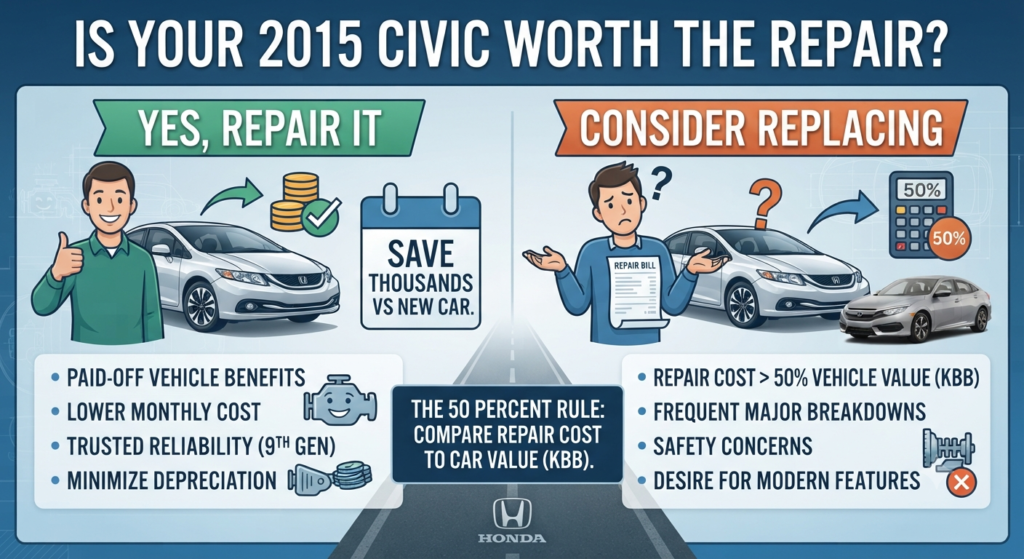
Eventually, you will face a large repair bill. This makes many owners wonder if they should fix the car or trade it in. This is where the 50 percent rule comes in handy.
If the cost of the repair is more than 50 percent of the total value of the car, it might be time to sell. You can check the current market value of your Civic on sites like Kelly Blue Book. Always compare the repair quote against that current value.
However, remember the emotional and financial benefits of a paid off car. Spending two thousand dollars on a new transmission hurts. But it is still much cheaper than taking on five years of brand new car payments.
Modern car payments are often over 500 dollars a month. That is 6,000 dollars a year. Even a “big” repair bill of 2,000 dollars is a bargain compared to the cost of a new car note.
Buying a Used 2015 Civic: What to Check
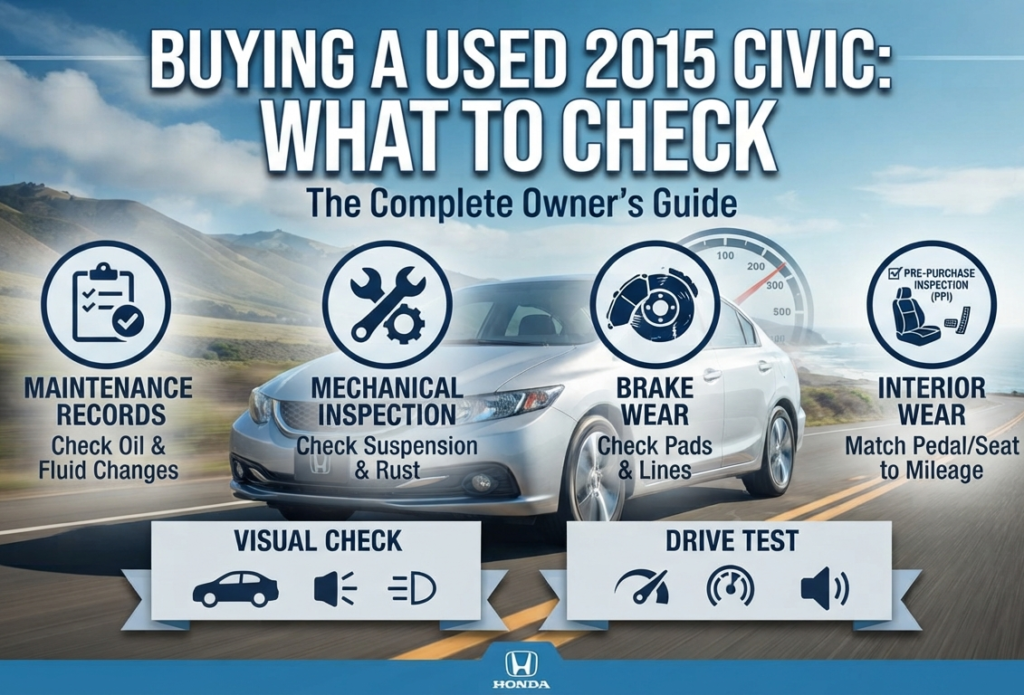
Are you in the market for a used 2015 Civic? You need to be careful so you do not buy someone else’s problems. A visual inspection is simply not enough.
Always ask the seller for the maintenance records. You specifically want to see proof of regular oil changes and transmission fluid services. If they cannot provide this proof, you should be very cautious.
Take the car to an independent mechanic before you hand over any money. Ask the mechanic to check the suspension components and look for hidden rust. A thorough inspection will give you peace of mind and protect your wallet.
Check the interior for signs of wear that might indicate a high-mileage car being sold as a low-mileage one. Look at the pedals, the steering wheel, and the driver’s seat. They should match the mileage shown on the dashboard.
Tips for Long-Term Ownership
Living with a car for 10 or 15 years requires a change in mindset. You are no longer just an “operator,” you are a caretaker. Here are some tips to keep your Civic running well:
- Listen to your car: If it makes a new sound, investigate it. Cars usually give you warnings before they have a major failure.
- Use quality parts: When you replace items like brakes or belts, use OEM (Original Equipment Manufacturer) parts. Honda parts are designed for your car specifically.
- Keep it clean: A clean car stays better maintained. When you wash your car, you often notice paint chips or rust spots that need attention.
- Avoid “Over-Modding”: Modifications can stress the engine and transmission. Keep the car close to stock for the best reliability.
Frequently Asked Questions (FAQ)
Does the 2015 Civic have a timing belt or chain?
The 2015 Civic uses a timing chain. This is great news, as timing chains are designed to last the life of the engine and do not require the expensive interval replacements that timing belts do.
Is the 2015 Civic good for road trips?
Absolutely. It is one of the most comfortable and fuel-efficient cars for highway cruising. Just ensure your tires are in good shape and your fluids are topped off before you head out.
What is the most common failure point?
For the 2015 model, it is usually minor electrical components or the starter. The core engine and transmission are very robust if maintained.