
Finding a dependable car for under $10,000 in today’s market feels like a challenge. However, the Honda Civic remains the gold standard for budget-conscious buyers.
When you walk in with cash, you hold a massive advantage. Sellers—whether private individuals or smaller dealerships—often prioritize a quick, guaranteed sale over a complex financing deal.
This guide helps you navigate the search, avoid common pitfalls, and secure a vehicle that will last you years.
The Sweet Spot: Best Model Years to Target
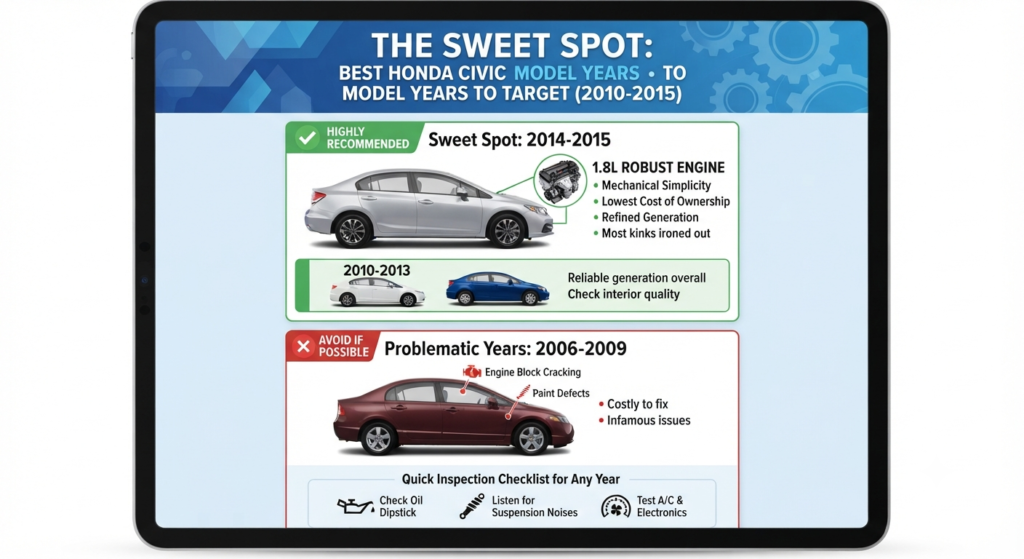
You are likely looking at the 2010 to 2015 generation. These models are renowned for their mechanical simplicity and lower cost of ownership.
The 2014 and 2015 models are widely considered the “sweet spot.” They feature the robust 1.8L four-cylinder engine and have had most of their early manufacturing kinks ironed out.
Avoid the 2006 to 2009 models if possible. These years are infamous for engine block cracking issues and paint defects that can be costly to fix.
If you find a 2012 model, pay close attention to the interior quality, as some early production runs had cheaper plastic components. Generally, prioritize the 2013-2015 range for the best reliability-to-price ratio.
Where to Find the Best Deals
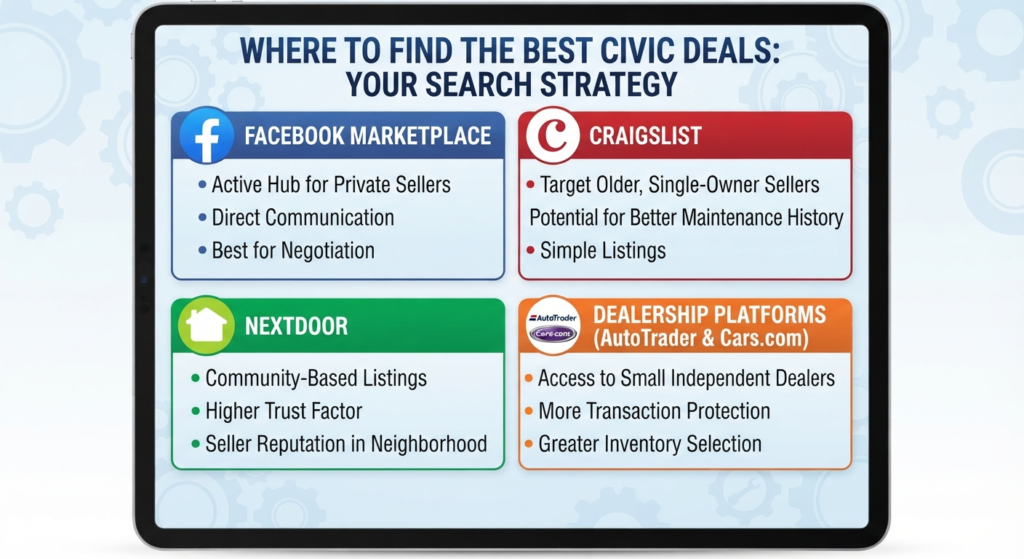
Finding a car under $10,000 requires searching in the right places. Do not rely on just one platform.
Facebook Marketplace: This is currently the most active hub for private sellers. You can often find owners who just want the car gone, allowing for better negotiation.
Craigslist: While it looks outdated, it is still used by older, single-owner sellers. These individuals often maintain their cars better than younger owners.
Nextdoor: Many people list cars here to sell to neighbors. These listings are often more trustworthy as the seller has a reputation to maintain in the community.
AutoTrader & Cars.com: Use these mainly for small, independent dealerships. You may pay a slightly higher price than a private party, but you get more protection regarding paperwork.
Red Flags: When to Walk Away
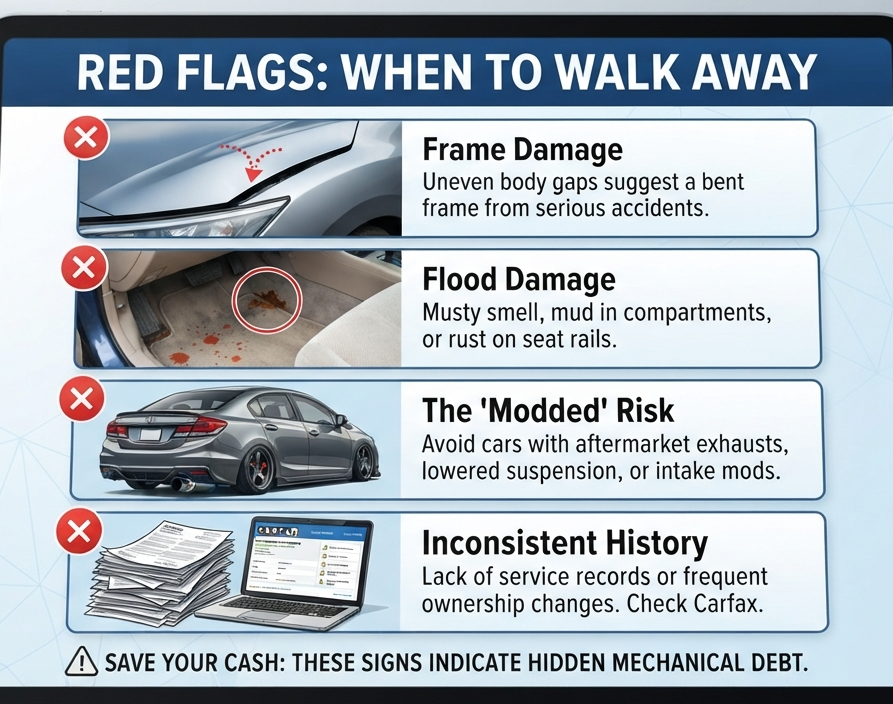
Not every “good deal” is a bargain. If you notice these warning signs, save your cash and keep looking.
Frame Damage: If the car has been in a serious accident, the body panels may not align perfectly. Check the gaps between the doors, hood, and trunk. Uneven gaps suggest a bent frame.
Flood Damage: Look for a musty smell in the interior, mud in hidden compartments, or rust on seat rails. This often indicates the car was submerged in water, which leads to electrical nightmares later.
The “Modded” Risk: Avoid Civics with aftermarket exhausts, lowered suspension, or intake modifications. These cars were likely driven hard by previous owners. A stock, unmodified Civic is almost always the safer bet.
Inconsistent History: If the seller lacks basic service records or shows a history of frequent ownership changes, it may indicate hidden mechanical debt. Always check the Carfax or AutoCheck report before meeting the seller.
Your 10-Minute Inspection Strategy
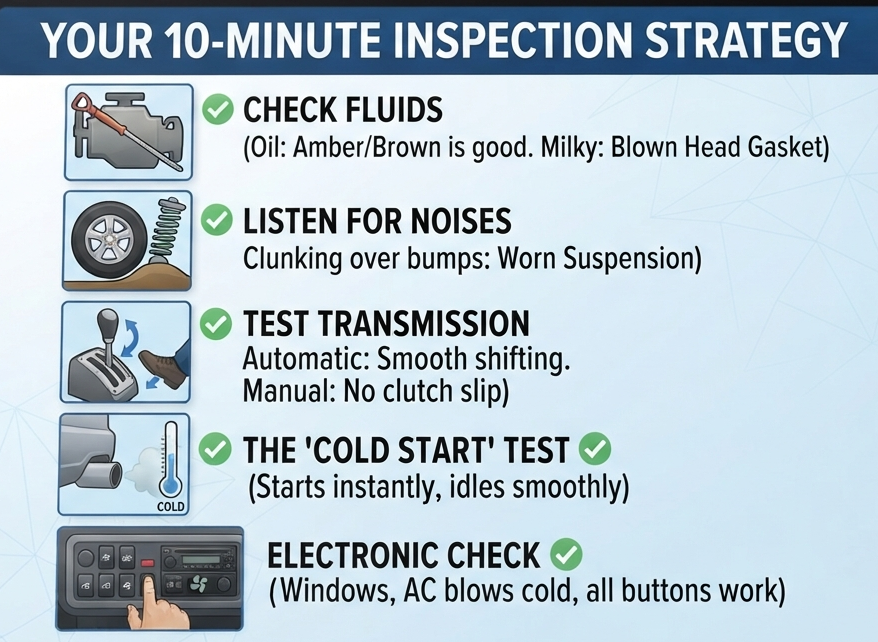
You do not need to be a professional mechanic to perform a solid pre-purchase inspection. Use this quick checklist.
Check the Fluids: Pull the oil dipstick. The oil should be amber or light brown. If it looks like a milky chocolate milkshake, it could be a sign of a blown head gasket.
Listen for Noises: Turn off the radio during your test drive. Listen for clunking sounds over bumps, which could indicate worn suspension links or bushings.
Test the Transmission: If the car is an automatic, it should shift smoothly without jerking. If it is a manual, ensure the clutch doesn’t slip when you accelerate in higher gears.
The “Cold Start” Test: Always try to see the car when the engine is cold. A car that starts instantly and idles smoothly is usually a good sign of a well-maintained engine.
Electronic Check: Test every button. Do the windows go up and down? Does the AC blow ice-cold air? Even small electrical issues can add up to hundreds of dollars in repair costs.
The Art of Cash Negotiation
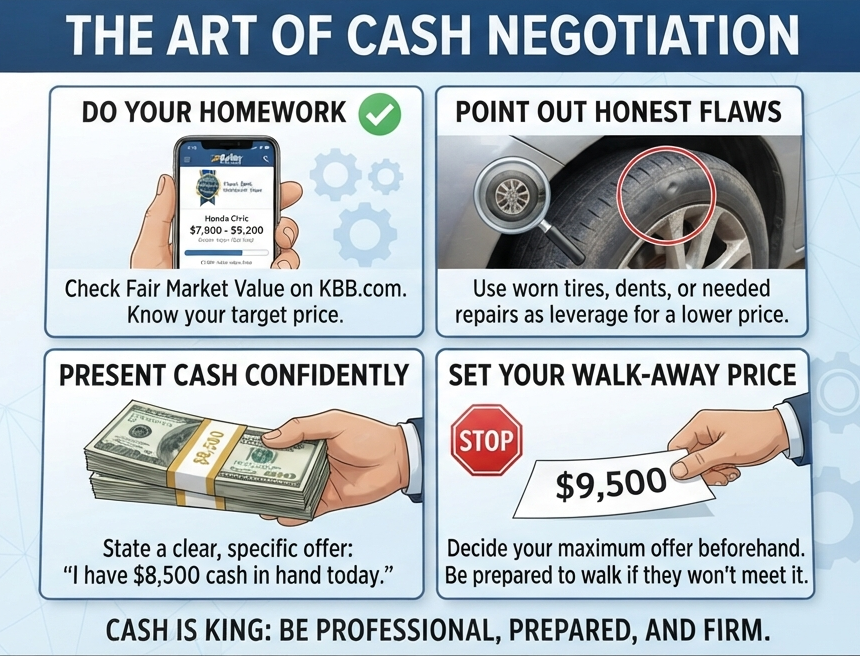
Paying with cash gives you leverage, but you must be professional.
Do Your Homework: Check sites like Kelley Blue Book (KBB) to know the fair market value of the specific model and mileage you are viewing. Do not show up unprepared.
Point Out Honest Flaws: If the tires are worn or there is a dent, use that as a bargaining chip. Politely explain that you will need to spend money on those repairs immediately.
Present Cash Confidently: When you make an offer, be clear. “I have $8,500 cash in hand right now if you are ready to sign the title today.” This shows you are a serious, low-effort buyer for the seller.
Set Your “Walk-Away” Price: Decide on your maximum offer before you arrive. If the seller won’t meet your price, be prepared to walk away. There is always another Civic on the market.
Legal Safety: Protecting Your Cash
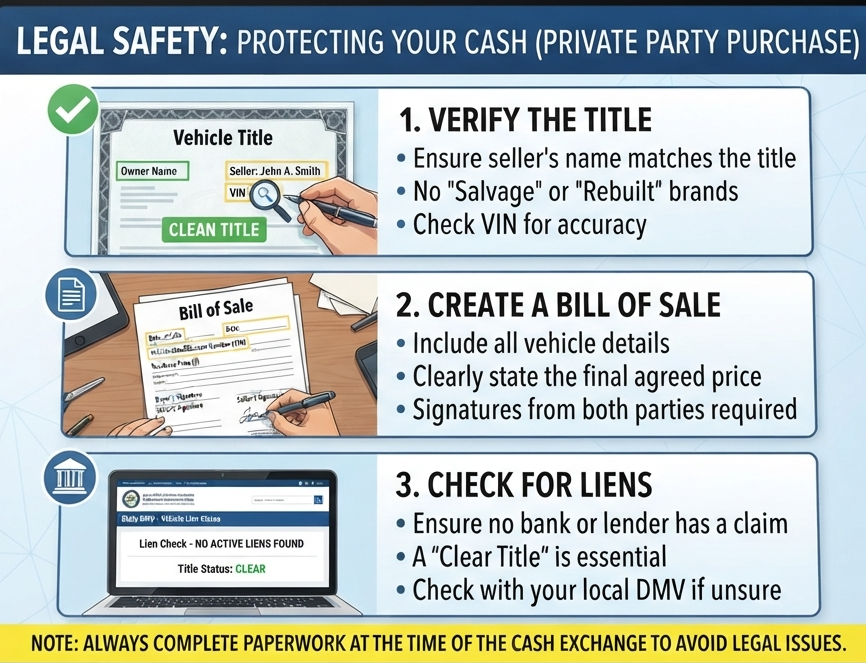
When buying from a private party, paperwork is the most important part of the transaction.
Verify the Title: Ensure the name on the title matches the person selling the car. If they say the car is in their “wife’s name” or “friend’s name,” be extremely cautious.
The Bill of Sale: Always create a simple Bill of Sale. Include the VIN, sale price, date, and signatures from both parties. This protects you in case of any future legal issues.
Check for Liens: Ensure there is no loan currently tied to the vehicle. A bank or lender may still technically own the car if the title is not clear.
Post-Purchase: The First $500
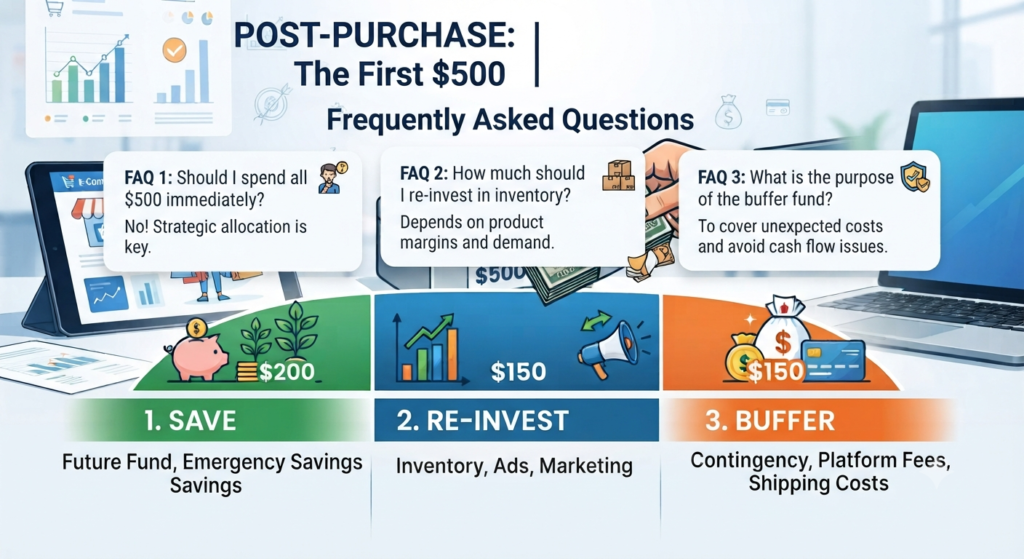
Once you buy your car, do not spend the rest of your budget on aesthetics. You need to reset the car’s maintenance baseline.
Immediate Oil Change: Even if the seller says it was recently done, change the oil and filter. This ensures you know exactly when the next service is due.
Safety Check: Have a trusted local mechanic perform a “Pre-Purchase Inspection” (PPI) if you didn’t do it before buying. They can check your brakes, tires, and belts for safety.
Fluid Flushes: If the car has over 100,000 miles, consider flushing the coolant and transmission fluid. This is cheap insurance for your engine’s longevity.
Tire Condition: Check the manufacturing date code on the tires. If they are older than six years, replace them regardless of how much tread they have left. Old rubber can dry rot and cause blowouts.
Frequently Asked Questions
Is 150,000 miles too many for a Honda Civic? Not necessarily. A well-maintained Civic can easily last over 250,000 miles. Focus more on the service history than the odometer.
Should I buy from a private seller or a dealer? Private sellers are usually cheaper, but dealers offer more convenience. If you buy from a private party, ensure you verify the title is “clean” and not “salvage” or “rebuilt.”
Is a pre-purchase inspection worth the cost? Absolutely. Paying a mechanic $100 to $150 for an hour of their time can save you thousands in hidden repair costs. Never skip this step.
What if the seller says they have other offers? This is a classic sales tactic. Stay calm. If the car is worth the price, buy it. If you have any doubts, wait. Never let pressure force you into a bad financial decision.