
When hunting for a used Civic, you generally have to choose between two different philosophies: mechanical simplicity or modern feature sets. Both are excellent, but they serve different priorities.
The 2012–2015 Generation: The Peak of Simplicity
If your primary goal is to minimize long-term repair costs, the ninth-generation Civic (2012–2015) is widely considered the peak of mechanical simplicity. These models utilize traditional, proven engine architectures and, in many trims, reliable automatic transmissions rather than CVTs. They are essentially “bulletproof” appliances. They may lack the fancy touchscreens of newer cars, but they deliver rock-solid, predictable transportation.
The 2020–2022 Generation: The Peak of Modern Reliability
If you are willing to trade a bit of mechanical simplicity for safety and convenience, look at the 2020–2022 models. By this time, Honda had ironed out the “teething issues” of their tenth-generation platform. These cars offer the full “Honda Sensing” suite of driver-assist technologies, smartphone integration, and better interior refinement, all while maintaining the brand’s legendary reliability.
Reliability vs. Tech Comparison

| Generation | Focus | Reliability | Tech/Features |
| 2012–2015 | Mechanical Simplicity | Exceptional | Basic |
| 2020–2022 | Feature-Rich Reliability | Very Good | Advanced |
Years to Approach with Caution
Transparency is vital when you are spending your savings. While even “bad” Hondas are often better than the average used car, some years come with documented headaches that require extra diligence.
Known Problem Areas
The 2006–2009 models are notorious for engine block cracking, which can lead to catastrophic coolant loss. Additionally, many Civics from 2016 onward experienced issues with A/C compressor seals. These repairs can be expensive if you are paying out of pocket.
How to Protect Your Investment
If you find a deal on one of these “caution” years that you simply cannot pass up, do not panic. You can mitigate the risk by being proactive. Always ask for service records. If you are looking at a 2016+ model, look specifically for receipts proving the A/C compressor was already replaced or that the system was serviced under warranty. A little legwork now saves you thousands in surprise repair bills later.
CVT Longevity: The Truth About Maintenance
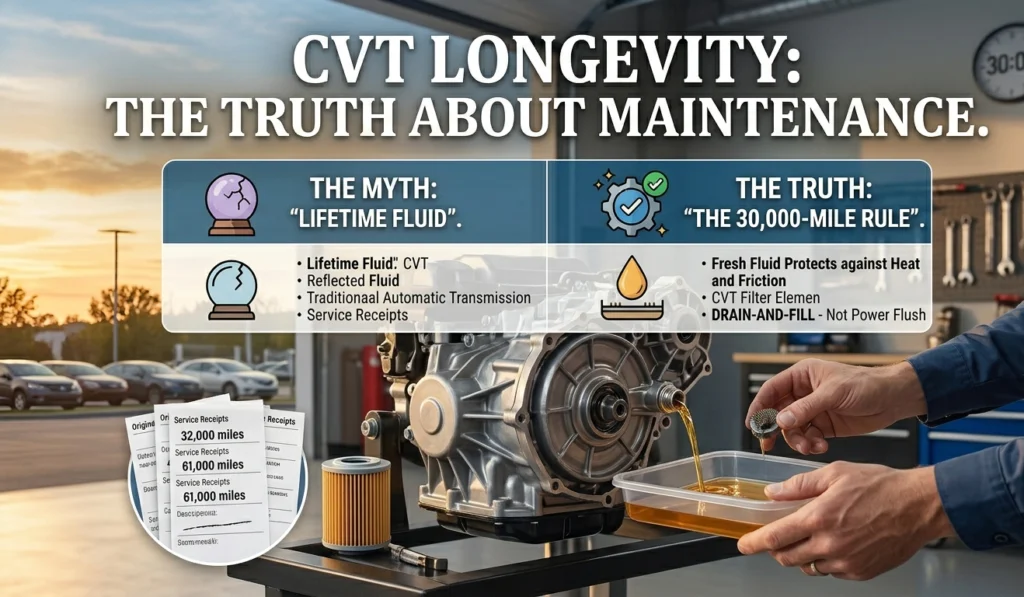
A common myth in the automotive world is the concept of “lifetime fluid.” Please hear me loud and clear: there is no such thing as lifetime transmission fluid.
Why Your CVT Needs Fresh Fluid
A Continuously Variable Transmission (CVT) is a marvel of engineering, but it is also sensitive to heat and friction. Over time, the fluid inside the transmission breaks down, loses its lubricating properties, and collects debris. If you ignore it, you are significantly shortening the life of your transmission.
The 30,000-Mile Rule
To extend the life of your used Civic, I recommend performing a simple “drain-and-fill” of the CVT fluid every 30,000 miles. This is not the same as a power flush; it is a straightforward service that refreshes a significant portion of the oil. This one act of preventative maintenance is the single most effective way to ensure your transmission lasts well past the 200,000-mile mark.
Used Car Buyer’s Checklist
Before you hand over your money, use this checklist to protect yourself from hidden issues.
- NHTSA Recall Lookup: This is non-negotiable. Go to the official and enter the vehicle’s 17-character VIN. It will tell you immediately if there are any outstanding, safety-critical recalls that the previous owner failed to address.
- A/C Health Check: Turn the A/C to the coldest setting on both sides. If one side blows warm or the air doesn’t feel crisp, you might be looking at a leaking condenser or compressor.
- Cold Start Test: Always arrive to see the car when it has been sitting overnight. Start it cold and listen for any unusual rattles or engine hesitation.
- Transmission Engagement: When shifting from Park to Drive or Reverse, the car should engage quickly and smoothly without any harsh clunking or long delays.
- Service History: A binder full of receipts is worth more than a polished exterior. Look for evidence of regular oil changes and, crucially, that 30,000-mile CVT fluid service.