
The Honda Civic Type R FL5 is an absolute masterpiece of front-wheel-drive engineering. It attacks corners with surgical precision and gives you incredible feedback right through the steering wheel.
Yet, many track enthusiasts run into a frustrating roadblock after pushing the car hard for just a few minutes. The dashboard lights up with warnings, power drops significantly, and your fast lap session gets cut short by thermal limp mode.
When ambient temperatures climb on demanding circuits like Laguna Seca, Circuit of the Americas, or VIR, the factory cooling system hits its absolute limit. Solving this issue requires targeted modifications rather than throwing random aftermarket parts at the car.
This guide walks you through every step needed to build a bulletproof cooling setup for your FL5.
Why the FL5 Civic Type R Overheats on Track
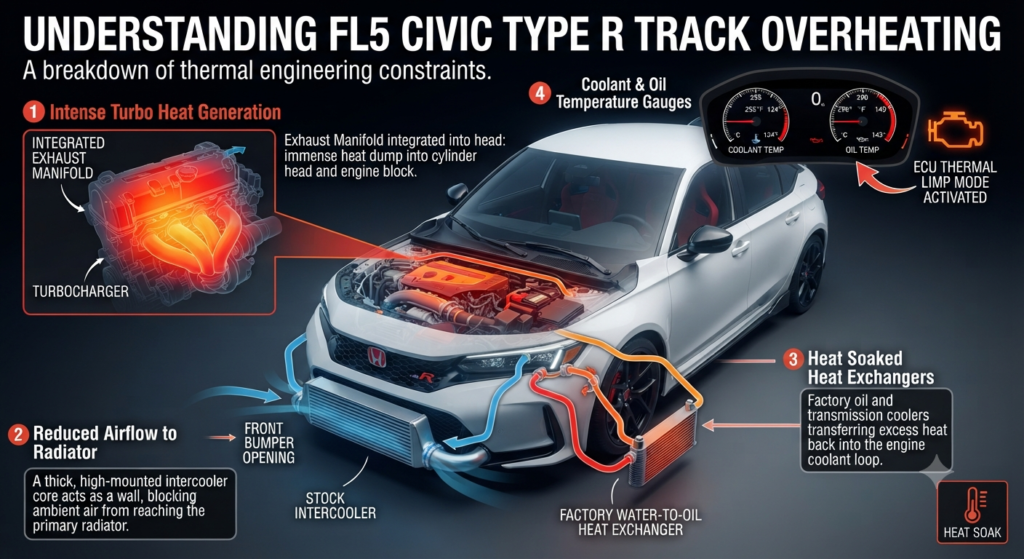
To fix a persistent heating issue, you first need to understand the engineering constraints of the platform. The K20C1 engine in the FL5 packs massive turbo power into a relatively tight engine compartment.
Honda integrated the exhaust manifold directly inside the cylinder head casting. This layout helps the turbocharger spool up very quickly, but it dumps immense amounts of heat straight into the cooling system from the very start.
Furthermore, Honda uses factory water-to-oil heat exchangers and transmission coolers to manage temperatures during normal street driving. Under heavy track conditions, these factory units struggle and often end up dumping excess heat right back into the engine coolant loop.
Once your coolant and oil temperatures cross safety thresholds, the engine control unit steps in aggressively. It pulls ignition timing and limits boost pressure to protect internal components, leaving you stranded with heavily reduced power.
Step 1: Fix the Primary Heat Sink with an Upgraded Radiator
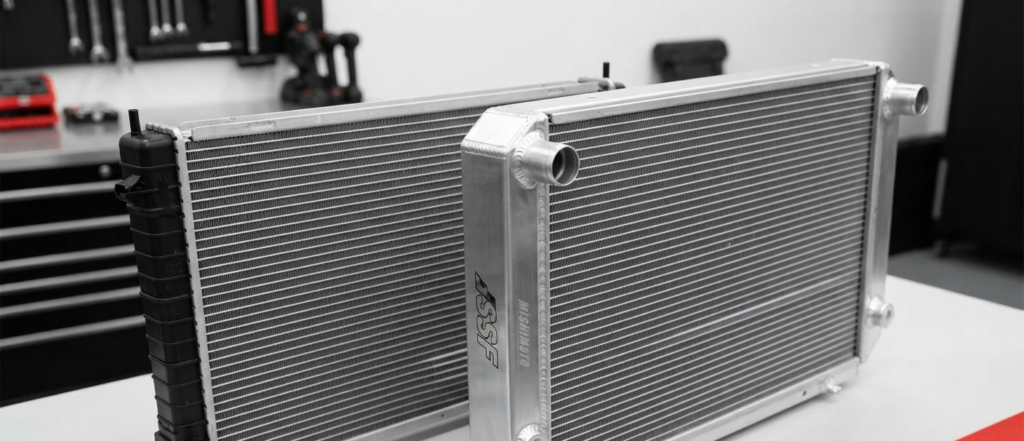
Your factory radiator is engineered to handle daily commutes and spirited weekend drives on twisty mountain roads. It simply lacks the core volume and fin density required for twenty-minute, flat-out track sessions.
- The Fix: Upgrading to a high-performance aluminum drop-in radiator is your absolute first line of defense.
- Top Brands: Brands like CSF and Mishimoto engineer oversized dual-core radiators that dramatically increase total coolant capacity.
A thicker core allows the system to shed heat much faster before thermal saturation occurs. When choosing a radiator, always look for units that use all-aluminum end tanks rather than factory plastic crimped fittings that can crack under extreme track pressure.
Step 2: The Intercooler Trap and Airflow Balance
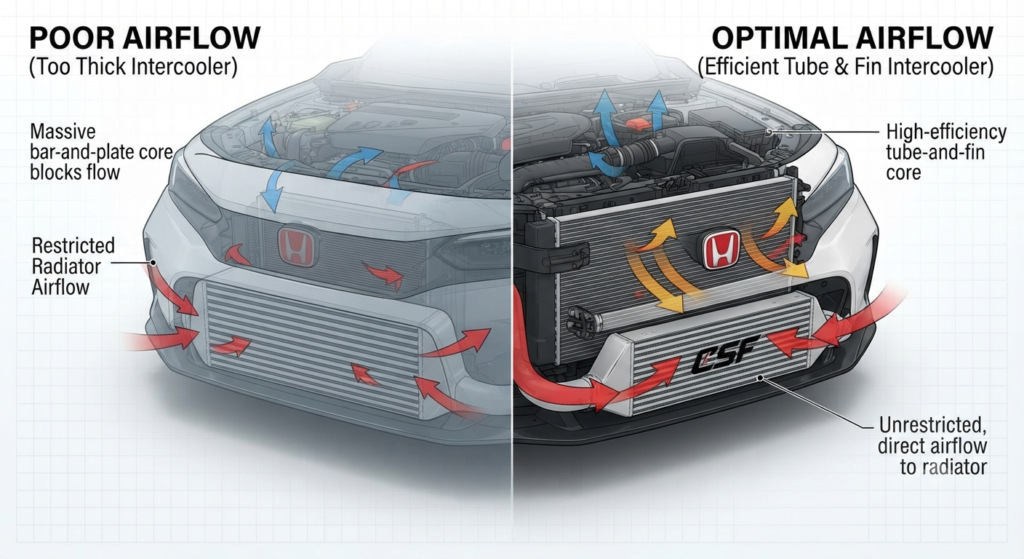
Many owners make the mistake of installing massive front-mount intercoolers to chase peak horsepower numbers on dyno sheets. While lower intake air temperatures are great, physical packaging in the FL5 front bumper creates a major conflict.
A massively thick intercooler core acts like a solid wall, blocking the front bumper opening entirely. This prevents vital ambient airflow from reaching your primary engine radiator sitting directly behind it.
- The Fix: If you upgrade your intercooler for higher boost levels, choose a high-efficiency tube-and-fin design instead of an overly thick bar-and-plate core. This keeps your intake air cool without starving your primary radiator of the fresh airflow it desperately needs.
Step 3: Advanced Thermal Management with Dedicated Oil Coolers
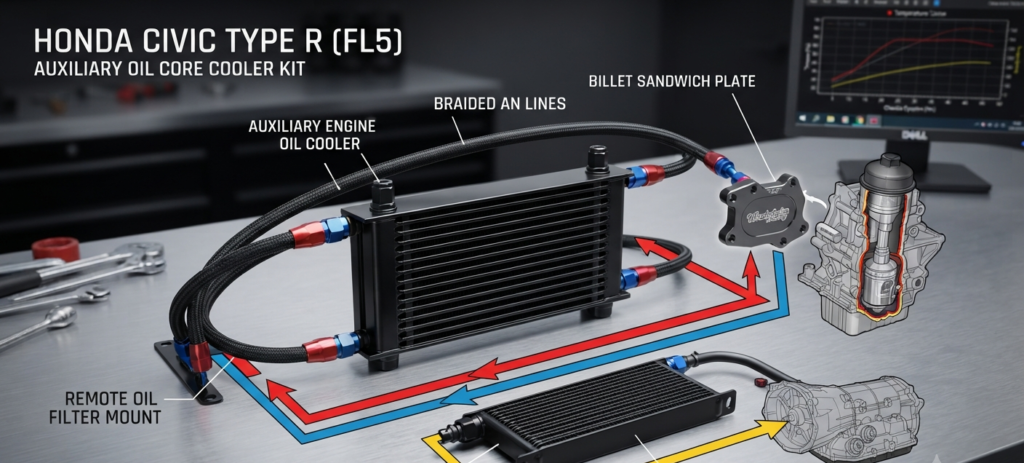
Engine coolant is only part of the puzzle on a demanding road course. Engine oil and transmission fluid temperatures skyrocket just as fast during heavy shifting and sustained high-RPM pulls.
- The Fix: Adding a dedicated auxiliary air-to-oil cooler separates your engine oil loop from the factory coolant system completely. This keeps your oil viscosity stable and stops thermal heat transfer between the oil and water jackets.
- Gearbox Health: Upgraded transmission coolers are equally important for manual drivers tracking in hot weather. Keeping your gearbox fluids at optimal operating windows prevents premature gear wear, synchro failure, and fluid breakdown.
Step 4: Airflow Control, Ducting, and Hood Ventilation
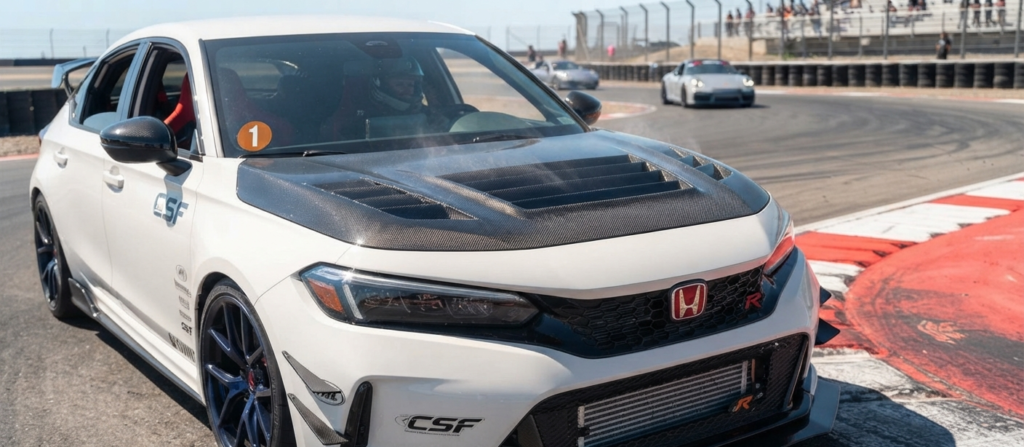
Radiators and auxiliary coolers only work efficiently if air is forced directly through them instead of escaping around the edges. Factory rubber seals and plastic undertrays often leave large gaps where incoming air can simply bypass the core.
- Sealing: Installing custom duct plates and sealing off front-end gaps forces every single ounce of incoming air through your heat exchangers.
- Hood Vents: Underhood pressure is another hidden enemy on track-focused cars. Adding a vented hood allows hot air trapped in the engine bay to escape freely, reducing front-end lift and lowering overall underhood temperatures.
Step 5: Choosing the Right Coolant and Fluids
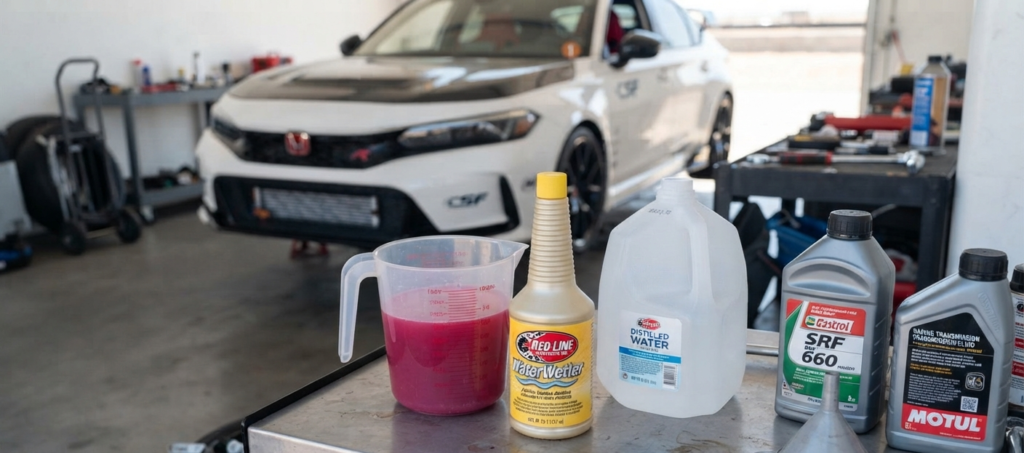
Using a standard factory coolant mixture is fine for daily driving, but track use demands specialized thermal fluids. Switching to a high-performance racing coolant with superior heat transfer properties makes a noticeable difference.
- Recommendations:
Products like Red Line WaterWetter mixed with distilled water and a small amount of antifreeze can drop operating temperatures significantly. - Brakes and Transmission:
Additionally, ensure your brake fluid and manual transmission fluid are rated for high-temperature racing conditions to maintain consistent pedal feel and smooth gear engagement throughout your track day.
Summary Table: FL5 Cooling Upgrades at a Glance
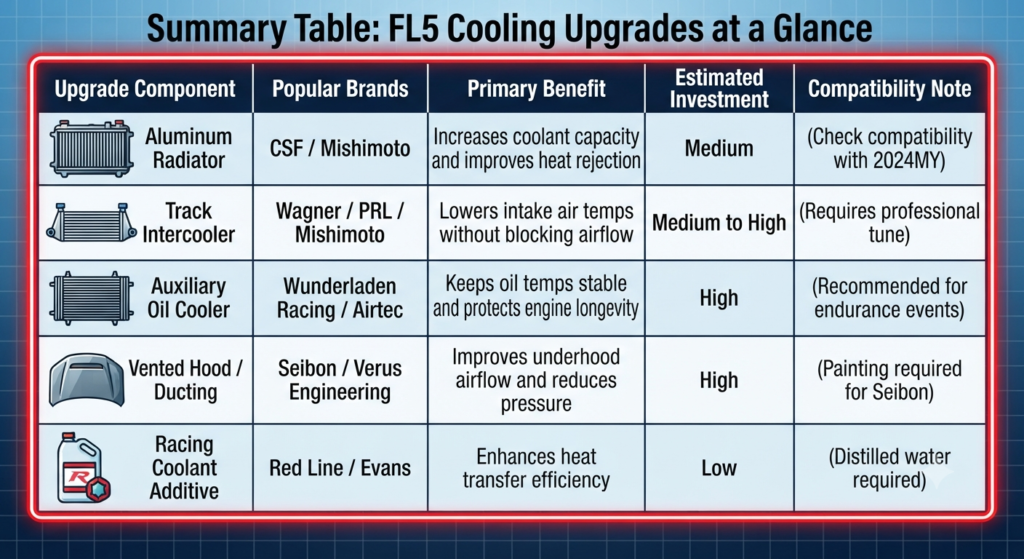
| Upgrade Component | Popular Brands | Primary Benefit | Estimated Investment |
| Aluminum Radiator | CSF, Mishimoto | Increases coolant capacity and improves heat rejection | Medium |
| Track Intercooler | Wagner, PRL, Mishimoto | Lowers intake air temps without blocking airflow | Medium to High |
| Auxiliary Oil Cooler | Wunderladen Racing, Airtec | Keeps oil temps stable and protects engine longevity | High |
| Vented Hood / Ducting | Seibon, Verus Engineering | Improves underhood airflow and reduces pressure | High |
| Racing Coolant Additive | Red Line, Evans | Enhances heat transfer efficiency | Low |
Conclusion and Track Day Checklist
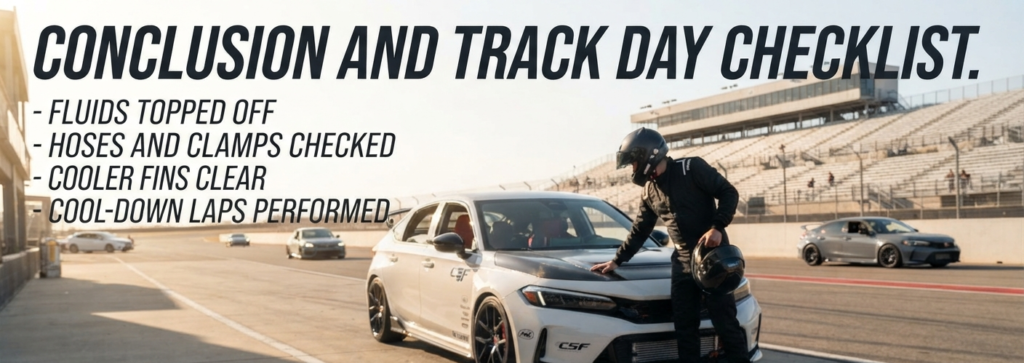
Managing thermal efficiency on the Honda Civic Type R FL5 is essential for maintaining consistent lap times and engine reliability. By upgrading your primary radiator, balancing your intercooler size, and adding dedicated oil cooling, you can eliminate limp mode entirely.
Before heading out to your next track event, always run through this quick checklist:
- Verify your coolant and oil fluid levels are topped off with high-quality racing fluids.
- Inspect all hose clamps, fittings, and lines for signs of wear or leakage.
- Check that your front bumper grilles and cooler fins are clear of rubber debris and bugs.
- Allow for proper cool-down laps at the end of every high-speed driving session.