
If you grew up in the early 2000s, there is one movie scene that lives rent-free in your head. It is the moment Hector shows up at Harry’s Garage, talking about his fleet of Honda Civics.
That specific line about Spoon engines, T66 turbos, and Motec exhaust systems is more than just dialogue. It is a piece of automotive history.
For many of us, this was the gateway drug into car culture. It turned the humble 1992 Honda Civic EG Hatchback into an overnight superstar.
But how much of that build was real? And if you wanted to build that car today, what would you actually need? Let’s break down the icon.
The Cultural Impact of the Hector Civic
Before the movie, the Honda Civic was mostly seen as a reliable grocery getter. Hector and his crew changed that perception entirely.
They brought the JDM movement to the mainstream. They showed that you didn’t need a massive displacement engine to go fast.
It was all about the “power-to-weight” ratio. It was about taking a small, lightweight chassis and pushing it to its absolute limits.
Even today, that specific aesthetic—the wild graphics, the huge wings, and the aggressive stance—defines the nostalgia of that era.
Decoding the Legend: Spoon, T66, and the Motec Blooper
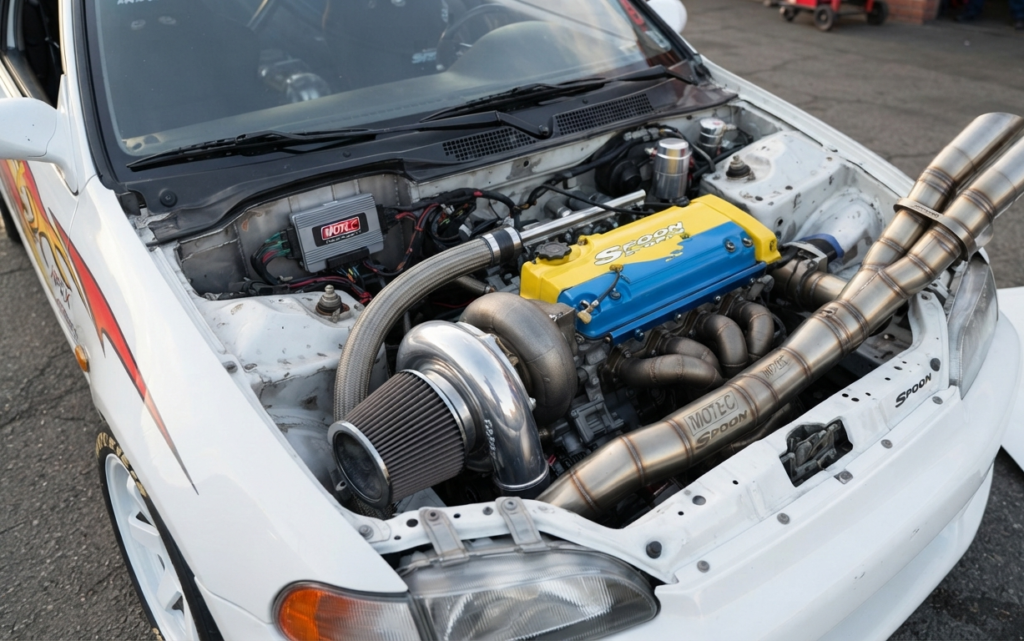
Let’s look at that famous list of parts. If you are an enthusiast, you know that some of these things make perfect sense, while others are pure Hollywood fiction.
The Spoon Engine
Spoon Sports is a real, legendary Japanese tuner. Based in Tokyo, they are absolute masters of the Honda B-series engine.
Back in 2001, a “Spoon engine” wasn’t just a motor. It was a badge of honor. It meant your car was tuned for high-RPM reliability and precision.
Having a Spoon motor meant you valued quality over everything else. It is still considered the holy grail for many Honda collectors today.
The T66 Turbocharger
The T66 is a massive piece of hardware. On a 1.6-liter engine, it is frankly overkill.
In the real world, a T66 turbo would create significant “turbo lag.” You would be waiting forever for the boost to kick in.
However, in the movie, it looked perfect. It gave the Civic that aggressive, “ready-for-war” look under the hood that audiences loved.
The “Motec System Exhaust”
We have to talk about the elephant in the room. This is arguably the most famous mistake in film history.
Motec is a world-class leader in ECU (Engine Control Unit) and data logging technology. It has absolutely nothing to do with exhaust systems.
The writers clearly just picked a cool-sounding brand name. It’s a funny error, but it’s part of why we love the scene so much. It reminds us not to take the movie too seriously.
How to Build a “Hector-Spec” Civic Today
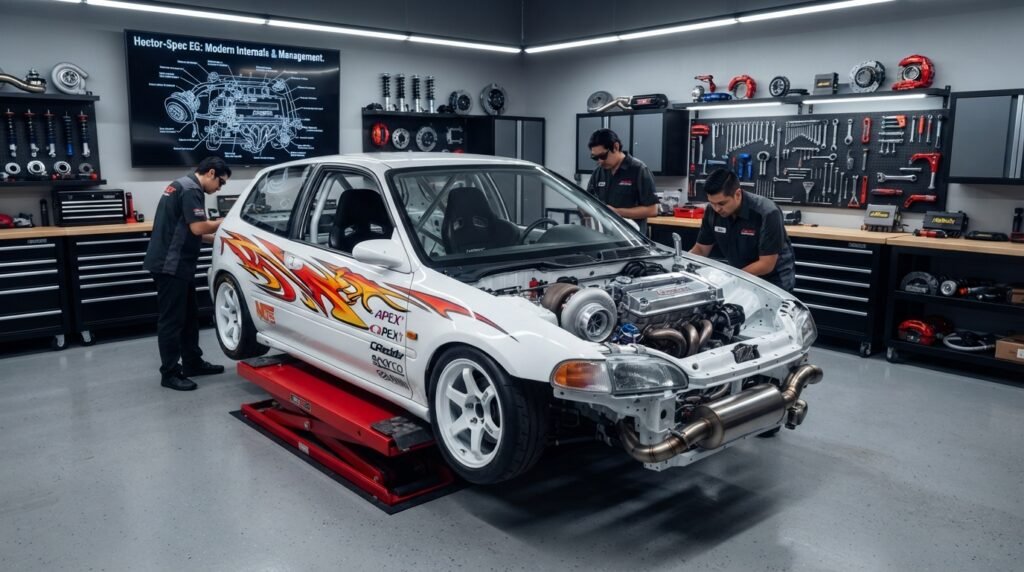
If you want to build a tribute to this car, you don’t need to follow the movie’s technical mistakes. You can build a car that looks like the movie car but performs like a modern beast.
Start with the Right Chassis
You need a 1992–1995 Honda Civic EG Hatchback. This is the most iconic body style for this build.
Finding a clean shell is the hardest part. Since these cars were often abused, look for one with minimal rust and a straight frame.
The Engine Build
Instead of chasing a 90s-era “Spoon” engine, look for a B16 or B18 block. You can build these to handle high boost with modern forged internals.
Today’s engine management systems are lightyears ahead of what we had in 2001. A modern Hondata or Haltech ECU will give you better reliability and more power than the movie script ever could.
Perfecting the Aesthetic
The early 2000s look is all about “period-correct” modifications. You want a body kit that looks like it came out of a 2001 catalog.
Focus on:
- Aggressive front bumpers with large air intakes.
- Classic multi-spoke wheels, like the iconic Volk TE37.
- Clean, high-quality vinyl graphics that follow the body lines.
Why This Build Still Matters in 2026
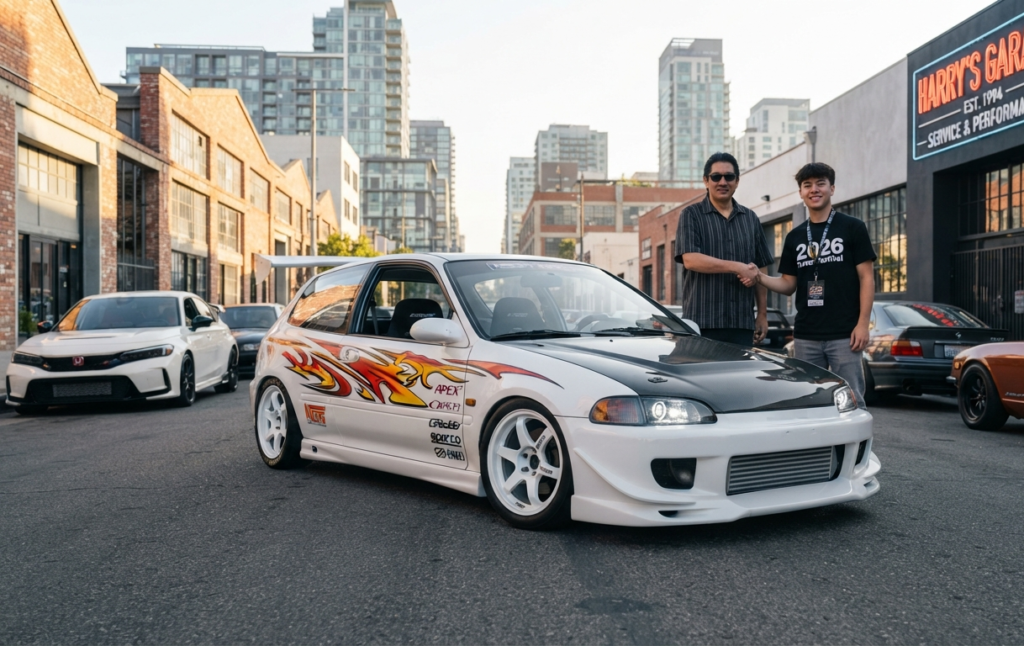
You might wonder why we are still talking about a car from a 25-year-old movie. It is simple: the passion remains the same.
The 90s Honda scene is currently in a massive resurgence. Values for these cars are climbing, and younger enthusiasts are discovering the beauty of the EG platform for the first time.
Building a Hector-style Civic is a way to pay homage to the roots of street racing culture. It is a project that connects the past with the present.
Frequently Asked Questions
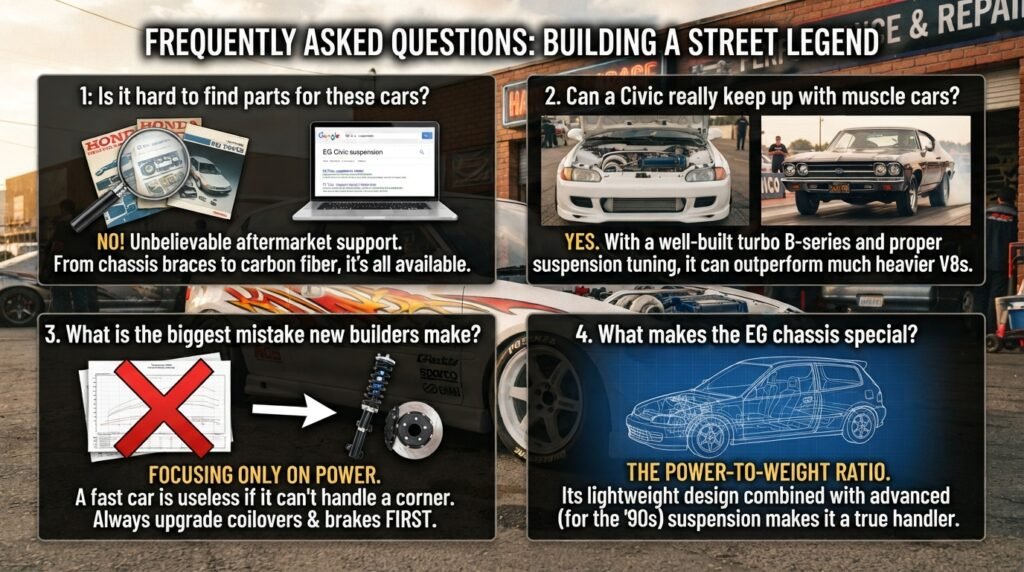
Is it hard to find parts for these cars?
Not at all. The aftermarket support for the Honda EG chassis is still incredible. You can find everything from suspension arms to carbon fiber hoods with a simple search.
Can a Civic really keep up with muscle cars?
Absolutely. With the right turbo setup and suspension tuning, a well-built Honda Civic can easily outperform many heavy V8s on a track or a drag strip.
What is the biggest mistake new builders make?
They often focus too much on power and not enough on the suspension. A fast car is useless if it cannot handle a corner. Always upgrade your brakes and coilovers before you push for big horsepower numbers.