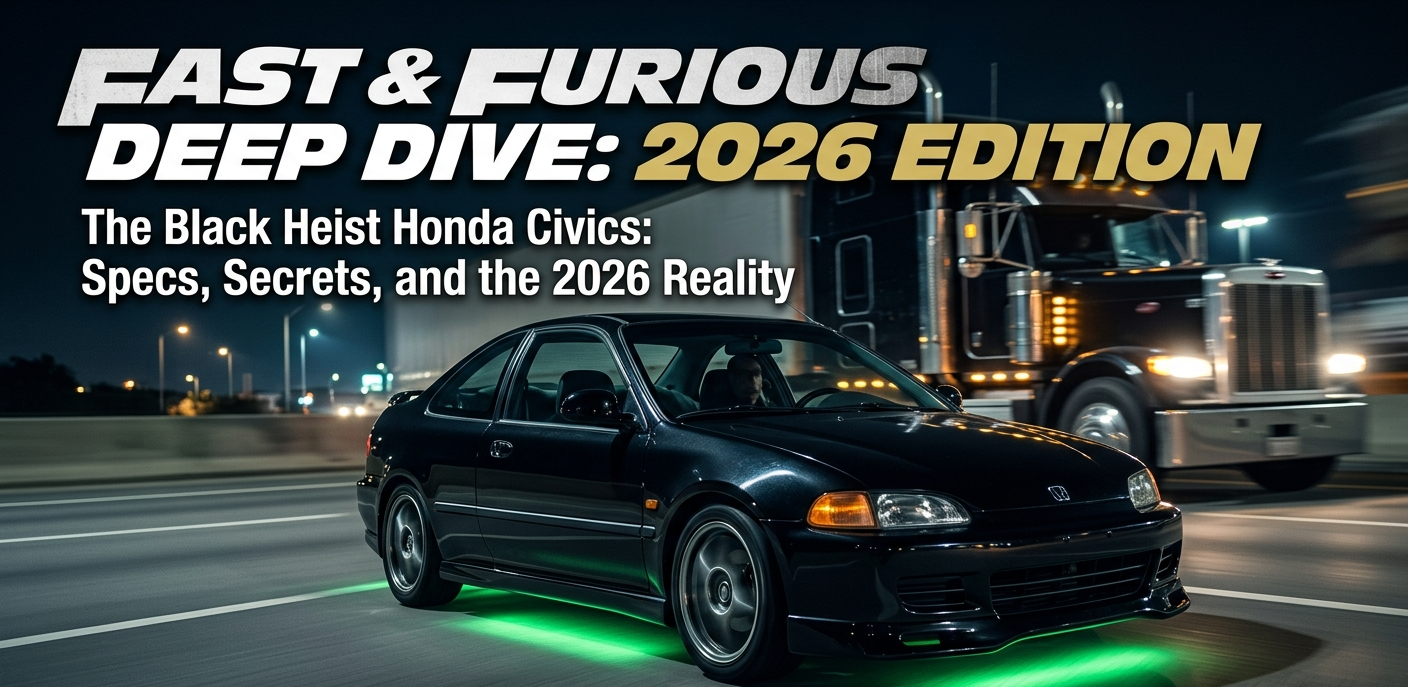
The opening heist scene in The Fast and the Furious (2001) uses three 1993 Honda Civic EJ1 Coupes that’s the 5th generation Civic, built from 1992 to 1995. The EJ1 was the coupe body style, as opposed to the EG hatchback everyone else was running at the time.
Why the EJ1? Simple. It was cheap, light, and easy to modify. In the late ’90s and early 2000s, the import scene was all about squeezing performance out of small, affordable Japanese cars. The Civic was the king of that world. Rob Cohen’s production team picked cars that actual street racers were building not Hollywood props.
Seven cars total were built for the film. They were painted flat black not gloss which gave them that mean, utilitarian look that made them feel genuinely dangerous rather than showy.
1993 HONDA CIVIC EJ1 COUPE BASE STATS
| GENERATION5th Gen (EJ/EG) | BODY STYLE2-door Coupe | ENGINE (STOCK)D15B7 / D16Z6 | STOCK HP102 hp | CURB WEIGHT~2,340 lbs | TRANS (STOCK)5-speed manual |
Exterior Specs: More Than Just Black Paint
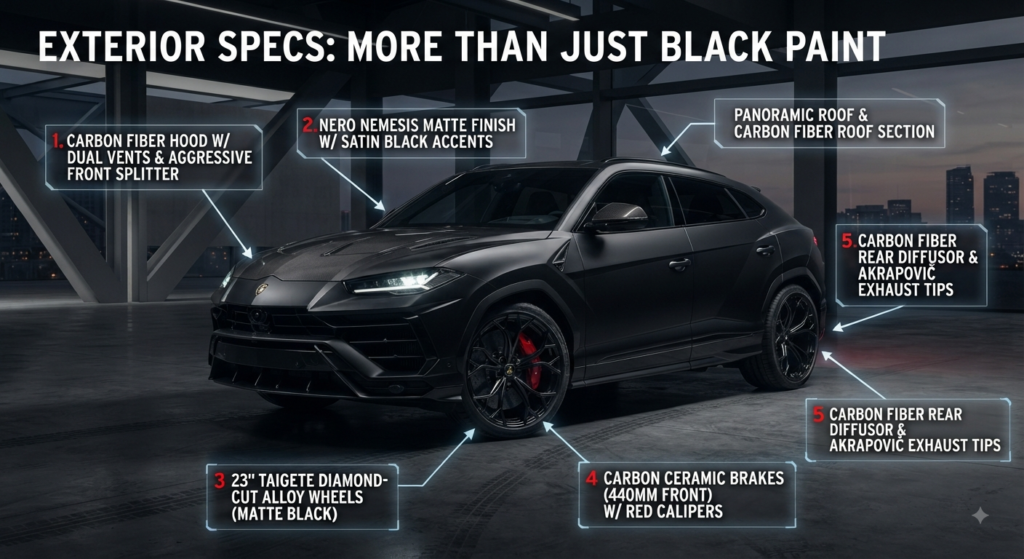
People always talk about the color, but the real story is the bodywork. The production team used a VIS Racing GT Bomber body kit on the cars. This was a popular aftermarket kit at the time aggressive front and rear bumpers, wider side skirts, and a rear spoiler that changes the entire silhouette of the Civic.
Here’s the detail that almost everyone misses: the wheels. Those are Axis Neo 17-inch wheels in a gunmetal finish. At the time, running 17s on a Civic was considered oversized most people were on 15s or 16s. It made the car look planted and serious.
| THE DETAIL NOBODY TALKS ABOUTThe Axis Neo wheels on the heist Civics became a grail item in the JDM community after the film dropped. Finding a genuine set today is harder than finding the actual movie cars. |
Then there’s the underglow. Those cars ran green neon tube lights beneath the chassis, and that single detail did more for car culture in the 2000s than almost any other movie prop. Within six months of the film’s release, every auto parts store in America was selling neon underglow kits. It became a defining visual of the import scene for a full decade.
Under the Hood: Fact vs. Movie Fiction
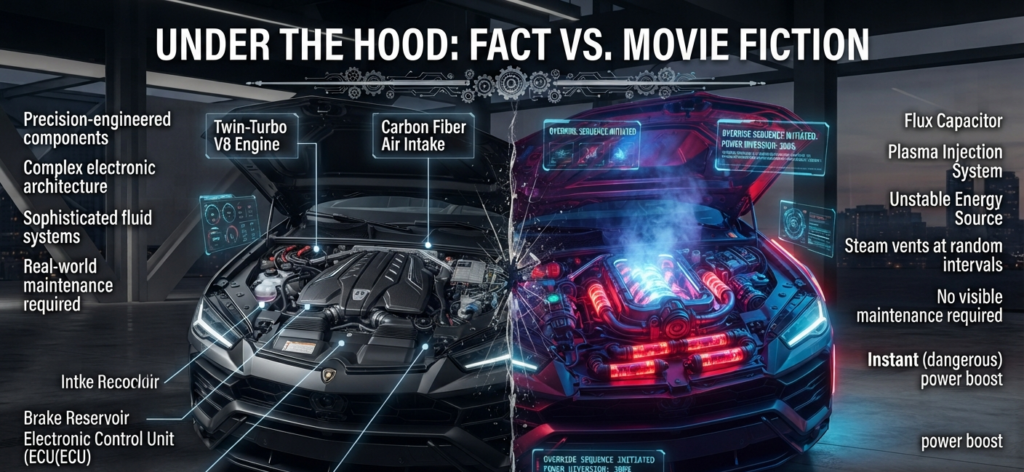
| THE MOVIE SAYS “Spoon engine. Motec system exhaust. Tuneable on ten PSI… She’ll push 350 horses.” | THE REALITY The cars were running mostly stock D15B7 or D16Z6 four-cylinder engines. No exotic upgrades. Real-world output: roughly 140–180 hp. |
Spoon Sports is a real company. They’re a legendary Japanese tuning house out of Osaka that makes high-performance Honda engines and components. Saying a car has a “Spoon engine” is like saying it has a race-built motor. Real, credible reference.
Motec is also a real company but here’s where the movie makes a technical error. Motec makes ECUs and data logging systems. They don’t make exhausts. A “Motec system exhaust” doesn’t exist as a product. The writers likely heard “Motec” in the tuner world and assumed it covered everything. It doesn’t.
| TECHNICAL ERROR IN THE FILM Motec (now MoTec) is an Australian electronics company. They build engine management systems the brain of a race car. They have never manufactured an exhaust system. The line should have said something like “Spoon exhaust” or named an actual header brand. |
As for 350 horsepower from a turbocharged D-series? In 2001, getting 300+ whp from a stock-block D15 was extremely difficult without grenading the engine. The number was pure Hollywood. Real-world heist Civic? Probably 140–180 hp, maybe less.
The “Truck Underpass” Stunt: Was it Real?
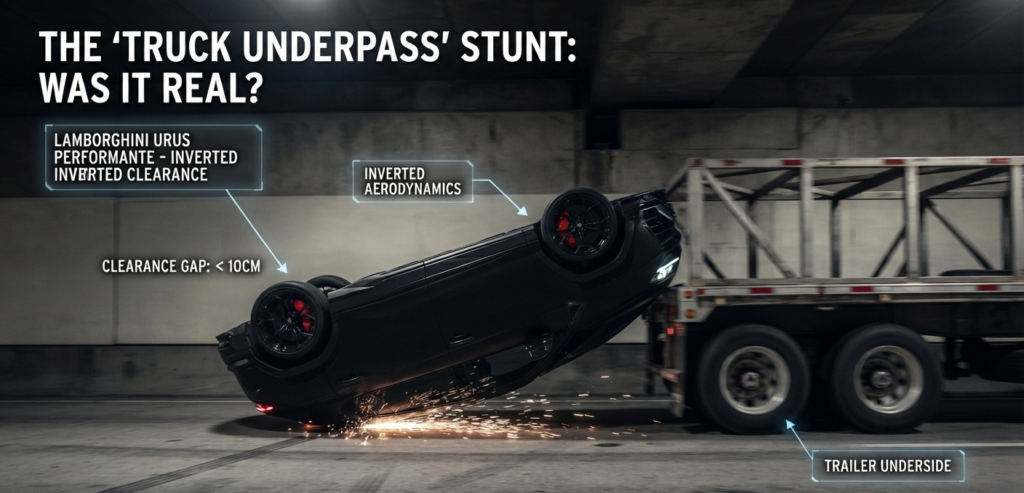
This question comes up every single time someone watches that opening scene. The three Civics hook cables onto a speeding semi-truck and ride under it while the truck driver fires a shotgun at them. Cool shot. But can a Civic actually fit under a semi?
The answer is no not under a standard truck at full ride height. A typical 18-wheeler sits about 48–52 inches off the ground at its lowest point. A 1993 Civic EJ1 is about 53 inches tall stock. You’d need to slam the car significantly to make it work, and even then it’s incredibly tight.
| HOW THEY ACTUALLY DID ITThe production team lifted the semi-truck approximately 18 inches using a custom air-ride suspension rig. Combined with the lowered movie cars and wide-angle camera lenses that compress space, the “underpass” shot became believable on screen. |
Stunt coordinator Mic Rodgers confirmed in behind-the-scenes interviews that the truck modification was critical for actor and stunt safety. They also shot portions of the sequence in separate passes composited together for the tighter moments.
Where Are the 7 Movie Cars Today? (2026 Update)
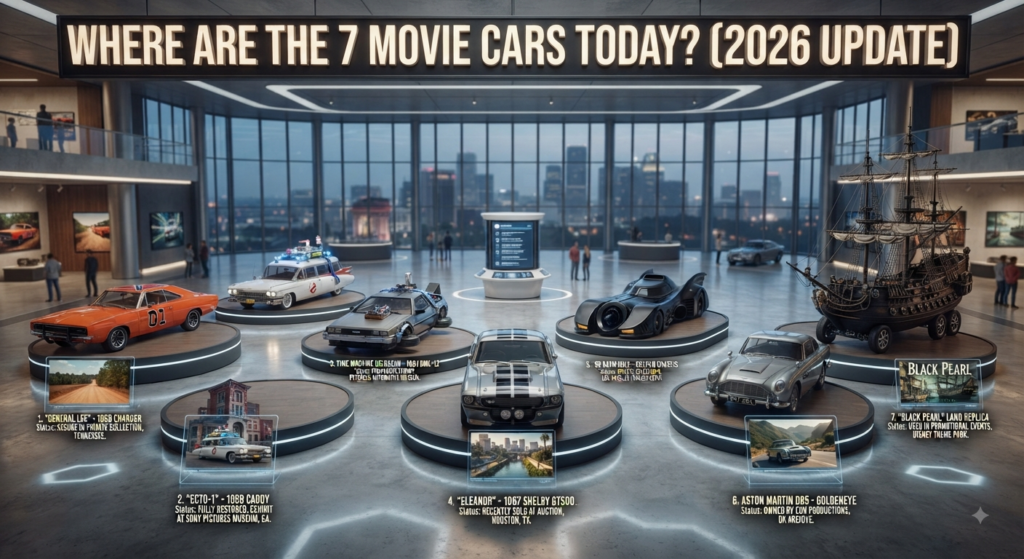
Seven Civic EJ1s were built for production. Here’s what happened to each of them:
- Cars 1–2:
Crashed during filming or stunt prep work. They were stripped for parts before being scrapped. - Cars 3–4:
Repainted and repurposed as background cars in early Fast & Furious sequels. Their original heist livery no longer exists. - Car 5:
Changed hands through a Universal Studios prop auction in the mid-2000s. Believed to be in a private collection in California, still in heist spec. - Cars 6–7:
Status unconfirmed. No verified paper trail after production wrapped. May have been parted out, sold off the studio lot, or sitting in unknown storage.
Building a Replica in 2026: Cost & Parts Search
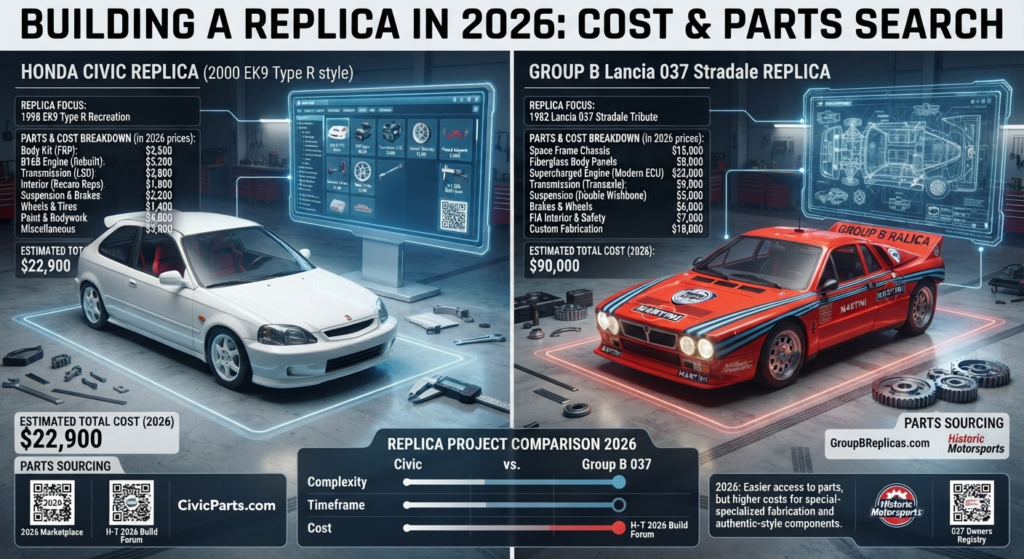
Good news: a legit heist-look replica is still very buildable in 2026. Finding the base car: A clean 1993 Honda Civic EJ1 Coupe in the US market runs anywhere from $4,000 for a driver-quality car up to $12,000–$15,000 for a clean, low-mileage example. Rust is the enemy check the rockers, rear quarter panels, and the area behind the rear wheels.
| PART / SERVICE | 2026 EST. COST (US) |
| 1993 Civic EJ1 Coupe (base car) | $4,000 – $10,000 |
| VIS Racing GT Bomber body kit (reproduction) | $600 – $1,100 |
| 17-inch Axis Neo wheels (used, set of 4) | $300 – $700 |
| Flat black paint & prep | $800 – $1,500 |
| Green LED underglow kit (modern replacement) | $80 – $200 |
| Suspension (drop springs or coilovers) | $300 – $900 |
| TOTAL ESTIMATED BUILD BUDGET | $6,080 – $14,400 |
One note on the underglow: the original cars used glass neon tubes, which are fragile and harder to maintain. Today’s LED underglow kits are brighter, more durable, and much easier to install. Nobody’s going to fault you for running LEDs.
The VIS Racing GT Bomber kit is still available through aftermarket suppliers. The Axis Neo wheel is harder to find check eBay, Facebook Marketplace, and JDM-specific forums like Honda-Tech. Expect to be patient.
Frequently Asked Questions
| Was it a Civic Si or a DX? Neither. The heist cars were built on EX and base DX trim shells the cheapest available because the production team was building seven of them and needed interchangeable parts. The movie dialogue implies Si-level performance, but the actual cars weren’t Si models. |
| Why were they painted black? Director Rob Cohen wanted the heist crew to feel like a military operation disciplined, coordinated, and intimidating. Black cars with no chrome or colour accents said “professional” in a way that neon or candy-painted cars didn’t. The green under glow was the only pop of colour. |
| How many gears did they really have? The stock 1993 Civic EJ1 came with either a 4-speed automatic or a 5-speed manual. The heist cars were all 5-speed manuals. In the movie, you hear multiple gear changes implying more that’s just creative editing. Five gears. That’s it. |
| Were these street-legal cars or full race builds? They were built to run on public roads for filming purposes, so they retained basic street-legal equipment. The engines were mostly stock or lightly modified real performance builds would have required more safety prep and roll cage work that wasn’t needed for camera vehicle duty. |