
Driving a Honda Civic equipped with a 1.5 liter turbocharged engine is an exciting experience. You get smooth acceleration, great highway power, and impressive fuel economy all in one reliable package.Yet if you spend any time browsing online automotive forums or social media groups, you will quickly find plenty of chatter about engine problems.Talk of sudden breakdowns and unexpected repair bills can make any car owner feel nervous about their daily commute.You might wonder if your specific car is safe to drive or if a massive financial burden is waiting for you around the corner.This guide cuts through the online noise and confusion. We will look at official records, break down common mechanical issues, and give you a clear path forward.
Is There an Official Recall List for the Honda Civic 1.5T Engine?
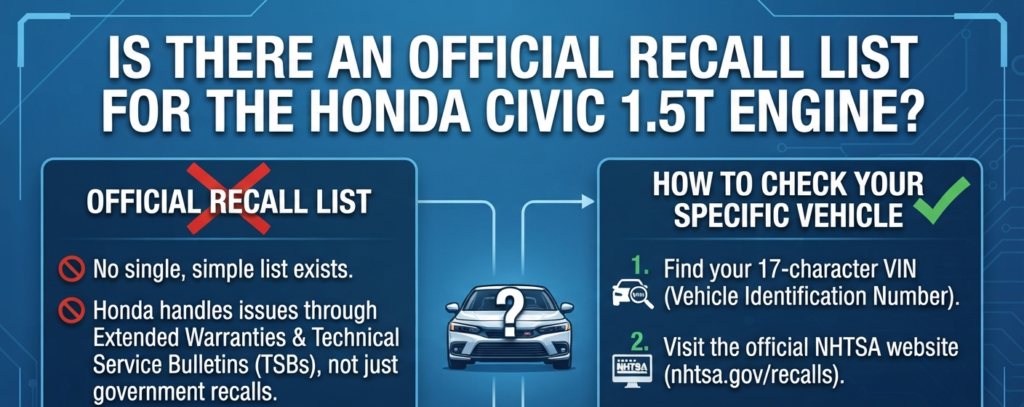
Many drivers search the web hoping to find a simple and straightforward recall list for this specific engine. The reality of how the automotive industry handles these issues is a bit more complex.A formal government safety recall is issued only when a defect poses an unreasonable safety risk to the public. When this happens, the manufacturer is legally required to fix the problem for free.Honda has issued major safety recalls for various vehicle components over the years. However, for the 1.5 liter turbo engine, Honda often chose to handle major owner complaints through extended warranties or technical service bulletins instead of mandatory government recalls.This means your car might have hidden service campaigns that do not show up on basic government safety lists unless you check your unique vehicle identification number.
Major 1.5T Engine Issues Explained
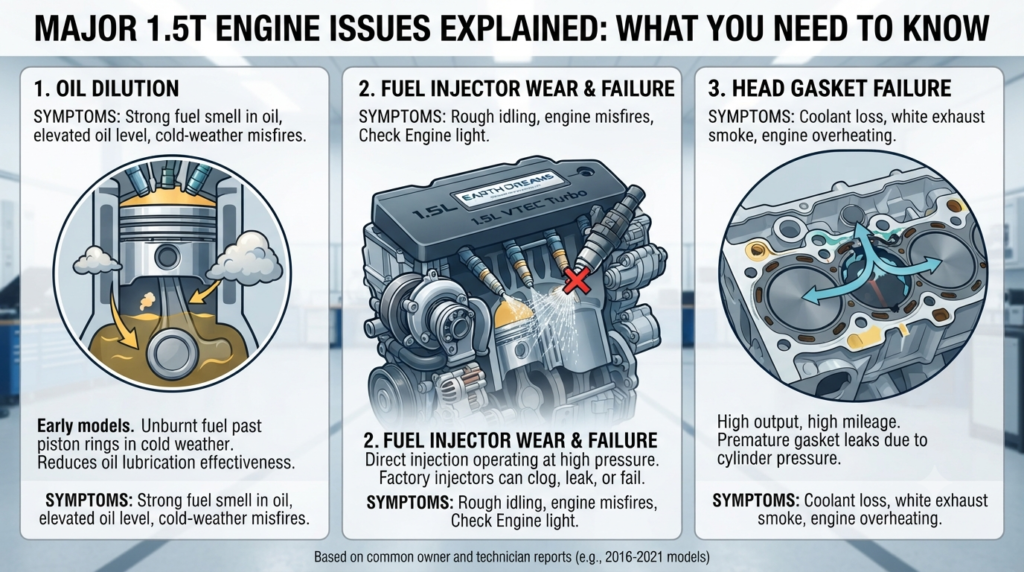
To truly understand what might affect your vehicle, you need to know the actual mechanical problems reported by professional technicians and everyday owners.
The Oil Dilution Problem
Early versions of this turbocharged engine faced severe oil dilution issues during their initial production runs. Unburnt fuel would slip past the piston rings during short city trips, especially in freezing winter weather.This excess fuel mixed directly with the engine oil, raising the overall fluid level and drastically reducing lubrication effectiveness.Honda eventually released software updates and extended warranty coverages to help solve this specific issue for early model years.
Fuel Injector Wear and Failure
Direct injection systems operate under extremely high pressure to deliver fuel efficiently. Over time, the factory fuel injectors on some 1.5T engines can clog, leak, or fail completely.Common symptoms of failing injectors include rough engine idling, unexpected engine misfires, and a sudden check engine light flashing brightly on your dashboard.
Head Gasket Failures
As these high output engines rack up higher mileage numbers, some owners report premature head gasket leaks.Excess cylinder pressure can compromise the gasket seal, leading to coolant loss, white smoke billowing from the exhaust, and dangerous engine overheating.
Model Year Breakdown: Which Civics Are Affected?
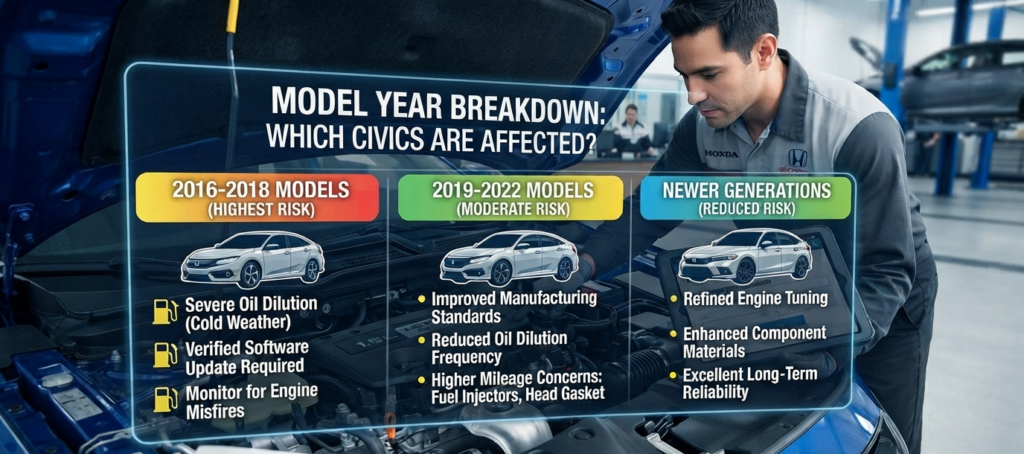
Not all model years carry the same level of risk. Different production periods have distinct known patterns that you should monitor closely.
2016 to 2018 Models
These early years carry the highest association with oil dilution complaints, particularly for drivers living in colder regional climates.
If you own one of these early models, you must verify that the official Honda cold weather software update was installed by a previous owner or an authorized dealer.
2019 to 2022 Models
Honda updated factory manufacturing standards and assembly line protocols for these years. Oil dilution became a much rarer occurrence.
However, repair reports shifted toward fuel injector wear and occasional head gasket concerns once the vehicles crossed higher mileage thresholds.
Newer Generations
Recent production years feature heavily refined engine tuning and better internal component materials, drastically reducing early failure rates and boosting long term reliability.
How to Check If Your Honda Civic Has an Open Recall
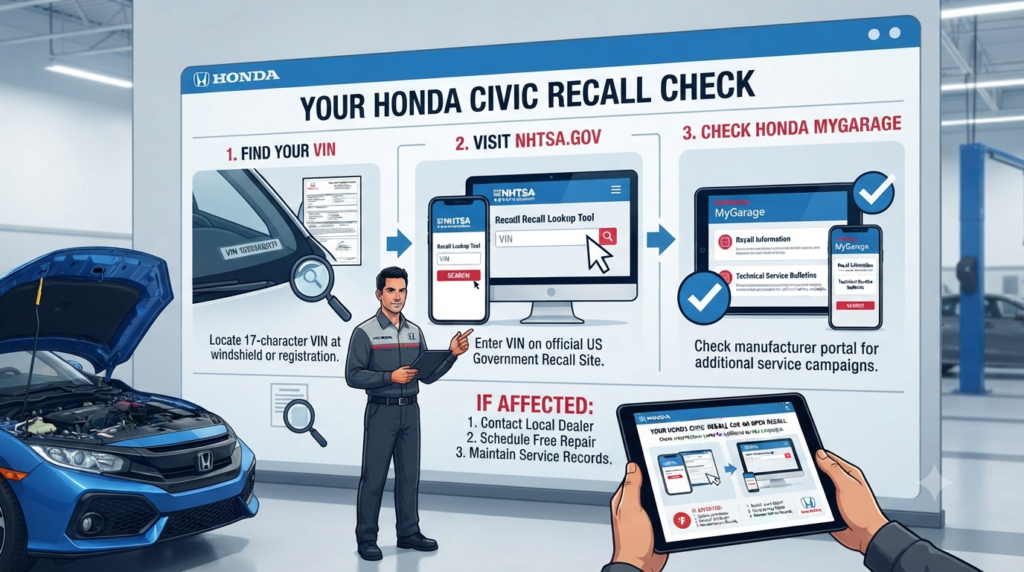
You do not have to guess whether your car is safe to drive. You can check your specific vehicle status in less than five minutes right from your phone.
First, find your 17 character Vehicle Identification Number. You can easily spot this unique number on your vehicle registration card or through the lower corner of your driver side windshield.
Next, visit the official NHTSA website and enter your VIN into their secure online recall lookup tool. This instantly reveals any active government safety recalls tied to your car.
Finally, log into the official Honda MyGarage portal. This platform reveals technical service bulletins or hidden dealer campaigns that might not appear on public safety databases.
What to Do If Your Vehicle Is Affected
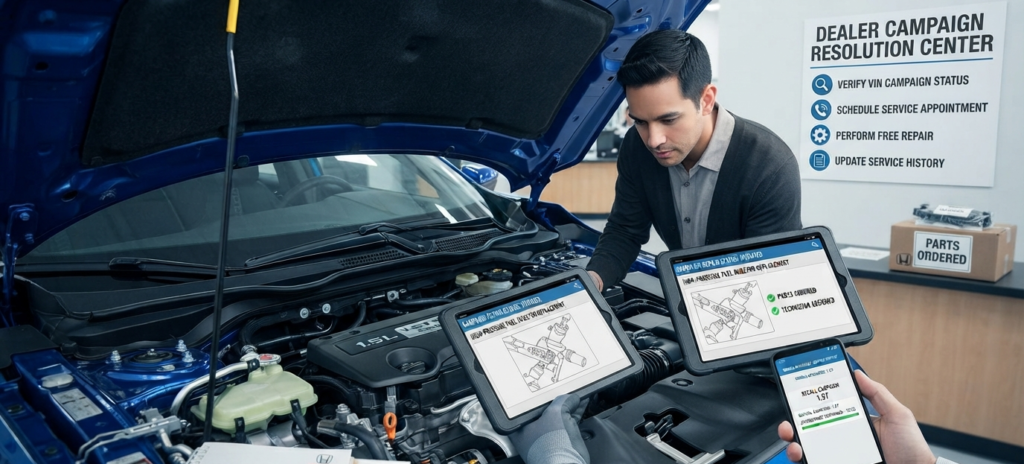
Finding an open recall or a technical service bulletin can feel stressful for any car owner. Taking calm and structured action protects your automotive investment.
Contact your local authorized Honda dealership immediately if your VIN search shows an active safety campaign or a pending dealer update.
Ask the service advisor if your specific mechanical issue qualifies for free dealer repair under an active safety recall or an extended manufacturer warranty.
Keep physical or digital copies of every single oil change and routine service record. Dealerships often require strict proof of proper maintenance before approving goodwill or warranty repairs.
Proactive Maintenance Tips to Protect Your 1.5T Engine
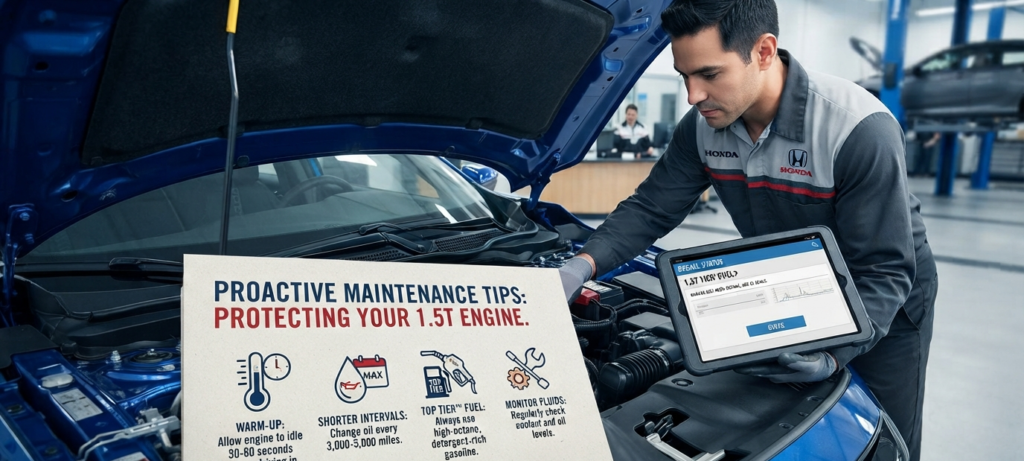
Prevention is always better than paying for a costly engine rebuild. You can protect your 1.5T engine by adopting smart driving habits and maintenance routines.
Switch to shorter oil change intervals. Changing your engine oil every 3,000 to 5,000 miles helps remove fuel contamination before it harms sensitive internal components.
Allow your engine to reach normal operating temperature before pushing heavy acceleration, especially during cold winter mornings.
Always use top tier high octane fuel. Quality fuel reduces internal carbon buildup and keeps your direct injection system running smoothly for years.