
Seeing the Maintenance Minder Code 3 on your dashboard can be frustrating. You might wonder if it is a major issue or just a routine notification.
This code specifically signals that it is time to replace your transmission fluid. Staying on top of this service is vital for the longevity of your Honda Civic.
In this guide, we will break down the costs, the technical process, and how you can save money while keeping your car running like new.
What Does Code 3 Actually Mean?
The Honda Maintenance Minder system is designed to track your specific driving habits. It monitors engine conditions and fluid life to determine when service is due.
When the number 3 appears on your dashboard, your car is telling you that the transmission fluid has degraded. It is no longer providing the lubrication your transmission needs to function properly.
It is important to understand the difference between a drain and fill versus a complete flush. Most Honda technicians recommend a drain and fill process for the Civic.
This method replaces the majority of the old fluid with fresh OEM fluid. It is safer for your transmission seals compared to a high pressure power flush.
Updated 2026 Transmission Fluid Service Costs
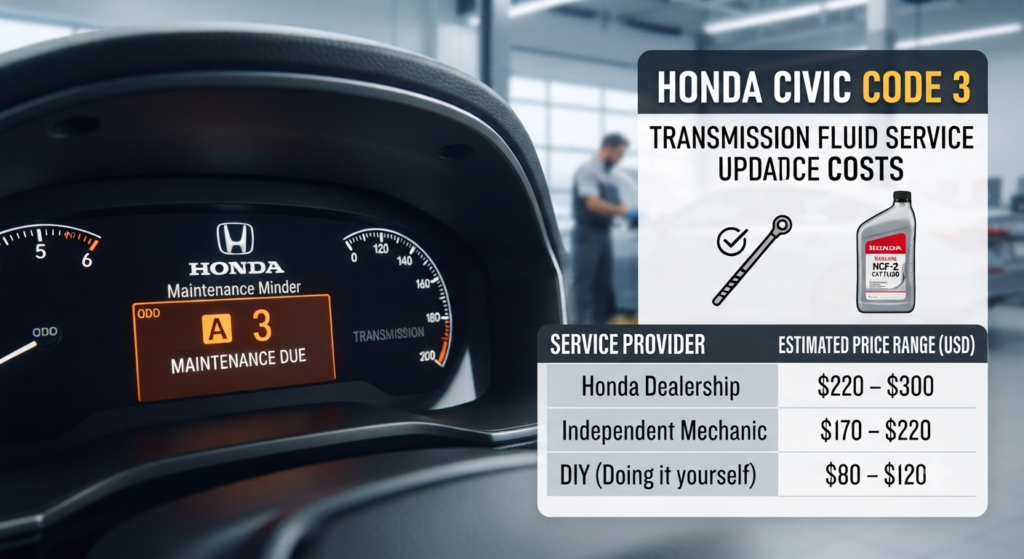
Costs vary significantly depending on where you choose to get the service done. Prices fluctuate based on your location and the specific model year of your Civic.
| Service Provider | Estimated Price Range |
| Honda Dealership | $220 – $300 |
| Independent Mechanic | $170 – $220 |
| DIY (Doing it yourself) | $80 – $120 |
Dealerships often charge more because they use certified technicians and genuine Honda fluids. Local mechanics might be cheaper, but you must ensure they use the correct fluid for your specific model.
Why Transmission Fluid is the Lifeblood of Your Civic
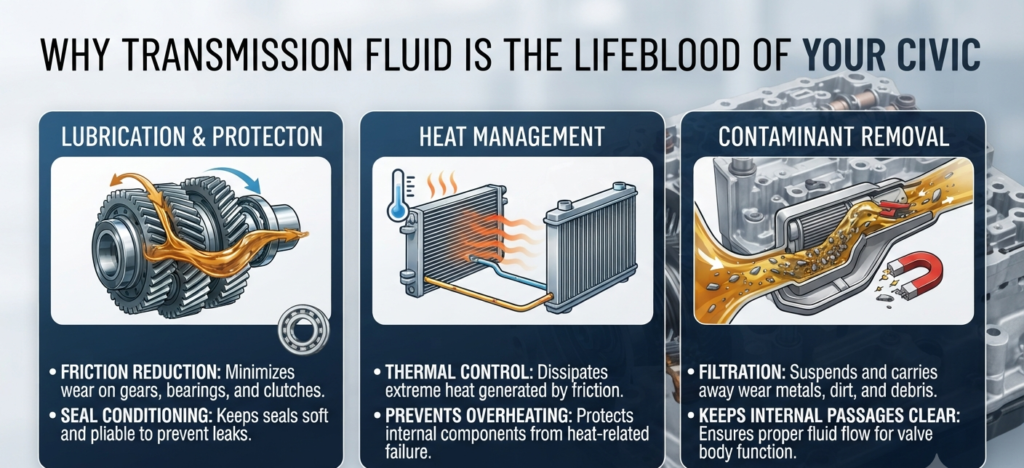
Your transmission is one of the most complex and expensive components of your car. It relies on fluid to lubricate internal parts and manage heat.
Over time, this fluid breaks down due to high temperatures and internal friction. When it gets thin or dirty, it cannot protect the gears properly.
Neglecting this maintenance can lead to slipping gears or delayed engagement. Eventually, it may lead to a total transmission failure that costs thousands of dollars.
By following the Code 3 alert, you are effectively preventing these major mechanical failures. It is a proactive step that saves you significant money in the long run.
Understanding the Difference Between Fluid Types
Not all transmission fluids are created equal. Honda Civics, especially those with Continuously Variable Transmissions (CVT), require specific fluid.
Always use Honda Genuine HCF-2 fluid for CVT models. Using generic or improper fluid can cause shuddering and irreversible damage to your transmission.
Some aftermarket brands claim to be compatible with Honda systems. However, sticking to OEM fluid is the safest way to maintain your warranty and performance.
Always ask your mechanic what brand of fluid they plan to use. If they cannot confirm it meets Honda specifications, you should look for another shop.
DIY vs Professional Service: Which is Right for You?
Deciding between a professional service and a DIY project depends on your technical experience. Changing the fluid requires lifting the car safely and measuring levels accurately.
If your car is still under warranty, it is usually best to visit a Honda dealership. They will document the service in their electronic system.
This official documentation is essential if you ever need to file a warranty claim later. If you choose to do it yourself, keep all your receipts.
You should also keep a log of the date and mileage when you performed the service. This helps if you ever decide to sell your car in the future.
How to Save Money on Transmission Service
You do not always have to pay the highest price at a dealership. Check the official website of your local Honda dealer for service coupons.
Many dealers offer monthly specials on basic maintenance items. You can also purchase your own Honda OEM fluid from a reputable auto parts store.
Bring the fluid to a trusted local mechanic to save on labor costs. Always verify that they are experienced with modern Honda transmission requirements.
You can also call multiple shops to compare prices. Be clear about the specific service you need so you get an accurate quote over the phone.
How to Recognize Transmission Problems Early
Beyond the Code 3 light, there are signs that your transmission needs attention. Pay attention to how your car drives on a daily basis.
If you feel a shuddering sensation during acceleration, it could be a sign of worn fluid. This is common in high mileage Civics that missed a service interval.
Delayed engagement when shifting from Park to Drive is another red flag. If your car takes a second to “catch” before moving, check your fluid level immediately.
Unusual whining noises coming from the transmission area are also concerning. These sounds often indicate that the fluid is no longer protecting the gears.
The Role of the Transmission Filter
Many owners forget that the transmission also has a filter. While a simple drain and fill does not always include a filter change, it is worth discussing.
In many modern Civics, the internal filter is not easily accessible. It often requires dropping the transmission pan to reach it.
Ask your mechanic if your specific model allows for a filter replacement during the service. Replacing the filter adds an extra layer of protection for your gears.
Even if the filter cannot be changed, the drain and fill process is still highly effective. It removes the suspended contaminants that degrade the fluid.
Frequently Asked Questions
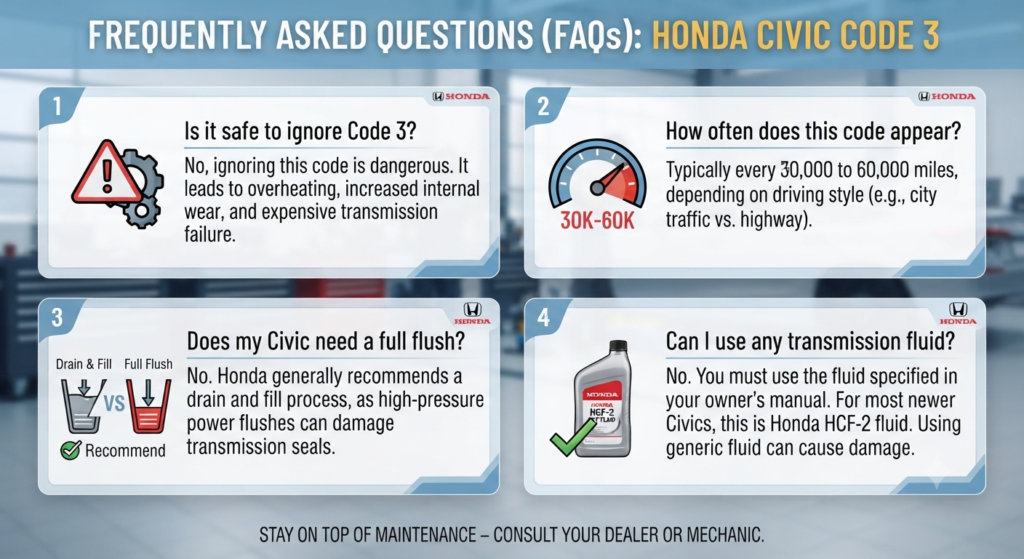
Is it safe to ignore Code 3?
No, ignoring this code is dangerous for your transmission. It leads to overheating and internal wear that is very expensive to repair.
How often does this code appear?
It typically appears every 30,000 to 60,000 miles depending on your driving style. Heavy city traffic or frequent mountain driving can trigger it sooner.
Does my Civic need a full flush?
Honda generally recommends a drain and fill process. Ask your mechanic to clarify their process before they start the work.
Can I use any transmission fluid?
No, you must use the fluid specified in your owner manual. For most newer Civics, this is Honda HCF-2 fluid.
What happens if I delay the service?
Delaying the service causes the fluid to turn into sludge. This can clog the internal filters and damage the valve body of your transmission.