
Seeing a maintenance light pop up on your dashboard is never a pleasant experience. If your Honda Civic is displaying the A14 code, you are likely feeling a mix of confusion and concern about your wallet.
This code is a standard factory notification. It is Honda’s way of telling you that your vehicle has reached a specific mileage milestone.
In this comprehensive guide, we will break down exactly what this means, what the costs look like, and how you can handle it without getting stressed out.
What Does Honda Civic Code A14 Actually Mean?
Your Honda uses a Maintenance Minder system to track the health of your engine. When multiple codes appear, it simply means several tasks are due at the same time.
The A14 code breaks down into three distinct maintenance items.
The A service represents an oil and filter change. This is the most common maintenance task for any vehicle and is essential for engine longevity.
The 1 service indicates that it is time to rotate your tires. This ensures they wear evenly and last as long as possible, saving you money on early tire replacements.
The 4 service is the most significant part of this alert. It specifically calls for the replacement of spark plugs and an inspection of the valve clearance.
If your specific model uses a timing belt and water pump, those may also need inspection or replacement.
Why the 4 Service is Critical
The 4 service is not something you should put off for too long. Spark plugs are the heart of your engine combustion process.
Over time, the metal electrodes on these plugs wear down. As the gap between the electrodes widens, the engine has to work harder to create a spark.
This causes a cascade of issues. Your fuel economy will drop, and you may experience rough idling or poor acceleration.
Valve clearance is equally vital. Valves control the intake of air and the release of exhaust gases.
If the valves are too tight, they may not close completely, leading to burnt valves. If they are too loose, you will hear a ticking noise and lose engine power.
Deep Dive: Understanding Valve Clearance Adjustments
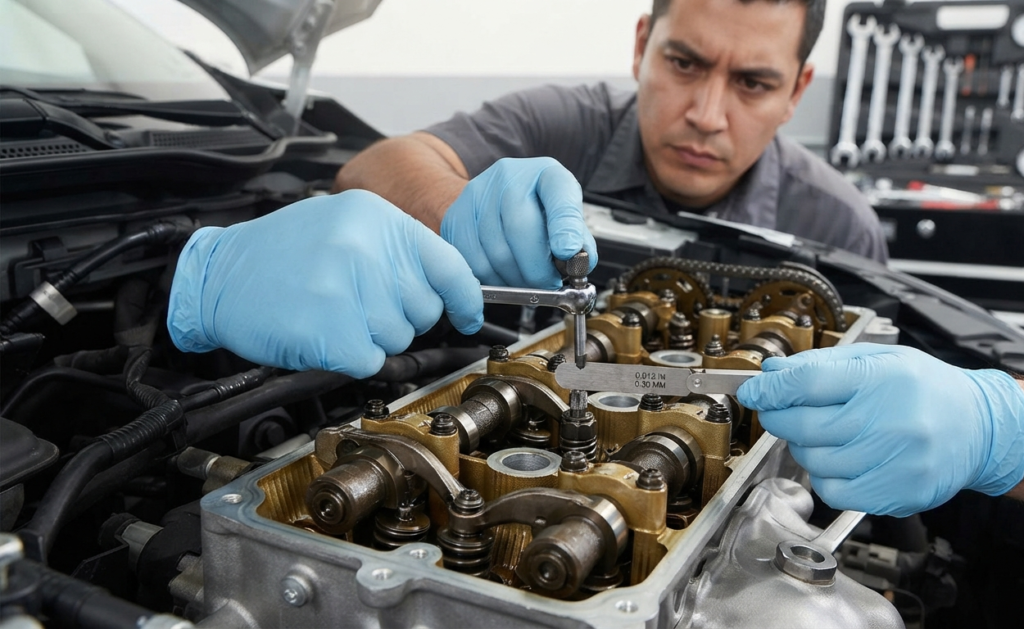
Many car owners are confused by the valve clearance portion of the A14 code. It is the most misunderstood part of Honda maintenance.
Over thousands of miles, the mechanical components of your cylinder head settle. This changes the tiny gap between the camshaft and the valve stem.
If these gaps are not adjusted, your engine performance will decline. You might notice a lack of power when merging onto a highway or a decrease in fuel efficiency.
A technician checks these gaps using a tool called a feeler gauge. If the measurement is outside of the factory specification, they adjust it manually.
This is a precise job that requires the engine to be completely cool. This is why you will often be asked to drop your car off at the shop the night before.
Understanding the Total Cost of Maintenance
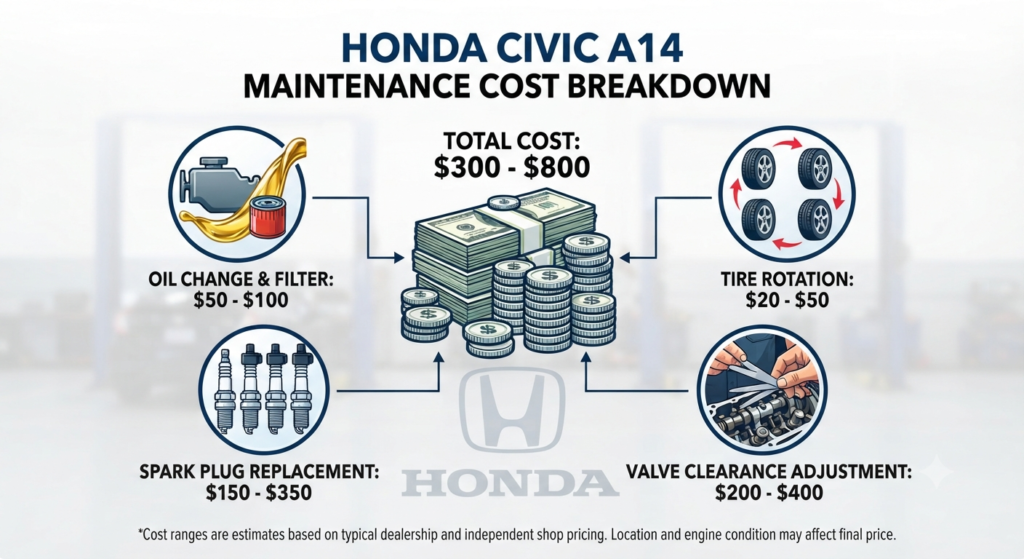
The cost for the A14 service varies significantly based on your location and the type of shop you choose.
On average, you can expect to pay between $300 and $800 for the full service.
The price fluctuates because the labor time required for a valve clearance inspection is much higher than a simple spark plug change.
| Service Item | Estimated Cost Range |
| Oil Change & Filter | $50 to $100 |
| Tire Rotation | $20 to $50 |
| Spark Plug Replacement | $150 to $350 |
| Valve Clearance Adjustment | $200 to $400 |
Dealerships typically charge at the higher end of these ranges. They use certified technicians who know your specific engine inside and out.
Independent mechanics who specialize in Japanese imports can often provide the same service for 20 to 30 percent less.
Factors That Influence Your Bill
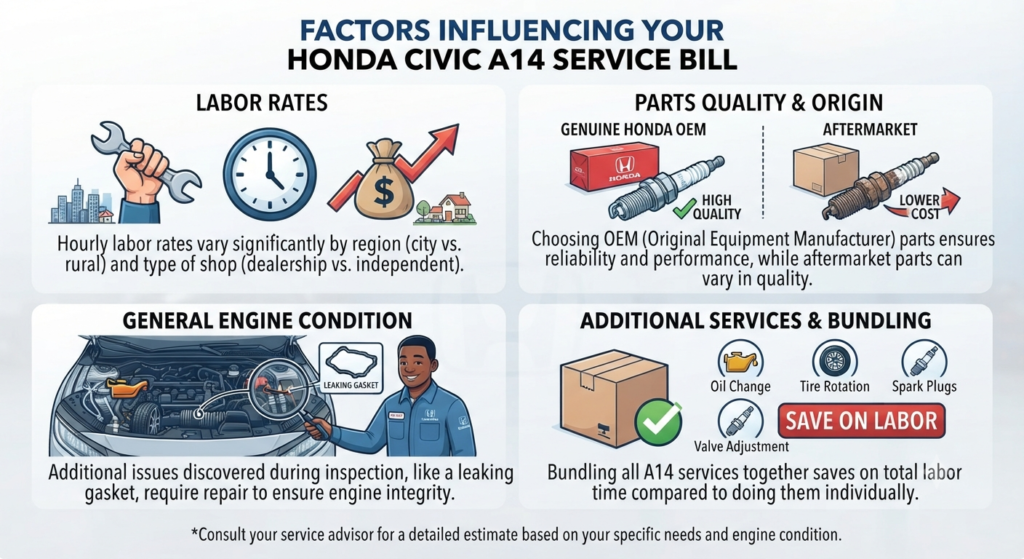
Several variables will dictate the final number on your invoice.
First is the cost of parts. You should always insist on OEM or high-quality NGK or Denso plugs that meet Honda specifications.
Second is the labor rate in your area. Mechanics in major cities charge more per hour than those in smaller towns.
Third is the condition of your engine. If your mechanic discovers that the valve cover gasket is leaking while they are in there, they will likely recommend replacing it.
While this adds to the cost, it is wise to do it while the engine is already opened up. You will save on labor by bundling these tasks.
Can You Do It Yourself?
If you have experience with car repairs, you might consider handling the oil change and tire rotation yourself.
However, replacing spark plugs on modern Honda engines often requires removing plastic covers and intake components.
The valve clearance inspection is a much more advanced task. It requires a set of feeler gauges and the patience to adjust each valve to exact specifications.
If you are not comfortable working on your engine internals, it is much safer to hire a professional. A mistake here can lead to permanent engine damage or poor performance.
Symptoms of Worn Spark Plugs
How do you know if your spark plugs are actually bad before you even reach the A14 milestone?
The first sign is usually a noticeable decline in fuel efficiency. If you find yourself visiting the gas station more often, worn plugs might be the culprit.
The second sign is a rough idle. If your car shakes slightly while stopped at a traffic light, it is a sign of an inconsistent spark.
The third sign is a hesitation during acceleration. If you press the gas pedal and the car stutters before moving forward, the ignition system is likely struggling.
OEM vs Aftermarket Parts
When you talk to your mechanic, they may ask if you want to use OEM parts or cheaper aftermarket alternatives.
OEM stands for Original Equipment Manufacturer. These are the exact parts that came in your car when it was built.
We highly recommend spending the extra money on OEM plugs. Honda engines are engineered to run on very specific heat ranges and material compositions.
Cheap aftermarket plugs may look the same, but they often fail much sooner. Using them can also void certain engine warranties if you have one.
How to Get the Best Deal
You do not have to settle for the first quote you receive. Use these tips to manage your costs effectively.
First, call two or three local independent shops that have good reviews for Honda service. Ask them specifically for a quote on the A14 package.
Second, always ask if they use OEM parts. You want to ensure the spark plugs they install meet Honda’s exact specifications.
Third, ask for a detailed breakdown of the quote. If they include a timing belt replacement, verify if your specific model year actually requires one.
Some newer Honda engines use timing chains that do not need replacement at this interval.
When to Ignore the Code
There is almost no scenario where you should completely ignore an A14 code.
If you are on a tight budget, you can prioritize the maintenance. The oil change and spark plugs are generally more urgent than the valve clearance check.
However, you should aim to get the valve clearance done within a few thousand miles of the code appearing.
Ignoring this service can lead to long-term issues like catalytic converter failure, which is significantly more expensive to fix than the A14 service itself.
Strategic Planning for Future Maintenance
Once you clear your A14 code, think of it as a fresh start for your engine.
Keep a physical or digital folder where you store all your service receipts. This is essential for resale value.
Future buyers love to see that you followed the Maintenance Minder system faithfully. It proves the car was treated with care.
Also, consider asking your mechanic to perform a general inspection of your suspension and brakes while they have the car on the lift.
This proactive approach helps you plan for future costs rather than being surprised by them.
Frequently Asked Questions
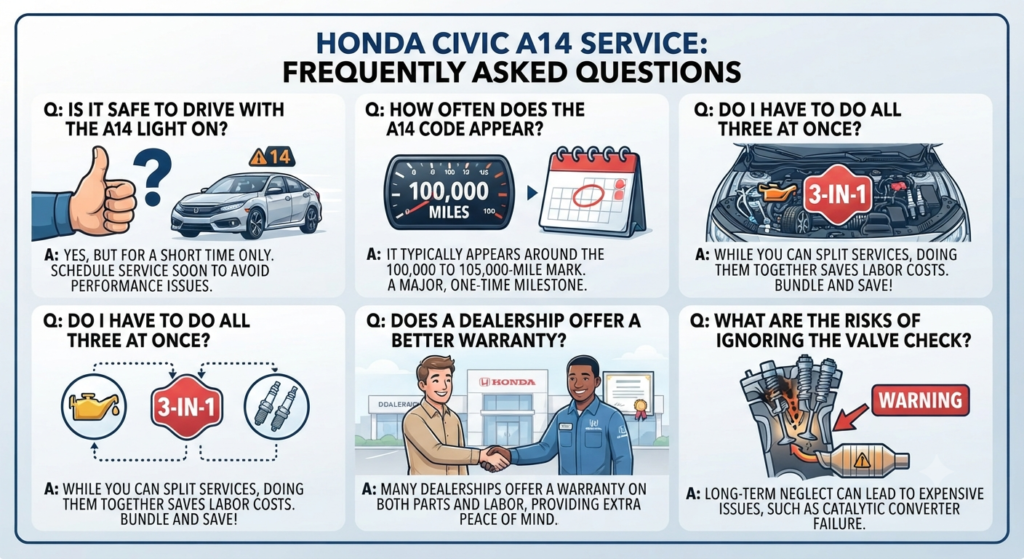
Is it safe to drive with the A14 light on?
Yes, it is generally safe to drive for a short time. However, you should schedule the service as soon as possible to avoid long-term performance issues.
How often does the A14 code appear?
This code usually appears around the 100,000 to 105,000-mile mark. It is a one-time major service milestone for most Civic owners.
Do I have to do all three at once?
While you can split the services, most mechanics recommend doing them together to save on labor costs. You are already paying for the mechanic to open the engine bay, so it makes sense to finish everything at once.
Does a dealership offer a better warranty?
Many dealerships offer a warranty on both parts and labor for their service work. This gives you extra peace of mind that a small independent shop might not provide.