
Seeing a light illuminate on your dashboard can be a source of immediate stress for any driver. You are driving down the road, perhaps on your way to work or a weekend trip, and suddenly the Maintenance Minder icon glows on your instrument cluster. If your screen displays the code B123, you might be wondering if you are facing an urgent mechanical emergency.
Is your car safe to drive? Is something majorly broken under the hood?
The short answer is no. This is not a critical error code indicating an engine failure or a dangerous fault. It is a scheduled maintenance notification from Honda. However, it is an important alert that you should not ignore. Understanding what the B123 code represents is the key to maintaining your vehicle’s performance, safety, and long-term value.
Understanding the Honda Maintenance Minder System
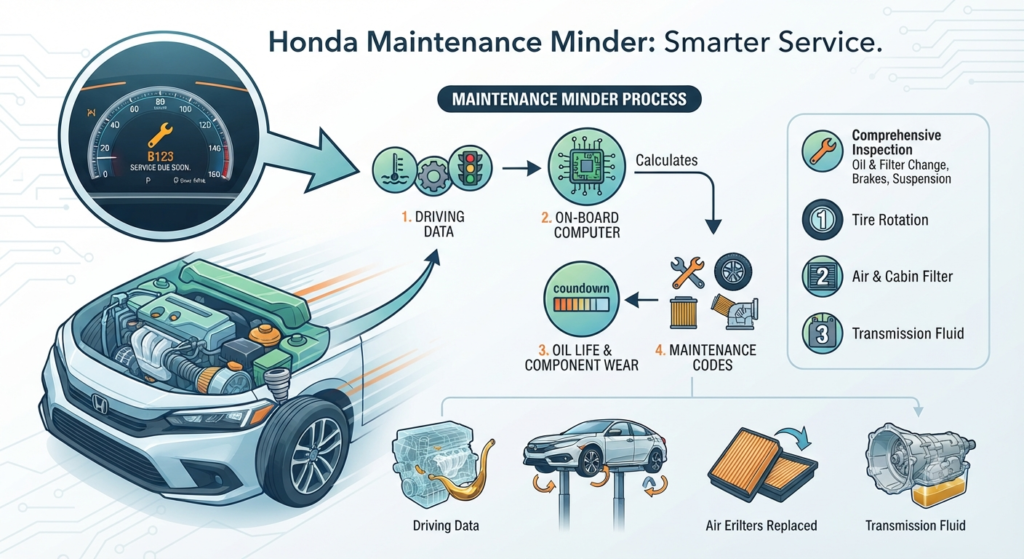
In the past, car owners followed a strict mileage-based maintenance schedule. You were told to change your oil every 3,000 or 5,000 miles, regardless of how you drove. Honda revolutionized this with the Maintenance Minder system.
This system is much smarter than a simple odometer tracker. It monitors your engine’s internal data, including engine temperature, engine load, speed, and how often you drive in stop-and-go traffic.
By analyzing these factors, the system calculates exactly when your specific engine needs service. When the system determines that your oil life is low or specific parts have reached their expected wear limit, it triggers a code. The B123 code is simply a notification that you have reached a significant milestone in your car’s life cycle.
Decoding the B123 Maintenance Code
The B123 code is not a random sequence of characters. Each letter and number corresponds to a specific set of maintenance tasks that the engineers at Honda have deemed necessary for your vehicle’s health. Let’s break them down individually.
The B Service: The Comprehensive Inspection
The letter B is the most significant part of this maintenance indicator. It serves as a signal that your car needs more than just a standard oil change.
The B service includes replacing the engine oil and the oil filter, which is the baseline for engine health. Beyond the fluids, the B service requires a technician to perform a multi-point safety inspection. This covers your front and rear brakes, the parking brake system, your steering gearbox, and your tie rod ends.
The technician will also inspect your suspension components, driveshaft boots, and brake hoses. This deep dive into your vehicle’s undercarriage is vital because it identifies small problems before they turn into dangerous failures.
The 1 Service: Tire Rotation
The number 1 indicates that it is time for a tire rotation. Tires on a front-wheel-drive vehicle, like most Honda Civics, wear down differently. The front tires typically handle steering and braking forces, causing them to wear out faster than the rear tires.
Rotating your tires at regular intervals ensures that all four tires wear down evenly. This simple step extends the life of your tires, saving you a significant amount of money over the life of the vehicle. It also ensures that your traction remains consistent, which is crucial for handling and cornering safety.
The 2 Service: Air Filter Replacement
The number 2 indicates that your air filters need attention. This involves two separate filters that are often overlooked by casual drivers.
First is the engine air cleaner element. This filter prevents dust, dirt, and debris from entering your engine. A clogged filter restricts airflow, which forces your engine to work harder. This leads to reduced power and decreased fuel efficiency.
Second is the cabin dust and pollen filter. This filter cleans the air that enters your passenger compartment. Over time, it collects dust, pollen, and leaves. Replacing it ensures that you and your passengers are breathing clean air and that your HVAC system operates at maximum efficiency.
The 3 Service: Transmission Fluid
The number 3 is a critical item that many owners underestimate. It signifies that it is time to replace your transmission fluid.
Your transmission is the most complex mechanical component in your drivetrain. It relies on pressurized, high-quality fluid to lubricate gears and keep internal temperatures stable. Over thousands of miles, the fluid breaks down due to heat and mechanical friction.
If you ignore this service, the fluid loses its lubricating properties. This leads to increased wear on your transmission gears, which can eventually cause slipping, rough shifting, or complete transmission failure. Because a transmission replacement is one of the most expensive repairs on any car, following this step is essential for your long-term budget.
The Importance of Proactive Maintenance
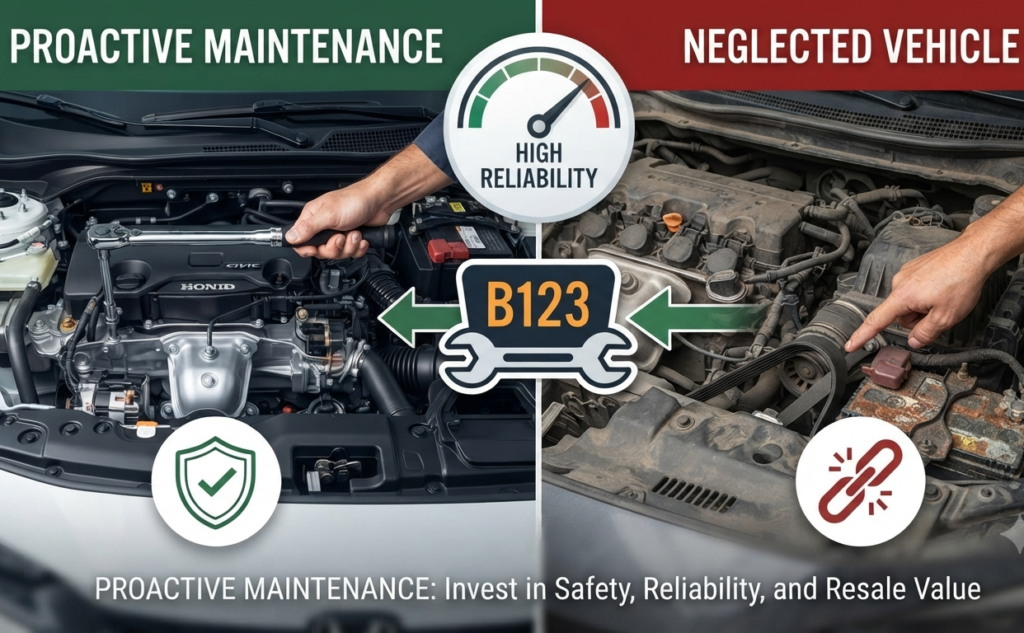
Why should you bother with these codes? Many drivers believe that if the car is “running fine,” they should not spend money on maintenance.
However, the reality of modern vehicle engineering is that you often cannot feel or hear a problem until it reaches a catastrophic level. For example, a worn-out drive belt might look perfectly fine to the naked eye, but it could snap while you are driving at high speeds.
Following the B123 schedule is effectively an insurance policy for your vehicle. It keeps your car reliable, safe, and efficient. Furthermore, a well-documented service history is a massive selling point if you ever decide to trade in or sell your Civic. It proves to the next owner that the car was treated with care.
Dealer Service vs Independent Mechanics
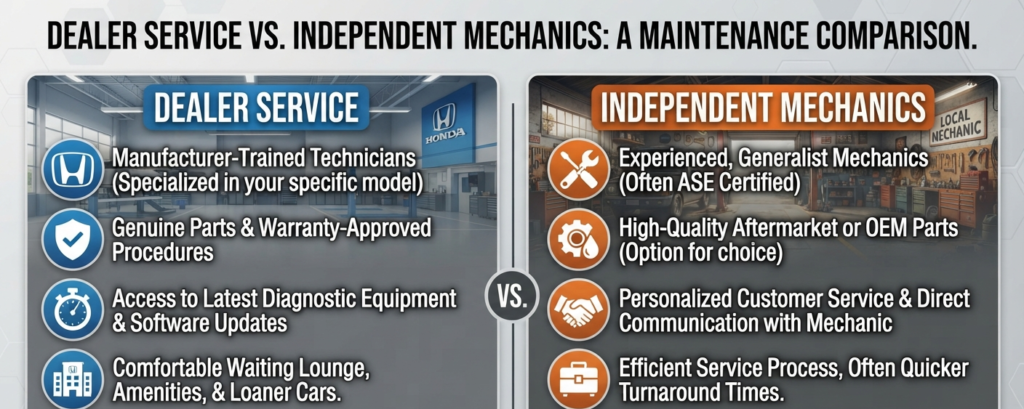
One common question is whether you are required to visit a Honda dealership to have this service performed.
The answer is a firm no. You have the freedom to choose any qualified independent mechanic. In many cases, independent shops can provide the same quality of service for a lower labor rate than a dealership.
However, you must be careful. Honda transmissions, in particular, are extremely sensitive to the type of fluid used. You must ensure that any mechanic you choose uses genuine Honda fluids and parts. Using an incorrect or generic fluid can cause severe damage that may not be covered under warranty.
DIY Opportunities: Where You Can Save Money
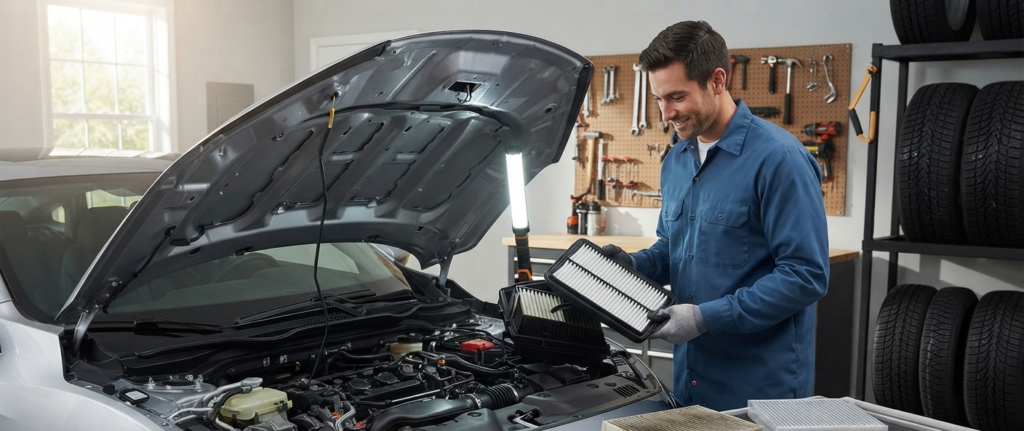
If you are handy with a wrench, you can perform some of these tasks yourself to save money.
Simple DIY Tasks
The cabin air filter and engine air filter replacements are the most straightforward jobs. In most Honda Civic models, these are located in the glove box area or the engine bay and can be replaced in less than ten minutes with basic hand tools. You can purchase these parts at most auto parts stores for a fraction of the dealer’s quoted price.
Tasks Best Left to the Pros
The B inspection, however, is a different story. It requires a vehicle lift, professional brake diagnostic tools, and years of experience identifying subtle suspension issues. Unless you are a trained mechanic, leave the B inspection to the professionals.
Similarly, changing the transmission fluid is a delicate process. You must ensure that the fluid level is exactly right, as both underfilling and overfilling can cause significant issues. For these more technical tasks, it is worth paying for professional expertise to ensure the job is done correctly.
How to Manage Service Costs
If you are worried about the cost of the B123 service, there are several ways to manage the expense.
First, always request an itemized estimate before the work begins. A reputable shop will have no problem explaining exactly what they are doing and why.
Second, consider doing the air filters yourself before your appointment. This removes those items from the shop’s bill.
Third, ask your mechanic about a “menu” service. Many shops have pre-set prices for specific maintenance intervals. Be transparent about your budget and ask if there is a way to prioritize the most urgent items if you cannot afford everything at once.
Frequently Asked Questions
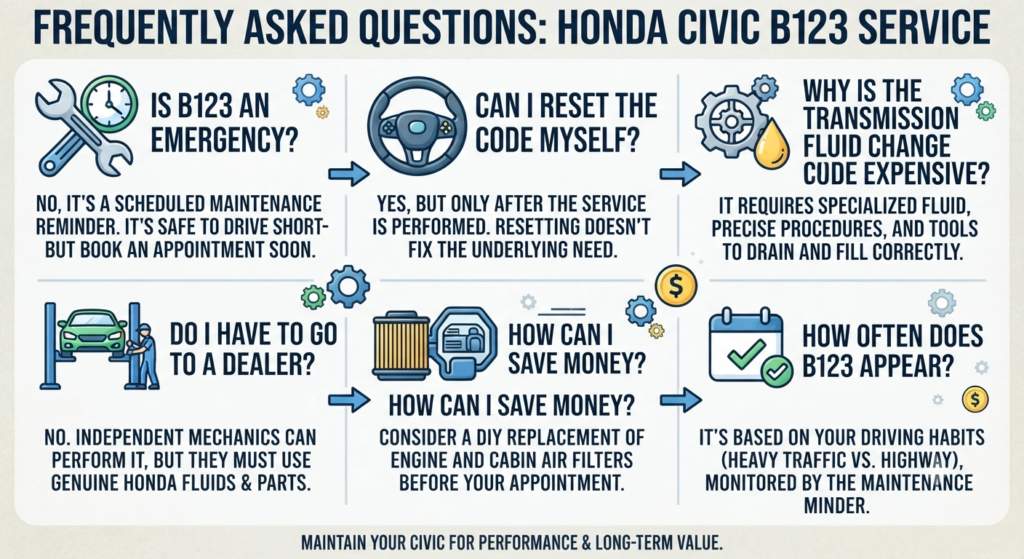
Is the B123 code an emergency?
No, it is not an emergency. It is a scheduled maintenance alert. You can continue to drive, but you should book an appointment to get the work done as soon as possible to avoid long-term wear and tear.
Can I reset the B123 code myself?
Yes, you can reset the light using the steering wheel controls and the information display. However, do not reset the light unless the work has actually been performed. Resetting the light does not fix the underlying mechanical need for service.
Why is the transmission fluid change so expensive?
Transmission fluid is a specialized product, and the process of changing it requires specialized tools to ensure the fluid is drained and filled properly. It is a more involved process than a simple oil change, which is reflected in the price.
What if I have already completed some of these tasks?
If you have already replaced your engine air filter or rotated your tires, inform your service advisor immediately. They can remove these items from your service order, which will save you money.
How often does the B123 code appear?
The frequency depends entirely on your driving habits. If you drive in heavy traffic, in extreme heat, or on short trips, the system will trigger the code sooner. If you do mostly highway driving, you might see it much later.