
Owning a Honda Civic Type R is an incredible driving experience. The razor-sharp handling and track-bred performance make it one of the absolute best hot hatches ever produced. However, living with factory low-profile wheels on rough American roads can quickly turn into a daily nightmare. If you are tired of bending expensive factory rims and replacing blown tires every few months, wheel downsizing is your ultimate solution.
Why Type R Owners Are Desperately Downsizing Their Wheels
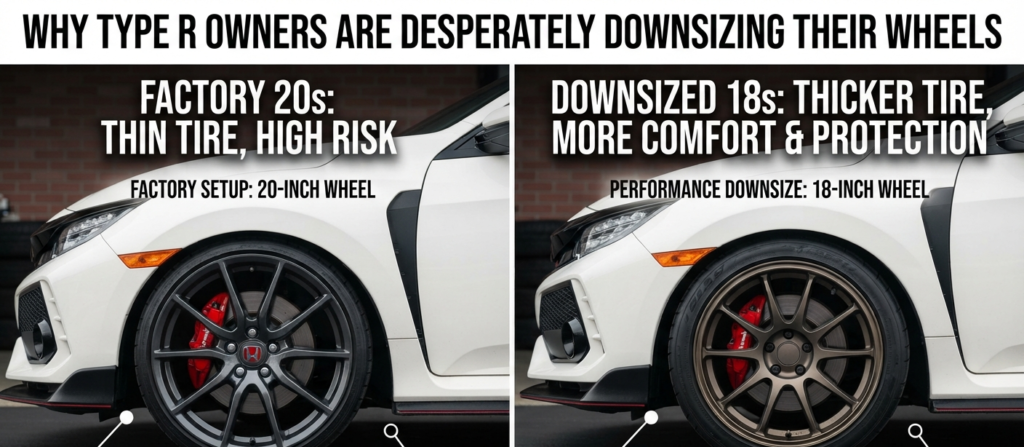
The Pothole Problem with Factory Low-Profile Tires
The FK8 generation came straight from the factory floor with massive 20-inch wheels wrapped in exceptionally thin 30-profile tires. The newer FL5 and Integra Type S models improved slightly by moving down to 19-inch wheels. Even with these 19-inch setups, the sidewall is simply too thin to absorb harsh impacts from potholes, expansion joints, and broken pavement. Every single time you hit a hidden crater on the highway, you run a massive risk of cracking a wheel barrel or blowing a tire sidewall completely out.
The Financial Reality of Constant Tire and Rim Replacements
Replacing an OEM factory wheel and a high-performance summer tire is shockingly expensive. Many Type R owners spend thousands of dollars every single year just repairing pothole damage and purchasing replacement rubber. Downsizing to an 18-inch wheel dramatically increases the amount of functional rubber between your metal rim and the hazardous road surface. This extra cushion absorbs heavy impacts seamlessly, saving your hard-earned money from endless repair bills.
The Golden Setup: Ideal 18-Inch Specs for FK8 and FL5
Wheel Width and Offset Breakdown
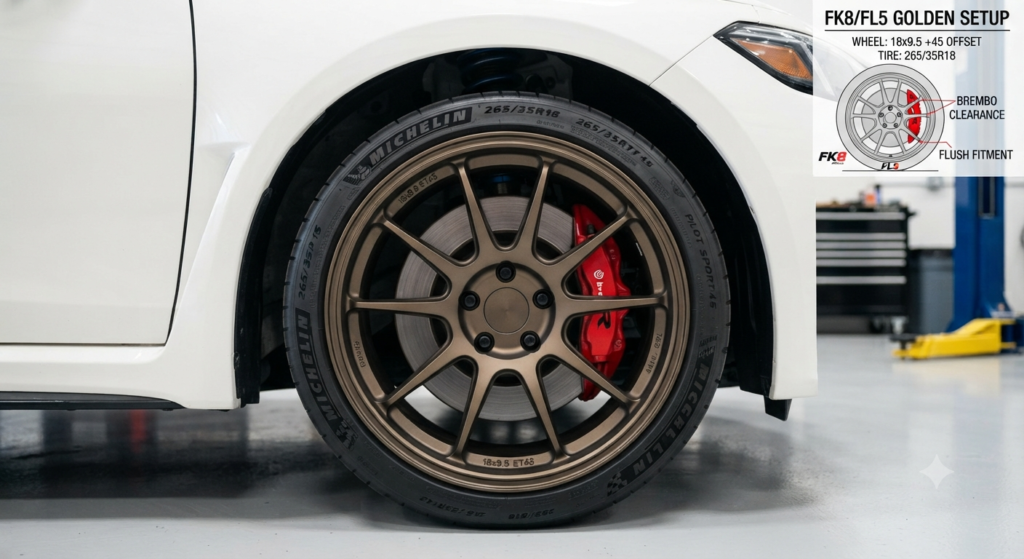
Finding the correct aftermarket wheel specification is crucial to avoid rubbing against your internal suspension components. The community-tested and proven golden setup for both FK8 and FL5 models is an 18×9.5-inch wheel. Pair this specific wheel width with a +45 offset for the absolute best balance of fitment and clearance. This specific offset pushes the wheel outward just enough to look aggressive and completely flush with the fenders without requiring custom widebody modifications.
Choosing the Right Tire Size for Balance
Once you secure your 18-inch wheels, you need to choose the correct tire size to maintain proper speedometer accuracy and gearing. The most popular and recommended tire choice among seasoned enthusiasts is a 265/35R18 tire. This size provides a meatier sidewall that drastically improves ride comfort during daily urban commutes. It also retains a wide, sticky contact patch, ensuring you do not lose any mechanical grip during hard cornering on backroads.
Handling and Performance Trade-offs You Must Know
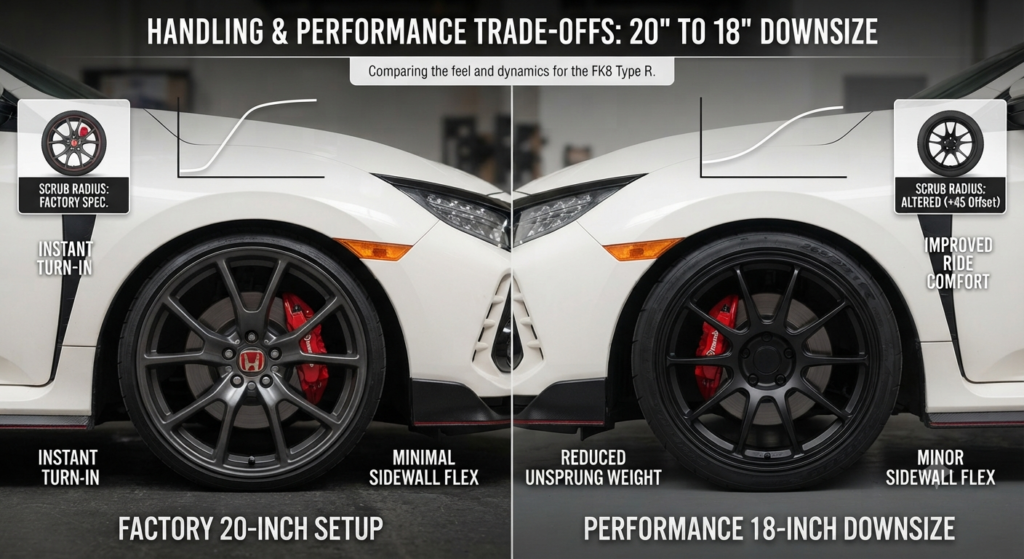
Steering Response and Sidewall Flex
Physics dictates that adding a taller tire sidewall introduces a tiny bit of flex compared to a rigid 30-profile tire. When you first make the switch from stock wheels, you might notice that initial steering turn-in feels slightly less instant. The steering wheel may feel a fraction softer during rapid left-to-right transitions on a winding canyon road. However, most daily drivers gladly accept this minor compromise in exchange for a ride quality that does not rattle your teeth out.
Scrub Radius Changes and Torque Steer Dynamics
Moving from the high factory offset to a +45 offset alters your front suspension scrub radius. Because the wheel centerline shifts slightly outward from the steering axis, you may notice a minor increase in torque steer. When you accelerate hard over uneven or wet pavement, the steering wheel might pull more aggressively in your hands. Keeping a firm, confident grip on the steering wheel during hard acceleration easily manages and mitigates this behavior.
Clearing the Brembos: Brake Clearance and Wheel Spacers
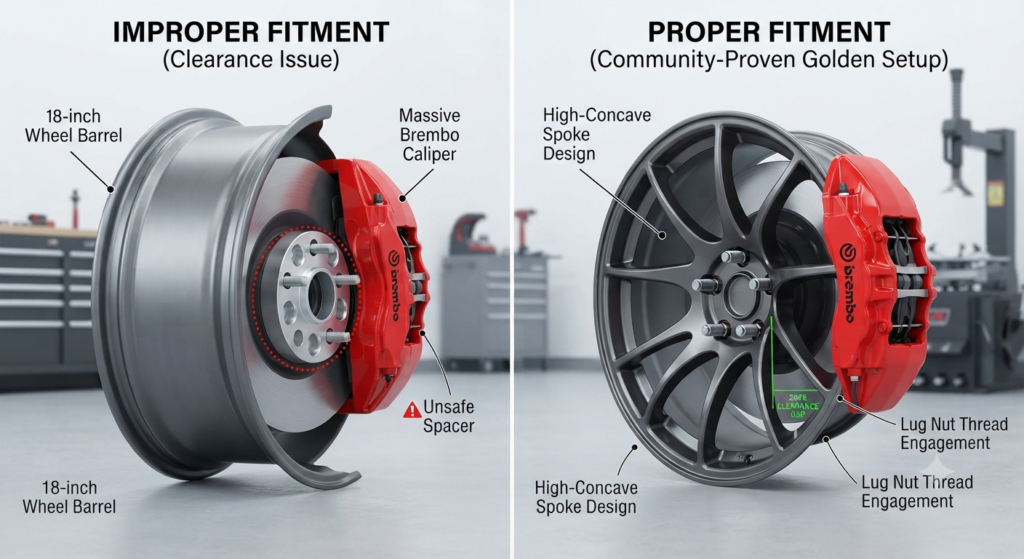
The Challenge of Massive Front Calipers
The massive Brembo front brakes on the Civic Type R require careful inner barrel clearance on any aftermarket wheel. Many budget 18-inch wheels will scrape directly against the outer edge or face of the brake calipers. Before buying any set of wheels, you must always verify that the inner barrel design clears big brake kits properly. Reputable wheel brands specifically engineer certain 18-inch wheel models with a high concave spoke design to clear the Brembos effortlessly without requiring annoying spacers.
Avoid Using Cheap Wheel Spacers
If you accidentally purchase wheels with a slightly incorrect offset that catches the brakes, never rely on cheap slip-on spacers. Spacers can introduce unwanted wheel vibrations at highway speeds and compromise your critical wheel stud engagement. Always buy the correct offset from the start to ensure structural safety on both the street and the race track.
Protecting Your Paint: Fender Flush Offsets and Rock Chips
The Physics of Wider Track Widths
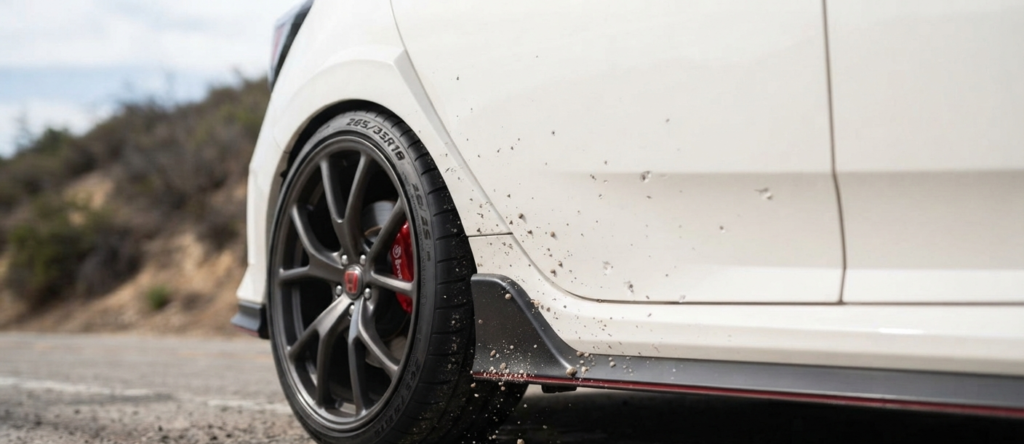
Running an aggressive flush fitment with an 18×9.5 +45 setup fundamentally changes how road debris is thrown by your tires. The wider track width means your front and rear tires will frequently fling small stones, salt, and gravel upward against the body panels. Without proper preventative protection, these high-velocity rocks will chip the factory paint on your rear doors and lower side skirts within just a few months.
Essential Preventative Measures
- Paint Protection Film (PPF): Applying quality PPF to the vulnerable lower rocker panels is a smart investment.
- Subtle Mud Flaps: Installing low-profile mud flaps will catch flying debris before it can damage your pristine factory paint.
Taking these simple steps preserves the exterior value of your Civic Type R while enjoying your new wheel setup.
Track Performance and Unsprung Weight Benefits
Why Track Enthusiasts Prefer 18-Inch Wheels
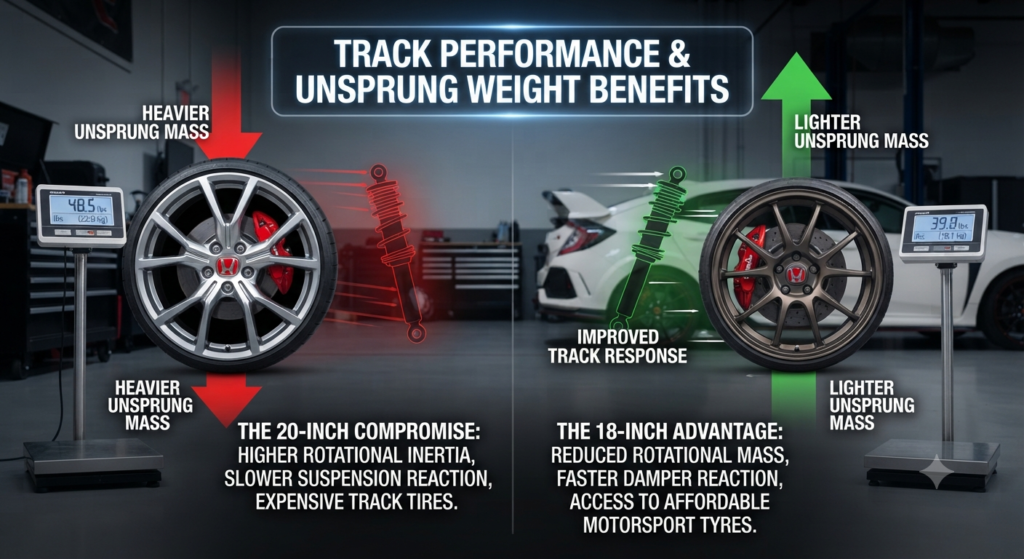
Beyond daily comfort, downsizing to 18-inch wheels brings massive performance advantages on the race track. Smaller 18-inch wheels and tires often reduce overall rotational mass and unsprung weight compared to heavy 20-inch factory setups. Lighter wheels allow your suspension dampers to react faster to surface changes, improving mechanical traction and grip.
Access to Affordable Motorsport Compounds
Finding high-performance track tires in 20-inch sizes is difficult and extraordinarily expensive. Moving down to an 18-inch platform opens up a massive catalog of affordable, competition-proven tire compounds. You can easily purchase dedicated semi-slicks for track days without spending a small fortune every single weekend.
Frequently Asked Questions About Type R Wheel Downsizing
| Question | Answer |
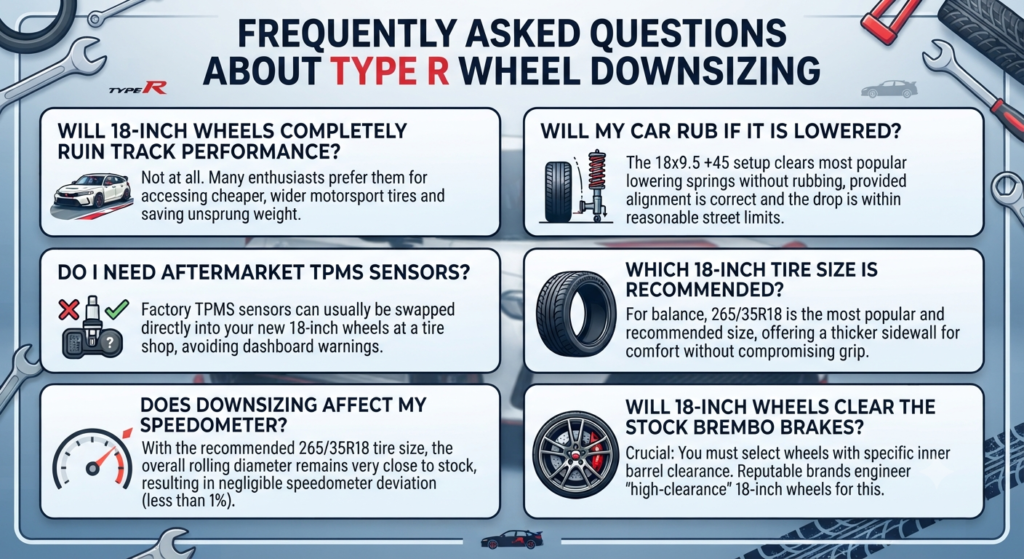
| Will 18-inch wheels completely ruin track performance? | Not at all. In fact, many serious track enthusiasts prefer 18-inch wheels because they open up access to cheaper, wider motorsport tire compounds and save valuable unsprung weight. |
| Do I need aftermarket TPMS sensors for my new wheels? | You can easily swap your factory tire pressure monitoring sensors directly into your new 18-inch wheels by visiting a local tire shop, helping you avoid annoying dashboard warning lights. |
| Will my car rub if it is lowered on aftermarket lowering springs? | An 18×9.5 +45 setup paired with 265/35R18 tires clears most popular lowering springs without rubbing, provided your drop is within reasonable street limits and alignment specs are correct. |
| Does downsizing affect my speedometer reading? | When paired with the recommended 265/35R18 tire size, the overall rolling diameter remains extremely close to stock, resulting in a negligible speedometer deviation of less than one percent. |