
Stepping into your car on a scorching summer day should bring instant relief. But when you crank up the AC and only get warm air blowing from the vents, your daily commute quickly turns miserable.
If you drive a Honda Civic, you aren’t the only one dealing with this. AC issues are notoriously common across several Civic generations.
The good news? Finding the root cause early can save you a lot of time, frustration, and money. This guide walks you through everything you need to know to diagnose, understand, and fix your Civic’s air conditioning system.
Common Signs of a Failing Civic AC

Catching the early warning signs can prevent a minor glitch from turning into a total system meltdown. Keep an eye (and ear) out for these symptoms:
- Uneven Vent Temperatures:
Warm air blows from some dashboard vents while others manage to stay slightly cool. - Idling Warmth:
The AC blows ice-cold when you’re cruising down the highway, but turns completely warm the moment you stop at a red light. - Strange Noises:
- You hear clicking, buzzing, or metallic grinding sounds from under the dashboard or engine bay when you press the AC button.
- Weak Airflow:
- The blower fan is blasting on high, but barely any air makes it through the cabin vents.
- Musty Odors:
- A foul, damp smell accompanies the airflow, usually pointing to mold growing inside the evaporator housing.
Top Causes Why Your Civic AC Blows Warm Air
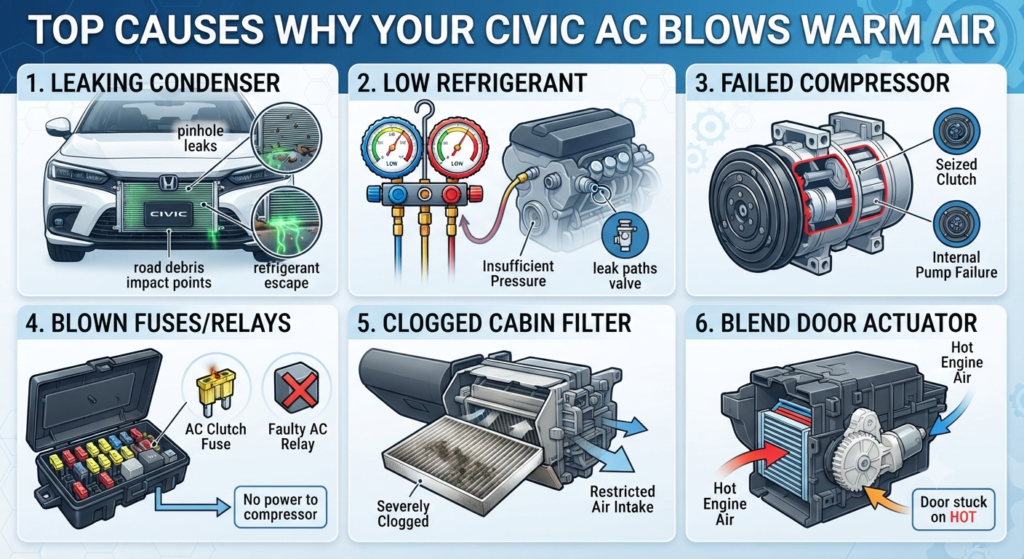
To fix the problem, it helps to understand what’s actually happening under the hood. Here are the usual suspects:
1. Pinhole Leaks in the Condenser
Modern Honda Civics use lightweight aluminum condensers with ultra-thin walls to boost fuel efficiency. Unfortunately, this makes them fragile. Road debris, stone chips, and high internal pressure easily cause microscopic pinholes, letting all your refrigerant slowly bleed out.
2. Low Refrigerant Levels
Refrigerant doesn’t just get “used up” or burned during normal driving. If your levels are low, you have a physical leak somewhere in the closed loop—usually at a hose connection, service valve, or an aging rubber seal.
3. A Failed Compressor or Clutch
The compressor is the heart of your climate system; it pumps and pressurizes the refrigerant. If the internal electromagnetic clutch stops getting electrical signals or completely seizes up, the system can’t circulate any cooling gas.
4. Blown Fuses and Relays
Electrical power routed through your under-hood fuse box controls the condenser fan and compressor clutch. A blown fuse or a stuck relay will instantly cut power to these critical components.
5. A Clogged Cabin Air Filter
A heavily restricted cabin air filter blocks fresh air from entering the HVAC box. This chokes the system’s performance and can even cause the evaporator core to freeze solid into a block of ice.
6. Blend Door Actuator Issues
Sometimes the cooling cycle is working perfectly, but a broken blend door motor fails to move the physical flap separating engine heat from the AC airflow.
Important: The Honda Civic AC Warranty Extension

Before you spend a dime fixing your AC, check this: Honda issued an extended warranty for specific 10th-generation Civic condensers due to widespread manufacturing defects.
If your vehicle falls within the covered production years and fails because of a condenser pinhole leak, authorized dealerships are required to replace the part and recharge the system completely free of charge.
- What to do: Call your local dealership with your Vehicle Identification Number (VIN) before paying out of pocket.
- Tip: Keep your maintenance records handy, as dealerships often ask for proof of prior service.
Step-by-Step DIY Diagnostic Guide
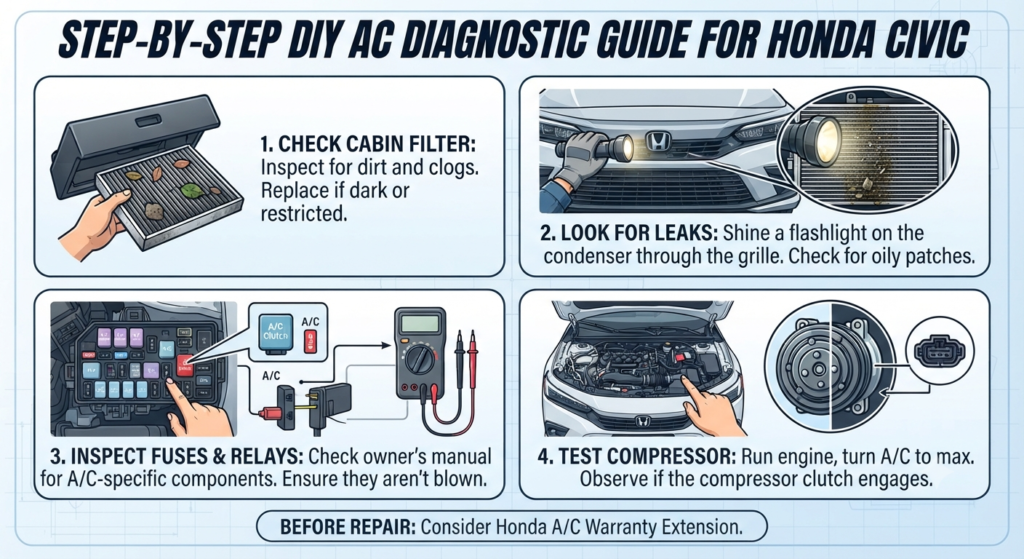
Want to check things out yourself before heading to a mechanic? Follow this simple workflow:
- Step 1:
- Inspect the Cabin Air Filter. Locate your filter behind the glove box. Pull it out and check for heavy leaves, dirt, or dust. If it looks dark and clogged, replace it immediately.
- Step 2:
- Observe the Compressor. Park safely, pop the hood, and let the engine run with the AC turned to max. Look down at the AC compressor pulley. The outer pulley should spin continuously, and the inner center plate should engage and spin with it. If the center plate stays completely still, your compressor isn’t engaging due to low pressure or an electrical fault.
- Step 3:
- Check Fuses and Relays. Consult your owner’s manual to find the specific fuses and relays for the condenser fan and magnetic clutch. Swap matching relays or use a multimeter to test for continuity.
- Step 4:
- Look for Oily Residue. Shine a bright flashlight through your lower front bumper grill onto the front condenser core. Look for dark, wet, oily patches where road dust has stuck to leaking refrigerant oil. Oily buildup is a dead giveaway for a leak.
How to Fix It: DIY vs. Professional Repair
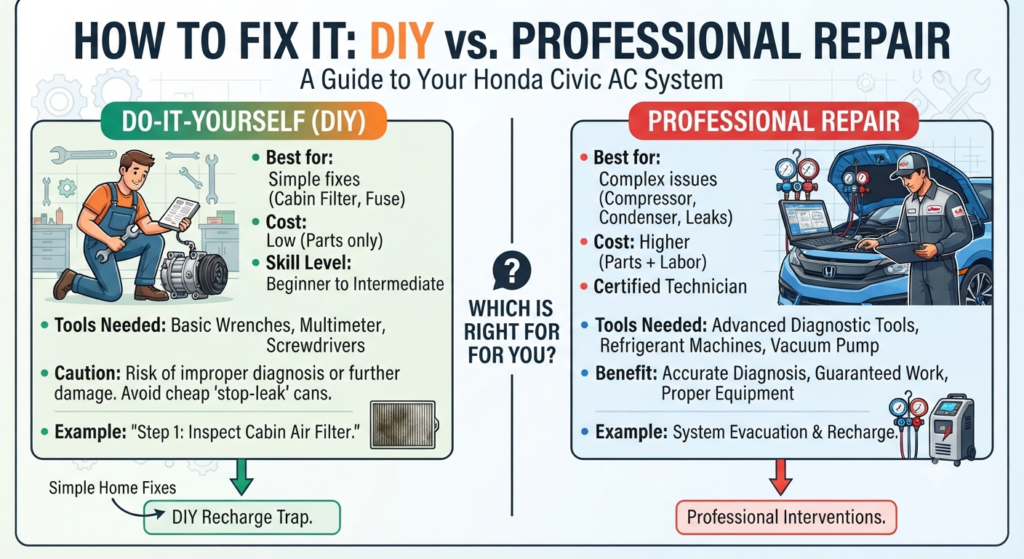
- Simple Home Fixes:
- Replacing a dirty cabin air filter or swapping a burnt fuse takes minutes and costs very little.
- The DIY Recharge Trap:
- Avoid using cheap, store-bought refrigerant cans that contain “stop-leak” additives. These chemical sealants frequently ruin professional recovery machines and rarely fix structural holes.
- Professional Interventions:
- Condenser replacements, evaporator core swaps, and compressor overhauls require professional equipment to safely evacuate refrigerant, pressure-test with a vacuum, and recharge to precise factory weight limits.
Pro Tips to Protect Your Civic AC
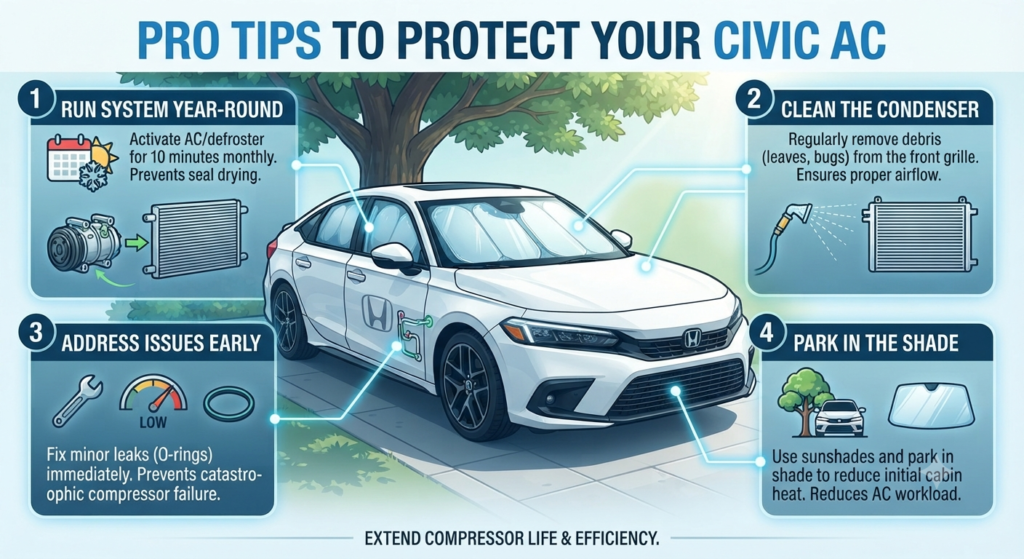
- Run the system year-round:
- Turn on your defroster or AC for a few minutes each week during the winter to keep the internal rubber seals lubricated.
- Clean the front grille:
- Regularly wash away bugs, leaves, and dirt blocking the front condenser fins so it can properly dissipate heat.
- Address issues early:
- Fix slow cooling losses immediately before a small O-ring leak burns out an expensive compressor.
- Park in the shade:
- Using sunshades lowers initial cabin temperatures, reducing the strain on your blower motor.
Frequently Asked Questions
Can I use a DIY refrigerant recharge kit on my Honda Civic?
Using a basic recharge kit is usually just a temporary band-aid. If you have an unsealed physical leak, the gas will just leak out again. Fixing the underlying hole is always required.
How much does a Honda Civic AC condenser replacement cost out of pocket?
Independent repair shops typically charge between $400 and $800 for parts and labor, depending on local rates.
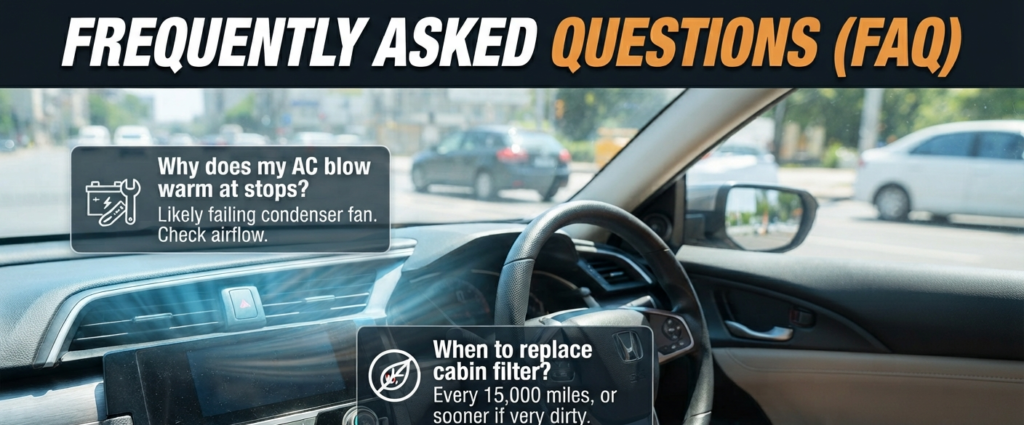
Why does my Civic AC work great on the highway, but blow warm air at stoplights?
This classic symptom usually points to a failing condenser fan or restricted airflow across the front radiator assembly when the car stops moving.
How often should I replace my cabin air filter?
You should inspect and replace your cabin air filter every 12,000 to 15,000 miles—or even sooner if you frequently drive on dusty dirt roads.